
Fulham fixed-wiring reports
Book an EICR inspection in Fulham
Arrange an EICR for a house, flat or rental property in Fulham. Include basement, garden and porter access details in your request.
- 5.0Google (58)
- 4.6Trustpilot (19)
- From £142.80 inc VAT
- Report usually within 24h
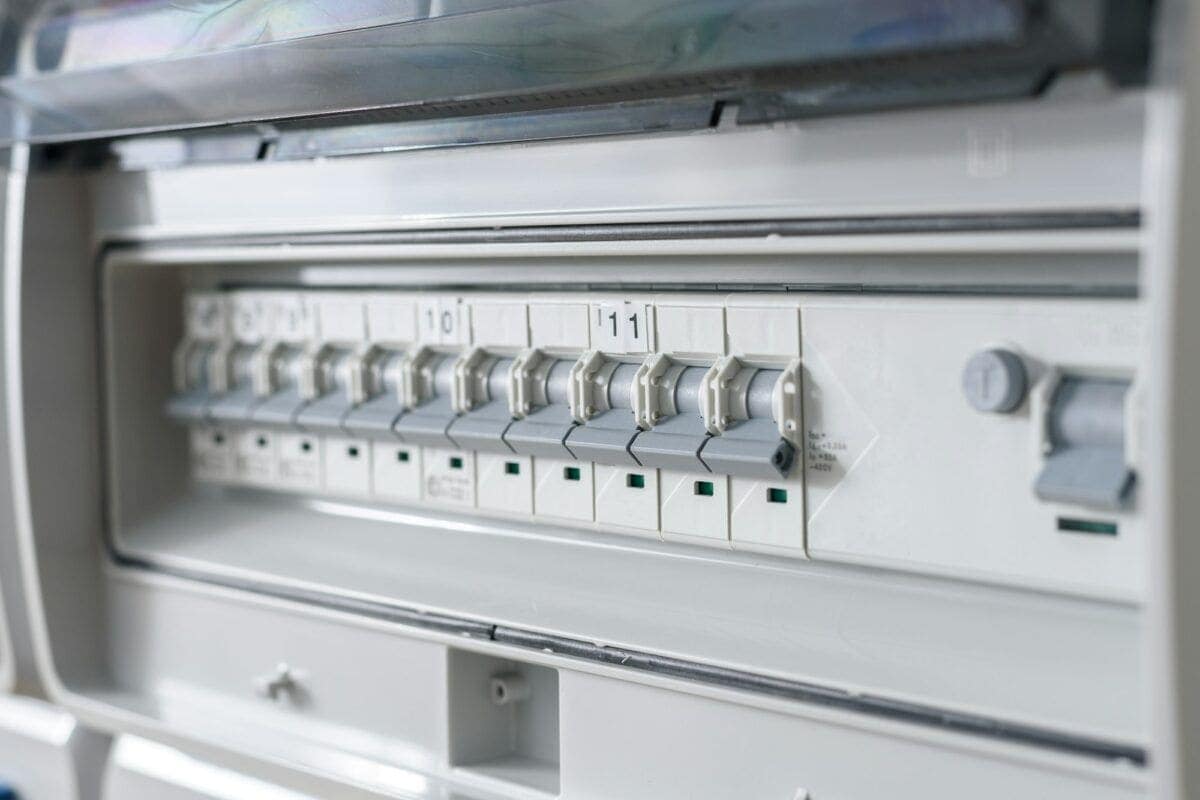
UK consumer unit with circuit breakers.
Google and Trustpilot customer ratings
 5.058 Google reviews, rated 5.0 out of 5 (opens in a new tab)
 4.619 Trustpilot reviews, rated 4.6 out of 5 (opens in a new tab)
Customer feedback
Rated 5 out of 5 on Trustpilot
“Arrangements were easy to make and the work was done on the day agreed.”
Robert · Trustpilot · May 2026
Review 1 of 6 by Robert
Residential price
Find your Fulham residential price
Use the home details and postcode to calculate the residential price. Business premises and mixed-use instructions follow the quotation route. EICR certificate cost page.
All of London and inside the M25.
Pick bedrooms and add the postcode to see your exact price.
from
£142.80
- Fixed price, VAT included, no call-out fee
- Weekday visits 9 to 12 or 12 to 4; evenings and weekends on request
- Report usually within 24 hours
- Shops, offices and blocks quoted separately
EICRs for Fulham property types
Fulham includes Thames-facing apartment blocks, Victorian streets and large houses converted into flats. Their installations range from communal meter arrangements to under-stair boards and later basement sub-boards.
An EICR records the fixed wiring in the agreed property. It does not include automatic repair of observations.
Who books Fulham EICRs
Landlords arrange reports around tenancy and refurbishment dates. Homeowners and buyers use them to assess fixed wiring after years of extensions, kitchen work or partial upgrades.
Managing agents should identify the building, flat and key-release process. Each self-contained unit requires clear scope.
Townhouse conversions and riverside mansion flats
Converted houses can have boards on separate floors with unclear labels after successive alterations. Riverside blocks may place meters in communal areas while the consumer unit remains inside the flat.
Lofts, lower-ground kitchens and garden offices need to be named if their circuits belong in the report.
Details to include
- Riverside block or terrace
- Every board location
- Rear and basement access
- Commercial areas excluded or included
Parking, porter desks and rear passages
Portered riverfront buildings need advance visitor approval and the correct lobby entrance. On terrace streets, rear gates and narrow side passages may be the only route to outdoor circuits.
Parking is not guaranteed. A mobile contact and precise flat number help the engineer reach the property with test equipment.
What happens during testing
The inspection covers the consumer unit, earthing, bonding and accessible fixed circuits. Appliances are not the focus, although fixed connections form part of the installation assessment.
Power is isolated in stages for instrument tests. Unavailable rooms or locked cupboards are documented as limitations.
Using the findings
The report gives an overall outcome supported by observations and codes. A coded item should be read with its description, not treated as a generic failure label.
Repairs and further investigation are priced apart from the original inspection.
Landlord and homeowner decisions
Landlords should finish planned electrical work before the EICR if they need the report to reflect the refurbished property. Tenants must know that circuit interruptions will occur.
Homeowners should gather certificates for recent additions and show the engineer every board. These documents support context but do not replace testing.
Fulham's distinct West London setting
Fulham is defined by low-rise riverside homes, townhouse conversions and Fulham Road mixed use. Kensington has more garden-square and museum-district mansion stock.
Nine Elms uses a separate South London route for newer tower developments and phase-specific concierge entry. Putney covers a different stretch of Thames-side housing farther west.
Prepare a Fulham property
Clear the main consumer unit, basement boards and outdoor enclosures. Unlock loft rooms, gardens and storage areas containing fixed electrical points.
Send the building name, flat number, parking notes and previous EICR before the visit where available.
Converted houses
Confirm the floor and demise served by each board so the inspection does not cross into another flat.
Riverside blocks
Arrange concierge entry and access to any communal meter cupboard needed for the agreed inspection.
Commercial quotation
Commercial inspections in Fulham
Shops, restaurants, salons and offices along Fulham Road or North End Road need a tailored scope. Provide trading hours, board information and any shared access restrictions. Commercial EICRs are quoted individually based on site size, circuits, distribution boards, access and operating requirements.
- High-street units
- Hospitality premises
- Residential above commercial
Tell us about the premises and we'll send a tailored quotation.
Fulham questions
Frequently asked questions for Fulham
Practical answers for property types and access patterns covered on this page.
Can I see the Fulham EICR price before booking?
Yes. Enter the residential property details in the calculator. Complex and commercial premises require a quotation.
Will you test a garden office or basement?
Yes when its supply belongs to the booked installation and the area is accessible. Add it to the scope notes.
What should a Fulham landlord arrange?
Provide access to all rooms, notify occupants about isolation and make every electrical cupboard available.
Is parking required outside the property?
No, but accurate access and parking notes help. The engineer may carry equipment from a nearby public bay.
What follows an unsatisfactory report?
Review the observations, then arrange the stated remedial work or further investigation as a separate instruction.
Understanding your EICR result
Your report uses four observation codes to show the level of concern and what normally happens next.
C1: Danger present
Immediate risk. The observation requires urgent attention. It should not be treated as a cosmetic issue.
Typical next step: Urgent attention required before further use where practicable.
C2: Potentially dangerous
Potential danger. Remedial work or further action is typically needed before the installation can be considered satisfactory.
Typical next step: Plan remedial work or further action before a satisfactory outcome.
C3: Improvement recommended
Improvement recommended. A C3 observation alone does not make a report unsatisfactory.
Typical next step: Optional improvement. A C3 observation alone does not make the report unsatisfactory.
FI: Further investigation
Under A4:2026, further investigation is advised. FI does not itself make the report unsatisfactory; earlier report formats may differ.
Typical next step: Read the report edition, observation and any applicable duty.
The classification applied depends on the installation and the inspector's professional assessment.
Arrange your Fulham EICR
Check the residential price and send access notes with your request. Use the commercial route for trading premises.