


EICR for Build-to-Rent, Co-Living and Managed Rental Blocks in London
EICR Certificate
22 April 2026
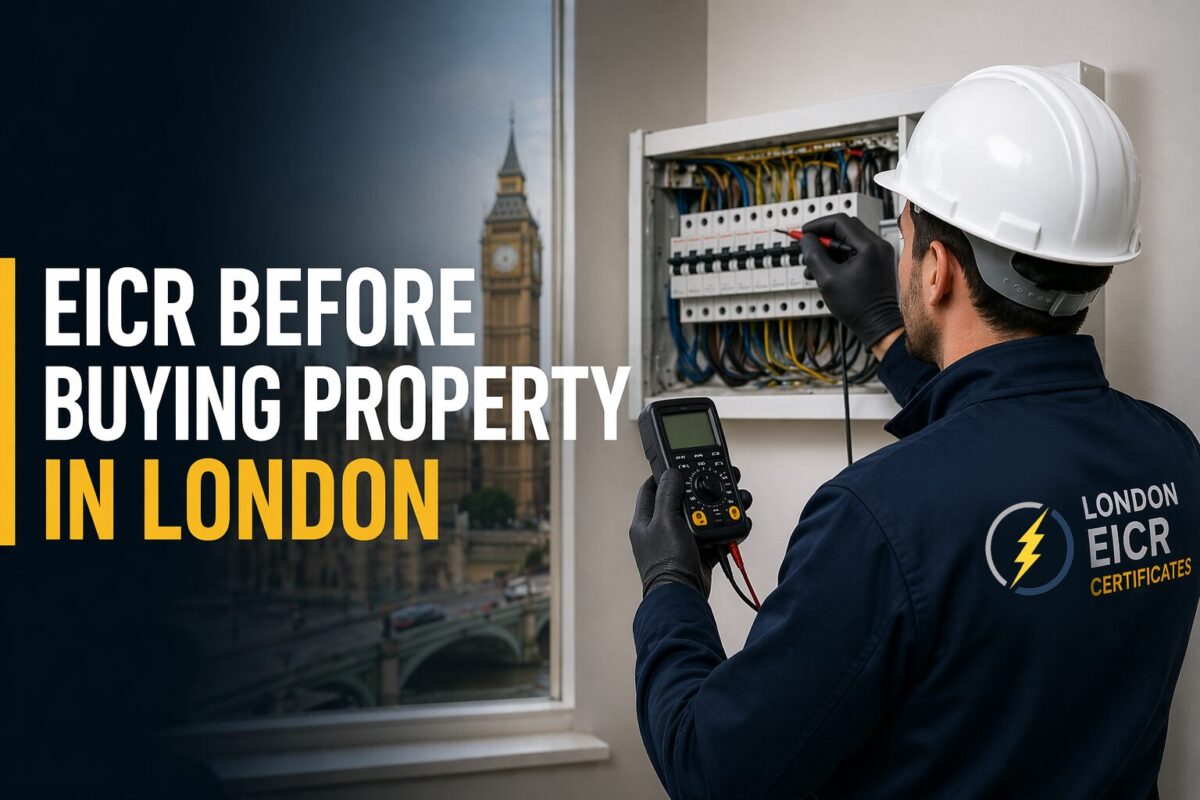
Buying a property in London is a big move. Whether it is your first flat, a family house, a buy-to-let, or a renovation project, most buyers focus on the same things first: location, price, condition, lease length, survey results, and how quickly the transaction can move. That all matters. But there is one area that gets ignored far too often until it becomes an expensive problem.
That is the electrical installation.
A property can look clean, modern, and well presented during a viewing while hiding serious electrical issues behind the walls, inside the consumer unit, or under years of poor alterations. New light fittings, a fresh coat of paint, and a stylish kitchen do not tell you whether the electrics are safe, compliant, or likely to cost you thousands after completion.
That is why smart buyers book an EICR in London before making an offer or before exchange. An Electrical Installation Condition Report gives you a much clearer picture of the condition of the fixed wiring and electrical system. It can uncover hidden faults, safety risks, outdated installations, and likely remedial costs before you commit your money.
If you are buying in London, especially an older flat, Victorian terrace, ex-rental property, or home that has been extended or altered, arranging an inspection can be one of the smartest decisions you make.
If you want to understand the inspection side in more detail, you can also visit our EICR Services page and our guide on how to read and understand an EICR report.
An EICR is a formal inspection and testing report on the fixed electrical installation of a property. It looks at the condition of the wiring, earthing, bonding, protective devices, sockets, switches, consumer unit, and overall electrical safety of the installation.
Most buyers hear about surveys, damp reports, or structural checks. Fewer think about the electrics in the same serious way. That is a mistake.
You are not just buying walls and floor space. You are buying responsibility for the condition of the property from the day completion takes place. If the electrics are unsafe, outdated, or fail inspection later, that becomes your problem.
An EICR certificate in London can help you:
For buyers, this is not about paperwork for the sake of paperwork. It is about reducing risk.
A property viewing is not an electrical inspection. Even a well-presented home can hide major problems.
You might see:
But what you do not see matters more:
A lot of buyers assume that if the lights turn on and the sockets work, the electrics must be fine. That is not how it works.
Electrical systems can function and still be unsafe.
That is one of the biggest reasons buyers book an EICR test in London. A working installation is not always a safe installation.
In our experience, certain types of properties deserve extra caution.
Victorian, Edwardian, and older converted properties often have a long history of alterations. Extensions, loft conversions, kitchen upgrades, rewires, partial rewires, and DIY changes can all leave a messy electrical legacy.
If a property has been rented for years, some works may have been done only to keep it functioning rather than to bring it up to a stronger modern standard. Some landlords maintain properties properly. Others patch things up and move on.
Converted houses can sometimes have complicated wiring arrangements, questionable alterations, and dated consumer units, especially where ownership has changed several times.
Fresh finishes can actually hide more than they reveal. Cosmetic improvement does not guarantee electrical quality.
If the fuse board looks dated, crowded, poorly labelled, or like it has been modified multiple times, that is a red flag.
Garden rooms, rear extensions, lofts, garage conversions, and annexes often introduce extra electrical work. If that work was not done properly, problems can spread across multiple circuits.
Let’s say a buyer is looking at a two-bedroom flat in London. The place looks good. The seller has repainted, added spotlights, and updated the kitchen. Everything feels clean and ready to move into.
The buyer books an EICR before exchange.
During inspection, the report reveals:
The buyer now has useful leverage.
Instead of completing blindly and discovering the problems later, they can:
Without the EICR, that buyer might only discover the real condition after they have already completed, moved in, and started getting quotes.
That is when costs feel painful.
Here is a realistic buyer scenario that shows why this matters.
A buyer agreed a purchase on an older flat that had been rented out for years. On the surface, the flat looked acceptable. The estate agent described it as “ready to go” and the electrics were said to be “working fine”.
The buyer chose to arrange an EICR before final commitment.
The inspection highlighted:
The estimated cost of corrective works was significantly higher than the buyer expected.
Because the issue was identified early, the buyer had three options:
That is the real value of a pre-purchase EICR in London. It gives you decision-making power.
This is where buyers often win.
When you discover electrical issues before exchange, you are no longer negotiating in the dark. You have a professional inspection report showing the condition of the installation and identifying defects that may need attention.
That can help you:
In a competitive London market, some buyers feel pressure to move quickly and not “cause problems”. But protecting yourself is not being difficult. It is being smart.
If you are spending hundreds of thousands of pounds on a property, checking the electrics is not excessive. It is basic risk management.
Not every property has serious issues, but these are some of the more common defects that can show up:
Some issues are minor. Others affect safety and can result in an unsatisfactory report.
If you want to understand how fault coding works, our guide on how to read an EICR report explains the basics clearly.
In many standard private purchases, an EICR is not always a strict legal requirement before buying.
But that is the wrong question.
The better question is this:
Do you want to buy a London property without knowing whether the electrical installation is safe or likely to cost you money?
For owner-occupiers, an EICR is often a smart precaution.
For buy-to-let buyers, it becomes even more important because once you own the property, landlord safety obligations become part of the picture too.
If you are planning to rent the property out, you should also review our page on EICR Certificates for Landlords in London.
If you are buying for yourself or your family, our EICR Certificates for Homeowners in London page is worth a look too.
Some sellers may say they already have an electrical report.
That does not always settle the matter.
You need to ask:
An old EICR is useful background, but it does not always tell you the current condition with enough confidence. If the installation has changed or if the report is no longer recent, a fresh inspection may still be the safer option.
A lot of buyers hesitate because they do not want “another cost” during the purchase process.
That thinking can backfire hard.
The cost of an EICR is small compared with:
If you want pricing information, visit our EICR Certificate Cost page or use our EICR Price Calculator.
For most buyers, the financial logic is simple:
A modest inspection cost now can save a much larger bill later.
The best time is usually once you are seriously interested in the property and want proper clarity before fully committing.
Some buyers arrange it:
The right timing depends on the deal, the seller, access, and how serious the transaction is.
If you are moving quickly and need a fast turnaround, our Book Online page makes it easy to arrange an inspection.
First, do not panic.
An unsatisfactory result does not automatically mean the property is a disaster. It means you now know more than you did before. That is the whole point.
Depending on the findings, you may decide to:
If remedial work is needed, we also provide remedial work for failed EICR certificates, so buyers and new owners can move from inspection to corrective works without unnecessary delays.
London property is expensive. That makes mistakes more expensive too.
A buyer in London is often already dealing with:
When money is already stretched, discovering hidden electrical issues after completion can hit hard.
That is why London buyers should be more careful, not less.
The older housing stock, high number of converted buildings, and constant history of alterations across London properties make electrical due diligence more important than many people realise.
There is also a peace-of-mind factor here that matters.
Most buyers do not want to move into a new home worrying about:
A proper EICR gives clarity. Even when defects are found, you are in a stronger position because you know where you stand.
Uncertainty is expensive. Clarity is powerful.
At London EICR Certificates, we focus on clear, practical electrical safety inspections for London properties. We understand that buyers do not want jargon, fluff, or vague answers. They want honest findings, a professional report, and a realistic understanding of risk.
We help property buyers, landlords, homeowners, and businesses across London with:
You can also explore:
A property can photograph well, stage well, and still hide electrical problems that cost serious money.
That is why smart buyers in London do not rely only on appearances, seller assurances, or quick viewings. They verify what they are buying.
If you are buying a property in London and want more certainty before you commit, booking an EICR is one of the smartest steps you can take. It can protect your budget, improve your negotiation position, and help you avoid inheriting expensive electrical issues the moment the keys are handed over.
If you are in the process of buying and want a professional electrical inspection before moving forward, we’re here to help.
Book your inspection here:
https://londoneicrcertificates.co.uk/book-online/
Or learn more about the service here:
EICR Services London
A small check now can save you a big problem later.
Find answers to common questions about EICR certificates and electrical safety inspections in London. Visit our FAQ page on EICRcertificates.com for more information.