

EICR Certificate
5 July 2026
London Landlord Electrical Compliance Calendar 2026
A London landlord electrical compliance calendar helps landlords stay ahead of EICR certificates, PAT testing, alarm checks, remedial work and tenant changeover deadlines before they become urgent problems. For rental properties in London, electrical compliance is not only about having a certificate. It is about proving that the installation has been inspected, the report has been reviewed, required remedial work has been handled, tenants have received the right documents, and safety records are stored properly.
Many landlords only think about electrical safety when a letting agent asks for a certificate, a tenant is moving in, a property sale is delayed, or an old EICR has expired. That reactive approach creates unnecessary pressure. In London, short-notice access can be difficult because of tenants, agents, concierge desks, parking restrictions, congestion zones, key collections and managed block rules.
A clear compliance calendar turns electrical safety into a controlled system. It gives landlords a structure for when to book an EICR certificate in London, when to arrange EICR remedial work, when to check alarms, when to review appliances and when to prepare documents before a new tenancy starts.
Why every London landlord needs an electrical compliance calendar
Electrical compliance fails most often because of poor timing, not because the landlord deliberately ignores safety. A landlord may have a property that is generally well maintained, but still run into problems because the EICR renewal date was missed, the previous report was saved in the wrong email folder, remedial work evidence was not collected, or the tenant was not given enough notice for access.
Government guidance for rented homes in England says landlords must have electrical installations inspected and tested by a qualified person at least every five years, obtain a report, supply copies where required and complete necessary remedial or further investigative work within 28 days or any shorter period stated in the report.
That means a landlord needs more than a certificate. A landlord needs a process.
A strong compliance calendar should track:
• EICR inspection date
• EICR expiry date or next inspection date
• Whether the EICR was satisfactory or unsatisfactory
• C1, C2, C3 and FI observations
• Remedial work status
• Remedial completion evidence
• Tenant and agent document issue dates
• Smoke alarm checks
• Carbon monoxide alarm checks where required
• PAT testing or appliance checks where relevant
• Electrical repairs during the tenancy
• New electrical work completed after the last EICR
• Renewal reminders before the certificate expires
For landlords with one flat, this can be a simple spreadsheet. For portfolio landlords and letting agents, it should be part of the property management process.
The EICR renewal cycle landlords should follow
A rental property EICR is usually managed around a five-year inspection cycle, unless the report recommends a shorter period. The mistake many landlords make is waiting until the fifth year is nearly finished before doing anything.
A better structure is:
• Month 0: EICR completed
• Month 0–1: report reviewed and stored
• If unsatisfactory: remedial work arranged immediately
• Month 1–2: remedial evidence stored and sent where needed
• Every 12 months: visual review during property inspection
• Month 48: first expiry warning
• Month 54: prepare renewal booking
• Month 57: book the next EICR
• Month 60 or earlier: renewed certificate in place
The reason for booking before expiry is simple. London access delays are common. Tenants may need notice. Agents may need to release keys. Parking may need planning. Some buildings require contractor approval, concierge access or management company permission. If the property fails, remedial work may also be needed before a clean compliance position is restored.
Landlords can use our EICR certificates for landlords in London service to arrange inspections for single rental properties, HMOs, portfolios and managed flats across London.
What should happen before every new tenancy
A new tenancy is one of the most important points in the landlord electrical compliance calendar. Even if the EICR has not expired, the landlord should still review the file before the tenant moves in.
Before occupation, check:
• Is the current EICR still valid?
• Is the report satisfactory?
• If the report was previously unsatisfactory, is remedial evidence available?
• Has the report been sent to the tenant or agent?
• Have any electrical alterations been carried out since the report?
• Are the smoke alarms working?
• Is a carbon monoxide alarm required and present?
• Are landlord-supplied appliances visually safe?
• Has any tenant reported tripping, overheating, flickering lights or damaged sockets?
• Is the property being used in the same way as when the EICR was carried out?
A common mistake is assuming that “certificate not expired” means “nothing else to check”. That is not always safe. A property may have had a leak, damaged sockets, a new cooker, a new bathroom fan, an EV charger, extra sockets, new lighting or tenant damage since the last report.
If the property has changed materially, a fresh inspection or targeted electrical safety check may be sensible even before the old EICR expires.
PAT testing and appliance safety in rental properties
PAT testing is different from an EICR. An EICR checks the fixed electrical installation: circuits, consumer unit, sockets, wiring, earthing, bonding and fixed electrical points. PAT testing deals with portable or movable electrical appliances.
HSE guidance explains that portable appliance testing is the examination of electrical appliances and equipment to make sure they are safe to use, and that many defects can be found by visual examination while some require testing. HSE also notes that in low-risk environments, the law does not require every portable electrical appliance to be PAT tested every year; the duty is to maintain electrical equipment to prevent danger.
For landlords, the practical question is not “Is PAT always legally required?” The better question is “Can I show that landlord-supplied appliances were maintained sensibly?”
PAT testing is especially useful for:
• Furnished rental flats
• HMOs
• Serviced accommodation
• Short-let properties
• Company lets
• Student accommodation
• Properties with multiple supplied appliances
• Managed portfolios where evidence matters
• Commercial units and offices
• Properties where tenants change frequently
Landlord-supplied appliances may include:
• Fridge/freezer
• Washing machine
• Dishwasher
• Microwave
• Kettle
• Toaster
• Desk lamp
• Portable heater
• Vacuum cleaner
• Extension lead supplied by the landlord
For a normal unfurnished flat with only a few fixed appliances, a visual appliance check may be enough depending on the situation. For high-turnover furnished lets, annual PAT testing or testing at regular intervals creates a stronger evidence position.
If you need both the fixed installation and appliances reviewed, our team can help coordinate EICR and PAT testing as part of one compliance visit where practical.
Smoke alarms and carbon monoxide alarms
A landlord electrical compliance calendar should also include smoke and carbon monoxide alarm checks. These are not the same as an EICR, but they sit inside the same property safety file.
Government guidance says landlords must ensure at least one smoke alarm is equipped on each storey used as living accommodation, and a carbon monoxide alarm is equipped in any room used as living accommodation containing a fixed combustion appliance, excluding gas cookers. The guidance also explains that alarms must be repaired or replaced once the landlord is informed and the alarm is found faulty.
For practical property management, landlords should check alarms:
• Before a new tenancy starts
• During routine inspections
• After building works
• After tenant complaints
• After water leaks or ceiling damage
• When renewing the EICR
• When preparing a property for sale or refinancing
A simple alarm check record should include:
• Property address
• Date checked
• Alarm locations
• Whether each alarm worked
• Any replacement carried out
• Photo evidence if useful
• Name of the person who checked
This is not complicated, but it is often missed. If a tenant later says an alarm was not working at move-in, the landlord’s record becomes important.
Remedial work after a failed EICR
An unsatisfactory EICR is not the end of the process. It is the start of the remedial process.
If the report has a C1, C2 or FI observation, the landlord must act. The issue may be urgent, or it may require investigation before the final repair is clear. The key point is that the landlord should not leave a failed report sitting unresolved.
Common EICR failure items in London rental properties include:
• No RCD protection where required
• Damaged sockets or switches
• Exposed live parts
• Missing consumer unit blanks
• Poor earthing or bonding
• High earth fault loop impedance readings
• Bathroom lights unsuitable for the zone
• Unsafe DIY alterations
• Borrowed neutrals
• Overloaded circuits
• Broken accessories
• Loose connections
• Incorrect circuit labelling
• Missing main earthing terminal
• Signs of overheating
Not every failed EICR means a full rewire is needed. Some failures can be corrected with focused remedial work. Others may require a consumer unit upgrade, bonding upgrade or further fault finding.
The landlord’s compliance file should show:
• Original unsatisfactory report
• Quote for remedial work
• Approval date
• Appointment date
• Completion evidence
• Photos if relevant
• Updated report or written confirmation where applicable
• Confirmation sent to tenant or agent
This is where London EICR Certificates can help. We do not only inspect and leave landlords confused. We can review the failed observations, explain what they mean, quote for the required remedial work and help restore the property to a satisfactory position where possible.
Case study 1: the last-minute tenant move-in
A landlord has a two-bedroom flat in Battersea. The old tenant moves out on Friday, and the new tenant is due to move in the following Wednesday. The letting agent asks for the EICR certificate during final tenancy preparation. The landlord checks the file and realises the previous report expired three weeks earlier.
Now the landlord has a timing problem.
The EICR needs to be booked urgently. Access depends on the outgoing tenant returning keys. The building has concierge access, but contractors are only allowed between certain hours. Parking outside the block is limited. The inspection is eventually arranged, but the report comes back unsatisfactory due to lack of RCD protection for part of the installation and damaged kitchen accessories.
The landlord now needs remedial work before the compliance position is clean. The move-in date is under pressure. The agent is chasing. The tenant wants confirmation. The landlord is forced into urgent decision-making.
This situation could have been avoided with a calendar reminder three months earlier.
The practical lesson: the tenancy start date should never become the EICR deadline. The EICR should be renewed before marketing or before the final tenant changeover period.
Case study 2: the furnished flat with appliances
A landlord owns a furnished one-bedroom flat in Canary Wharf. The EICR is satisfactory and still has three years remaining. The landlord assumes there is nothing else to do.
During a tenancy changeover, the agent notices that the microwave cable is damaged, the kettle plug is cracked, and the washing machine socket is difficult to access. None of these issues were part of the original EICR because they relate to appliance condition and day-to-day use.
The landlord arranges appliance replacement and PAT testing for the supplied appliances. The compliance file is updated with the EICR, appliance replacement invoices and PAT test records.
This is a stronger position than simply saying “the EICR is still valid”. The landlord can now show both fixed installation compliance and sensible appliance safety management.
The lesson: EICR and appliance safety are connected, but they are not the same thing. A landlord compliance calendar should include both.
Case study 3: the portfolio landlord with missing evidence
A portfolio landlord owns 12 flats across London. The properties are managed by two letting agents. Some certificates are stored in the landlord’s email. Others are stored by the agents. One report is unsatisfactory, but the landlord cannot find the remedial completion evidence. Another certificate has the wrong flat number in the saved file name.
There may not be a safety issue, but there is an evidence issue.
The landlord creates a compliance tracker with the following columns:
• Property address
• Certificate name
• Managing agent
• EICR date
• EICR result
• Next inspection date
• Remedial work required
• Remedial evidence saved
• Report sent to tenant
• Report sent to agent
• PAT testing date
• Alarm check date
• Notes
Within one month, the landlord has a clear view of all properties. Two EICRs are due within 90 days. One failed report needs remedial evidence recovered. One property needs a fresh inspection because the existing report is unclear.
The lesson: portfolio compliance fails when documents are scattered. A central tracker is essential.
The annual London landlord electrical compliance calendar
Here is a practical yearly structure landlords can use.
January: compliance file review
Start the year by checking every property file. Confirm which EICRs expire this year, which properties need alarm checks, and which properties have unresolved electrical notes.
This is the month to clean the tracker and remove uncertainty.
February to March: renewal planning
Any EICR expiring in the next six months should be treated as active. Contact tenants early. Confirm access. Check whether the property is occupied, vacant, managed by an agent or controlled by a concierge.
For pricing guidance, landlords can review our EICR certificate cost page before booking.
April to June: inspections and remedial work
Spring is a good time to complete planned EICR renewals before summer holidays and tenant changeovers. If a report fails, there is usually more time to arrange remedial work before the next tenancy cycle.
July to August: tenant changeover checks
Summer is busy for rental changes. Before new tenants move in, confirm the EICR is valid, satisfactory and available. Check alarms, appliance condition and any electrical maintenance issues reported by the previous tenant.
September to October: portfolio audit
Review all documents again. Check whether any certificates expire before the end of the year or early next year. This is also a good time to plan PAT testing for furnished properties.
November to December: winter safety review
Electrical usage often increases in winter. Tenants use more heating, lighting, kitchen appliances and extension leads. Check reported tripping issues, damaged accessories, portable heaters and overloaded sockets.
This annual cycle keeps compliance controlled instead of reactive.
What landlords should store in the electrical compliance file
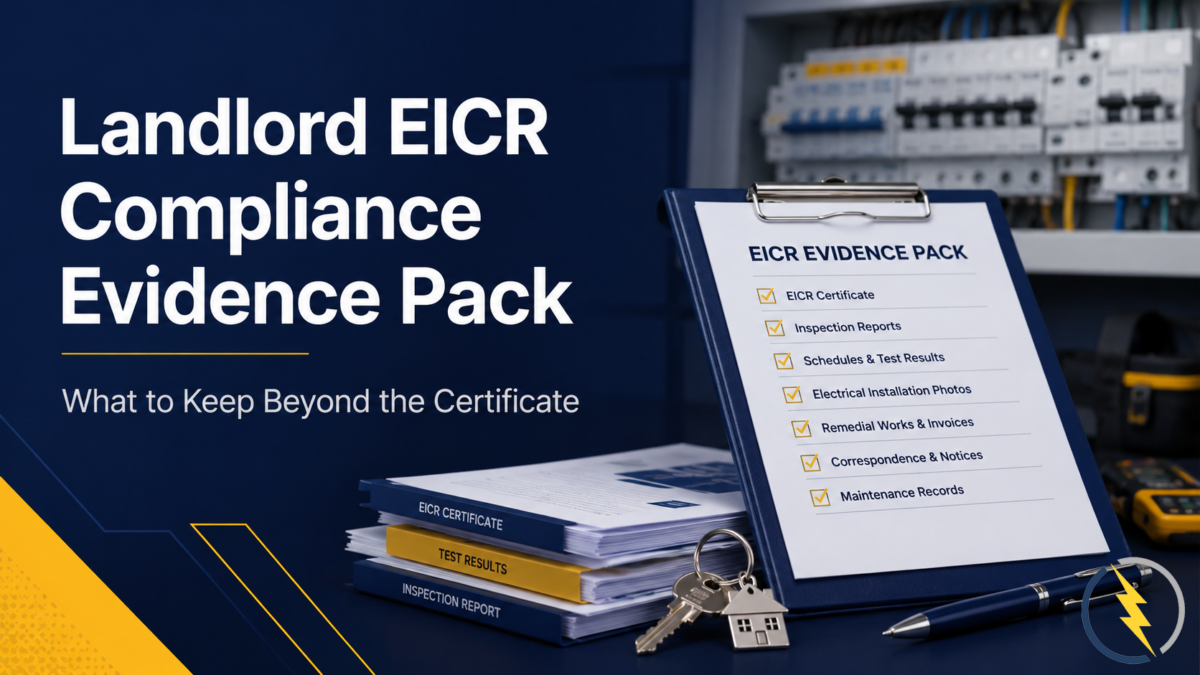
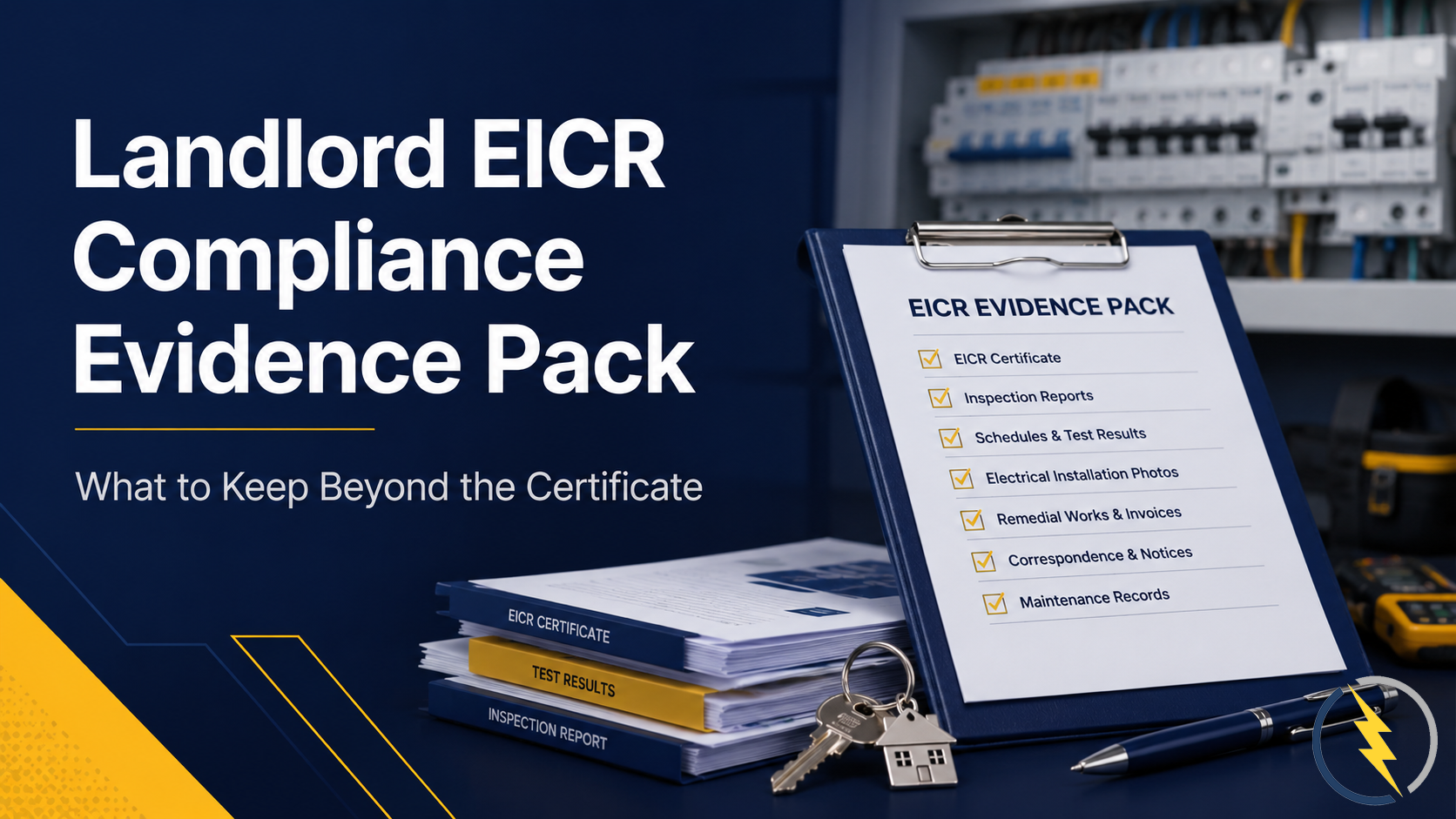
A proper file should include:
• Current EICR report
• Previous EICR report if available
• Remedial work quote
• Remedial completion invoice
• Written confirmation of completed work
• PAT testing report if applicable
• Smoke alarm check record
• Carbon monoxide alarm check record
• Tenant email confirming documents were supplied
• Agent email confirming documents were supplied
• Photos of relevant repairs if useful
• Electrical repair invoices
• Notes from tenant electrical complaints
• Date of next planned inspection
Use clear file names. For example:
2026-07-15-EICR-Flat-2-Example-Road-SW11-Satisfactory.pdf
For remedial work:
2026-07-22-EICR-Remedials-Flat-2-Example-Road-SW11-Completed.pdf
For PAT testing:
2026-07-22-PAT-Test-Flat-2-Example-Road-SW11.pdf
Good file naming saves time when a tenant, council, agent, solicitor, buyer, lender or insurer asks for proof.
When landlords should not wait for the EICR expiry date
A landlord should consider an earlier electrical safety inspection if:
• There has been a water leak
• There has been fire, smoke or overheating
• The tenant reports repeated tripping
• Sockets or switches are damaged
• The property has had electrical alterations
• A new kitchen or bathroom has been installed
• A new consumer unit has been fitted
• The property is changing from private let to HMO
• The property is becoming a short-let or serviced accommodation unit
• The current report is missing pages
• The certificate name or address is unclear
• The property has been empty for a long time
• The tenant may have carried out DIY electrical work
• A buyer, lender, insurer or agent requests updated evidence
The correct approach is risk-based. A valid EICR is important, but landlords should still respond to new information.
For landlords unsure how to interpret an existing report, our guide on how to read an EICR report explains the key sections, codes and observations.
Residential and commercial landlord compliance are not identical
Residential landlords usually focus on tenancy rules, EICR certificates, tenant documents, alarms and appliance safety. Commercial landlords and business occupiers often need a wider maintenance plan.
Commercial electrical compliance may include:
• Fixed wire testing
• Distribution board inspection
• Emergency lighting testing
• Fire alarm interface checks
• PAT testing
• Thermal imaging where suitable
• High-load equipment checks
• Commercial kitchen electrical safety
• Office power and desk cabling checks
• Insurance-related electrical records
• Tenant fit-out electrical documentation
A commercial property may have higher electrical demand, more frequent equipment use, more dutyholders and more insurer involvement. That means the compliance calendar should be tailored to the building.
For shops, offices, salons, restaurants, clinics, warehouses and commercial units, see our commercial EICR certificates in London service.
How London EICR Certificates helps landlords stay compliant
London EICR Certificates supports landlords, agents, homeowners and commercial property owners across London with practical electrical safety services.
We can help with:
• EICR certificates for rental properties
• EICR inspections before new tenancies
• EICR renewals before expiry
• Failed EICR review and explanation
• Remedial work quotations
• Remedial electrical repairs
• PAT testing for landlord-supplied appliances
• Commercial EICR certificates
• Portfolio inspection planning
• Electrical safety documentation support
• Fast booking across London areas
The objective is simple: help you keep the property safe, compliant and properly documented.
If you are managing one flat, we can book a straightforward inspection. If you manage multiple properties, we can help you plan renewals by postcode, access window and urgency. If your EICR has failed, we can explain the observations and provide a clear route toward a satisfactory outcome.
Final advice for London landlords
A London landlord electrical compliance calendar is one of the simplest ways to reduce risk. It prevents expired certificates, rushed bookings, missing documents, unresolved remedial work and tenancy delays.
The strongest landlords do not wait for problems. They plan EICR renewals early, store reports properly, track remedial evidence, check alarms, review appliances and keep agents informed.
If your EICR is due, expired, missing, unsatisfactory or needed before a new tenancy, arrange your inspection through London EICR Certificates. We provide EICR certificates, remedial work support, PAT testing and electrical compliance services across London.
London Landlord Electrical Compliance Calendar 2026 FAQs
Practical answers for London landlords, letting agents and property managers planning EICR renewals, electrical safety checks, remedial deadlines, alarm checks, PAT testing and rental compliance records throughout 2026.
What should be on a landlord electrical compliance calendar for 2026?
A 2026 landlord electrical compliance calendar should include every safety item that can affect a rental property, tenancy renewal, letting file or local authority request. The core electrical items are the EICR expiry date, the date of the last inspection, any remedial work deadline, smoke alarm checks, carbon monoxide alarm checks and appliance safety checks where landlord-supplied appliances are provided.
For London landlords managing several properties, the calendar should also include access arrangements, tenant changeover dates, HMO licence renewal dates, agent instructions and certificate storage. If an EICR is due, you can arrange a fixed wiring inspection through our EICR services in London.
How often do London landlords need an EICR in 2026?
For most rented homes in England, landlords need the electrical installation inspected and tested by a qualified person at least every five years. The report itself may also state a shorter recommended inspection interval, especially if the installation is older, heavily used or has limitations.
London landlords should not wait until the final week before expiry. A better approach is to review the certificate three months before it expires, book the inspection at least four to six weeks before the deadline and allow time for remedial work if the report is unsatisfactory. For landlord-specific guidance, see our EICR certificates for landlords in London page.
When should landlords book an EICR before the certificate expires?
The safest time to book is four to six weeks before the expiry date. This gives enough time to arrange tenant access, complete the inspection, receive the report and deal with any C1, C2 or FI observations before the property becomes a compliance risk.
For managed London flats, access can be delayed by tenants, concierge teams, estate agents, parking restrictions or building rules. Booking early gives the landlord a proper buffer instead of relying on emergency availability. If you already know the property is due, use our online EICR booking page.
What happens if an EICR fails during 2026?
If the EICR is marked unsatisfactory, the landlord should review the observations and arrange the required remedial work. The most important codes are C1, C2 and FI. These indicate danger present, potentially dangerous defects or further investigation required.
Common London rental EICR failures include missing RCD protection, damaged accessories, unsafe bathroom lighting, poor earthing, inadequate bonding, high Zs readings, exposed conductors and defective consumer unit arrangements. Our failed EICR remedial work page explains the next step after an unsatisfactory report.
Should landlords check smoke and carbon monoxide alarms in the 2026 calendar?
Yes. Smoke alarm and carbon monoxide alarm checks should be included in the landlord compliance calendar. A practical system is to check alarms at the start of each tenancy, during inspections, before renewal periods and whenever a tenant reports a fault.
For rental homes, landlords should keep evidence that required alarms were present and working at the start of the tenancy. If an alarm is reported as faulty, the issue should be dealt with promptly. Alarm checks sit alongside the EICR as part of a stronger electrical and fire safety record for the property.
Does the 2026 calendar need to include PAT testing?
PAT testing is not the same as an EICR. The EICR checks the fixed electrical installation, while PAT testing checks portable or movable electrical appliances supplied by the landlord, such as white goods, lamps, microwaves and extension leads.
For furnished flats, HMOs, serviced apartments and managed rental portfolios, PAT testing is a useful way to evidence that landlord-supplied appliances have been checked. It is especially sensible to schedule PAT testing around tenancy changes, annual management inspections or the same visit as the EICR where practical.
What electrical checks should landlords complete before a new tenancy starts?
Before a new tenancy starts, landlords should confirm that the EICR is valid, the electrical installation has no unresolved unsafe observations, smoke alarms are fitted and working, carbon monoxide alarms are fitted where required, and supplied appliances appear safe for use.
The landlord or agent should also make sure the tenant has the correct documents and that the property file contains the latest electrical safety report. If the property is being let for the first time or the certificate is close to expiry, book an EICR certificate in London before the tenancy begins.
Do HMOs and licensed properties need a stricter compliance calendar?
Yes. HMOs and licensed rental properties usually need tighter record keeping because there may be additional licence conditions, higher tenant turnover, more shared electrical use and closer scrutiny from the local authority.
For HMOs, the calendar should track EICR dates, emergency lighting checks where applicable, fire alarm checks, appliance checks, communal area issues, tenant reports and any local licence requirements. Where several tenants use the same kitchen, hallway, consumer unit or communal appliances, defects should be recorded and actioned quickly.
What documents should landlords keep for electrical compliance in 2026?
Landlords should keep a clean digital file for each property. This should include the latest EICR, previous EICRs, remedial invoices, confirmation that any C1, C2 or FI items were resolved, alarm check records, appliance test records where applicable, tenant access notes and copies sent to tenants or agents.
Good records are useful if a tenant, letting agent, insurer, buyer, lender or local authority asks for evidence. For cost planning and certificate renewal budgeting, read our EICR certificate cost guide.
Can London EICR Certificates help landlords manage 2026 inspection dates?
Yes. London EICR Certificates can help landlords, estate agents and property managers arrange EICR inspections, landlord electrical certificates, commercial EICR reports, remedial work and repeat compliance visits across London.
This is useful if you manage several flats, have certificates expiring in different months or need one point of contact for inspection, report, quote and remedial follow-up. You can start by booking online or by reviewing our main London EICR certificates service page.
2026 landlord compliance planning tip
Do not treat EICR renewal as a last-minute admin task. The safest system is to review every rental property quarterly, flag certificates expiring within 90 days and book inspections early enough to allow tenant access and remedial work.
- EICR expiry date tracking
- Remedial work deadline control
- Tenant and agent access planning
- Smoke and CO alarm checks
- Landlord property file records
Book an EICR inspection for your London rental property before the certificate expires. We help landlords, letting agents and property managers arrange electrical safety reports, remedial work and compliance records across London.
Please Submit Details Below



24/7 Emergency Service
Find answers to common questions about EICR certificates and electrical safety inspections in London. Visit our FAQ page on EICRcertificates.com for more information.