
Is No RCD a Fail on an EICR? Full Guide for Landlords and Homeowners
EICR Certificate
10 October 2025

🧠 Is No RCD a Fail on an EICR? Full 2025 Guide for Landlords and Homeowners
When your property’s Electrical Installation Condition Report (EICR) comes back with the note “No RCD protection,” it can raise serious concerns. But does that automatically mean your property has failed its inspection?
The answer is not always.
In this comprehensive guide, our team at London EICR Certificates explains what an RCD is, when it’s required, and how it affects your EICR results. Whether you’re a landlord, homeowner, or managing agent, understanding RCD compliance is key to keeping your London property safe and legally covered.
⚡ What Is an RCD and Why Does It Matter?
RCD stands for Residual Current Device a critical piece of electrical safety equipment that disconnects the circuit if it detects an imbalance in current, protecting people from electric shocks and preventing potential electrical fires.
Modern consumer units (fuse boxes) in London homes should include RCD protection for key circuits, especially those serving:
- Bathrooms and kitchens
- Outdoor sockets and garden electrics
- Sockets likely to supply outdoor equipment
- Portable electrical appliances
Without an RCD, even a small electrical fault can become dangerous. That’s why its presence is checked during every EICR inspection.
🧾 What Do the BS 7671 Wiring Regulations Say About RCDs?
The 18th Edition Wiring Regulations (BS 7671:2018 + A2:2022) set clear rules about where RCD protection must be installed.
Some older installations particularly pre-2008 may still be safe, even without RCDs, but they won’t meet current standards.
During an EICR, your electrician will inspect each circuit and apply observation codes depending on the risk level.
🧩 EICR Observation Codes Explained (C1, C2, C3, FI)
Every EICR report includes codes that show the level of safety concern:
| Code | Meaning | Action Required |
|---|---|---|
| C1 | Danger present | Immediate action required (FAIL) |
| C2 | Potentially dangerous | Urgent remedial work needed (FAIL) |
| C3 | Improvement recommended | Not a fail, but upgrade advised |
| FI | Further investigation required | More testing needed |
💡 So, is “No RCD” a fail?
Not necessarily.
- No RCD on socket circuits = usually a C3 (recommended upgrade)
- No RCD on bathroom or outdoor circuits = can be C2 (fail)
- No RCD and exposed earthing faults = could be C1 (dangerous)
It all depends on the specific risk and use of each circuit.
🏠 Common Scenarios in London Properties
🧱 1. Older Consumer Units
Many London flats and houses still have fuse-based consumer units with no RCD protection.
These often receive a C3, meaning the system is safe to use but not compliant with modern regulations.
🚿 2. Bathroom Circuits Without RCD
If lighting or socket circuits in a bathroom lack RCD protection, it’s a C2 automatic fail. Bathrooms are high-risk environments where the electric shock risk is highest.
🌳 3. Outdoor Sockets or Garden Lighting
Circuits supplying outdoor sockets, EV chargers, or garden lights must have RCDs. Missing one here = C2 fail under BS 7671.
⚙️ 4. Commercial Units
In Commercial EICR Certificates, absence of RCD protection can lead to stricter coding due to higher public risk or business interruption potential.
🔍 How Your EICR Engineer Determines RCD Failures
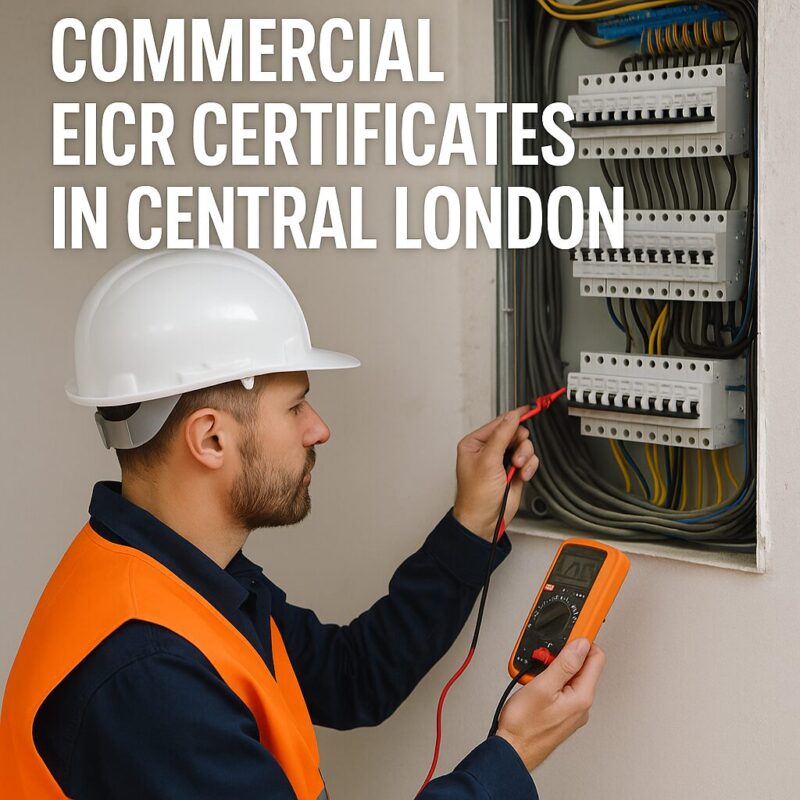
A certified electrician doesn’t just check for an RCD they test how it performs. During inspection, your engineer will:
- Check for the presence of RCD/RCBO protection.
- Perform a trip time test to confirm correct operation.
- Note if any essential circuits (bathroom, outdoor) lack RCD coverage.
- Assign the appropriate observation code (C1, C2, C3).
- Recommend remedial upgrades where needed.
You can book certified engineers directly through our EICR Services page.
💰 Cost of Upgrading an RCD or Consumer Unit in London
Upgrading your fuse box to a modern RCD-protected RCBO consumer unit usually costs between £300 – £550, depending on property size and accessibility.
For landlords managing multiple units, bulk EICR + remedial packages can reduce overall costs. Check our EICR Certificate Cost page for transparent pricing.
If your EICR failed due to missing RCDs, we can handle all EICR Remedial Work from RCD installation to consumer unit replacement.
🧰 What Happens After a Failed EICR (Due to No RCD)?
If your property’s EICR fails (C1 or C2), it must be rectified within 28 days under the Electrical Safety Standards in the Private Rented Sector (England) Regulations 2020.
Once remedial work is complete, we’ll issue an updated report confirming the property now meets safety standards.
Landlords can learn more about their obligations here:
🧠 Why Many London Properties Still Lack RCD Protection
Thousands of older homes and rental properties in London were built before RCDs became mandatory. Many landlords assume their systems are still compliant, but under current legislation, electrical safety inspections are now stricter than ever.
Modern RCD protection is not only about compliance, it’s about tenant safety and insurance validity.
🏢 RCDs in Commercial EICRs
In commercial or industrial properties, the absence of RCDs can pose greater risks.
These environments often involve:
- Heavy machinery or kitchen equipment
- Outdoor lighting systems
- Public access areas
A Commercial EICR Certificate ensures your business remains compliant, prevents downtime, and keeps insurance valid.
👉 Learn more on our Commercial EICR page.
⚙️ How to Upgrade to Modern RCD Protection
If your report shows “No RCD,” our engineers can:
- Install RCDs or RCBOs into your current consumer unit
- Replace old boards entirely
- Perform remedial work for failed EICRs
- Issue a new certificate upon completion
All work is carried out by NICEIC-approved electricians, ensuring your property is safe, certified, and compliant.
📊 Example EICR Scenario: London Flat Fails for No RCD
A recent inspection in Battersea showed:
- 2 socket circuits without RCDs
- Bathroom light circuit unprotected
- No RCD main switch
Result: C2 – Fail
Remedy: Installed new RCD-protected RCBO unit for £480, passed re-test same day.
Now compliant under 18th Edition Regulations.
👉 You can read more real-life examples in our Projects section.
🧭 How Often Should You Have an EICR Done?
According to regulations:
- Landlords: Every 5 years or at change of tenancy
- Homeowners: Every 10 years
- Commercial properties: Every 3–5 years, depending on usage
You can find more in-depth advice in our guide
💬 Final Thoughts
“No RCD” doesn’t always mean your EICR has failed — but it’s a clear sign your system needs improvement.
If your report shows missing RCD protection, act early. Upgrading not only ensures compliance but also protects lives and property.
At London EICR Certificates, we provide:
- Transparent pricing
- Fast 24–48 hour turnaround
- NICEIC-certified electricians
- Full remedial service and certification
Stay compliant. Stay safe.
Book your inspection today, it only takes 60 seconds.
RCD & EICR Compliance Frequently Asked Questions (2025 Guide)
❓1. Is no RCD always a fail on an EICR?
❓2. What is an RCD and why is it important?
❓3. How can I tell if my consumer unit has RCD protection?
❓4. What EICR code do you get for no RCD?
❓5. Can I rent out my property without RCD protection?
❓6. How much does it cost to add RCD protection in London?
❓7. What’s the difference between an RCD and an RCBO?
❓8. Can I fail an EICR for having an old fuse box?
❓9. Do commercial properties need RCD protection too?
❓10. How do I fix a failed EICR due to no RCD?
Please Submit Details Below



24/7 Emergency Service
Find answers to common questions about EICR certificates and electrical safety inspections in London. Visit our FAQ page on EICRcertificates.com for more information.