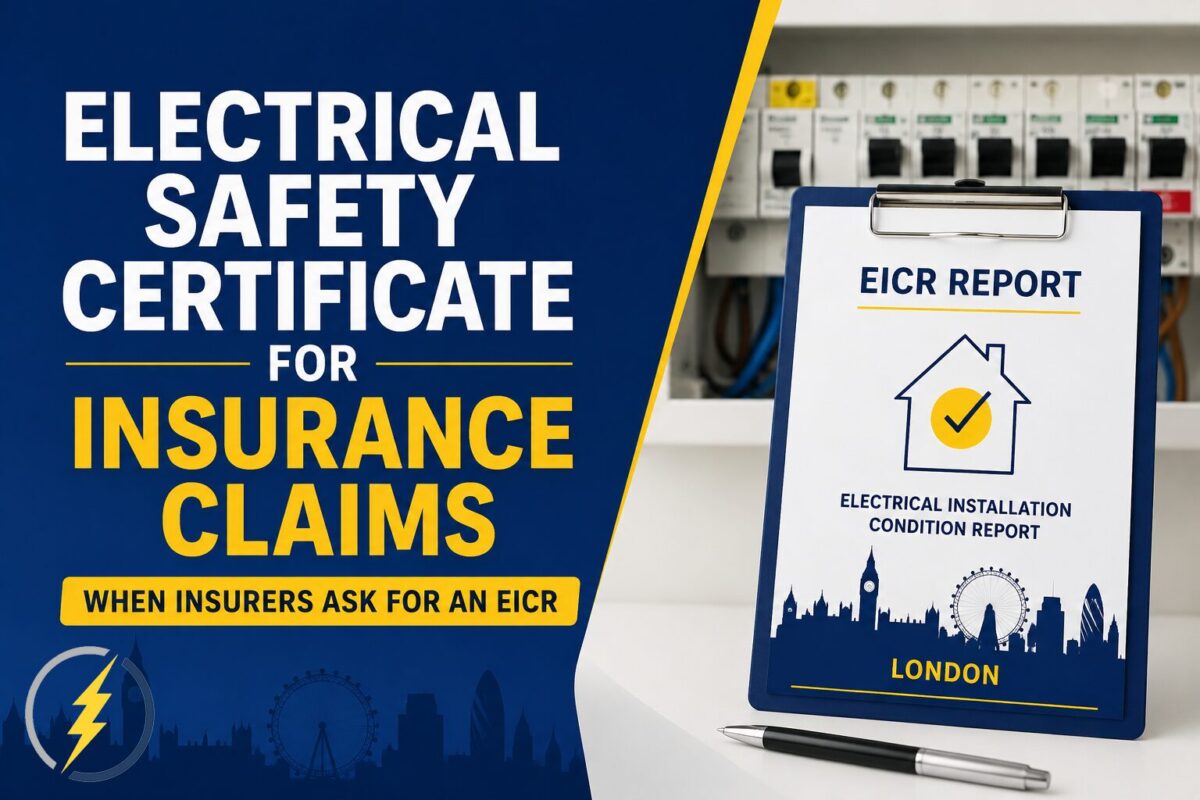

EICR for Solar Panels and Battery Storage in London Properties: What Owners and Landlords Need to Know

Are you a homeowner, landlord, or business owner in London? Ensuring the safety and compliance of your property’s electrical installations is crucial, and that’s where an Electrical Installation Condition Report (EICR) certificate comes in. But, how do you obtain one? Our step-by-step guide provides all the information you need to follow to get your EICR certificate. From finding a qualified electrician to scheduling the inspection and addressing any issues highlighted in the report, our guide covers everything you need to know. Don’t risk the safety of your property – read our guide and obtain your EICR certificate today!

Compliance and Regulations,EICR Certificates,EICR Faults & Failures,EICR Guide,Electrical Installation,Property Management,Tenant Safety

EICR for Solar Panels and Battery Storage in London Properties: What Owners and Landlords Need to Know

Home / Property Management / Archive by category "Tenant Safety"
EICR for Solar Panels and Battery Storage in London Properties.

Latest UK 2026 Guide

Solar panels and battery storage systems are becoming more common across London. Homeowners want lower energy bills. Landlords want more energy-efficient rental properties. Commercial property owners want to reduce running costs and future-proof their buildings. But once solar PV panels, inverters, batteries, and upgraded consumer units are added to a property, electrical safety becomes more important, not less.

This is where an Electrical Installation Condition Report, commonly known as an EICR, becomes essential.

An EICR is designed to assess the condition and safety of the fixed electrical installation in a property. It helps identify deterioration, unsafe wiring, poor earthing, overloaded circuits, lack of RCD protection, damaged accessories, unsuitable consumer units, and other risks that could affect people using the building.

But many London property owners ask the same question:

Does an EICR cover solar panels and battery storage?

The short answer is that an EICR can assess the fixed electrical installation connected to the property, including signs that solar PV or battery storage has affected the safety of the wider installation. However, an EICR is not the same as a specialist solar PV inspection or a full battery storage maintenance check. Where solar panels or batteries are installed, the electrician may identify issues that require further investigation by a competent solar PV or battery storage specialist.

For landlords, homeowners, and commercial property owners, this distinction matters. A property may have a valid EICR, but if the solar installation has been poorly connected, altered without proper certification, or added to an ageing electrical system, there may still be safety concerns that need attention.

If you own a London property with solar panels, battery storage, or both, this guide explains what an EICR can check, what it cannot replace, what common issues may appear, and when you should book an inspection.

For standard electrical safety inspections in London, you can also visit our main EICR services in London page.


What Is an EICR?

An Electrical Installation Condition Report is a formal inspection and test of a property’s fixed electrical installation. It is carried out by a competent electrician to assess whether the installation is safe for continued use.

An EICR typically checks items such as:

  • Consumer unit or fuse board condition

  • Earthing and bonding arrangements

  • RCD protection

  • Circuit protection

  • Socket outlets

  • Lighting circuits

  • Cable condition

  • Signs of overheating

  • Electrical accessories

  • Distribution boards

  • Fixed wiring

  • Defects or deterioration

  • Risk of electric shock or fire

  • Previous alterations or additions

For landlords in England, electrical safety inspections are a legal requirement at intervals of no more than five years for rented residential properties. The official government guidance confirms that landlords must ensure electrical installations are inspected and tested by a qualified and competent person at least every five years, and the 2025 update extends the framework to the social rented sector.

For landlords, the report is not just a technical document. It is evidence that the property’s electrical installation has been assessed for safety and compliance. You can learn more on our EICR certificates for landlords in London page.

For homeowners, an EICR is not usually a legal requirement unless the property is being rented, but it is still a sensible inspection when buying, selling, renovating, installing solar panels, upgrading a consumer unit, or adding battery storage. Visit our EICR certificates for homeowners in London page for more details.


Why Solar Panels and Battery Storage Change the Electrical Safety Picture

A normal domestic electrical installation is already complex. Once solar panels and battery storage are added, the electrical setup becomes more advanced.

A property with solar PV may include:

  • Solar panels on the roof

  • DC cabling from panels

  • An inverter

  • AC connection to the property installation

  • Generation meter

  • Isolators

  • Additional protective devices

  • Labelling

  • Connection to the consumer unit or distribution board

A property with battery storage may also include:

  • Battery unit

  • Battery management system

  • Inverter or hybrid inverter

  • Additional isolators

  • Dedicated circuits

  • Fire safety considerations

  • Ventilation requirements

  • Manufacturer-specific installation rules

  • Monitoring equipment

The IET’s Code of Practice for Grid-connected Solar Photovoltaic Systems covers design, specification, installation, commissioning, operation, and maintenance of grid-connected solar PV systems. This shows that solar PV is not just a simple appliance added to a home. It is a technical electrical system that needs competent design and ongoing safe operation.

Battery storage also introduces additional safety considerations. BSI’s PAS 63100:2024 focuses on protection against fire for battery energy storage systems in dwellings, reflecting the increased importance of correct installation, location, and safety control for domestic battery systems.

This is why an EICR is particularly useful in properties where solar or battery systems have been added. It can help assess whether the existing fixed installation remains safe and whether there are visible concerns that require further investigation.


Does an EICR Fully Inspect Solar Panels?

An EICR is mainly focused on the fixed electrical installation of the property. It does not automatically replace a specialist solar PV inspection.

This means a standard EICR may review relevant connected parts of the electrical installation, such as:

  • Consumer unit connection

  • Circuit protection

  • RCD protection

  • Earthing and bonding

  • Labelling

  • Signs of unsafe additions

  • Visible damage

  • Inverter connection points

  • AC-side electrical safety

  • Distribution board condition

  • Overheating or poor workmanship around the fixed installation

However, a normal EICR may not include detailed specialist testing of the solar PV system itself unless specifically agreed and carried out by someone competent in solar PV inspection.

A specialist solar PV inspection may involve further checks such as:

  • DC string testing

  • Solar panel performance checks

  • PV isolator inspection

  • Inverter testing

  • Roof mounting inspection

  • DC cable routing

  • Generation output review

  • Manufacturer-specific checks

  • Solar PV documentation review

  • MCS certificate review where applicable

Electrical Safety First describes solar panels as photovoltaic systems that convert sunlight into electricity and advises using registered electricians for electrical safety matters. Solar technology is beneficial, but it remains an electrical installation that needs proper safety consideration.

So, the practical answer is this: An EICR can identify electrical safety concerns connected to the property installation where solar PV is present, but it should not be treated as a full specialist solar PV service unless that scope is specifically included.

For a London landlord, this means the EICR remains important, but if the report identifies an issue linked to the solar installation, further investigation may be required.


Does an EICR Cover Battery Storage?

Battery storage systems are becoming more popular in London homes and commercial premises. They allow energy generated by solar panels to be stored and used later. In some cases, batteries are installed even without solar panels, usually to take advantage of off-peak electricity tariffs.

An EICR can assess parts of the fixed electrical installation connected to the battery system, including:

  • Consumer unit or distribution board connection

  • Protective devices

  • Circuit loading

  • Earthing arrangements

  • Cable condition

  • Isolation arrangements

  • Labelling

  • Signs of overheating

  • Visible damage

  • Poor workmanship

  • Suitability of existing circuits

However, an EICR is not a full manufacturer-specific battery storage inspection. A proper battery system check may require specialist knowledge of:

  • Battery chemistry

  • Manufacturer instructions

  • Ventilation requirements

  • Location restrictions

  • Fire safety guidance

  • Battery management systems

  • Inverter compatibility

  • Firmware or monitoring systems

  • Shutdown procedures

  • Maintenance requirements

For larger commercial battery systems, the Health and Safety Executive explains that battery energy storage systems carry responsibilities across their life cycle, including designers, installers, and operators. While HSE’s page focuses on grid-scale systems, the principle is relevant: battery storage is a technical system with safety duties at multiple stages.

For domestic systems, PAS 63100:2024 is particularly relevant because it addresses fire protection for battery energy storage systems used in dwellings.

The key point is simple: An EICR can help identify whether the wider electrical installation is safe where battery storage is connected, but a battery system may also need specialist assessment depending on its design, condition, and documentation.


Why London Properties with Solar Panels Need Extra Attention

London has a wide mix of property types. Solar panels and battery storage can appear on:

  • Terraced houses

  • Semi-detached houses

  • Detached homes

  • Converted flats

  • Purpose-built flats

  • HMOs

  • Shops with flats above

  • Office buildings

  • Warehouses

  • Schools

  • Community buildings

  • Commercial units

  • Blocks of flats

  • Mixed-use buildings

Many London properties are older and may already have electrical issues before solar or battery systems are added. Common background problems include:

  • Older fuse boards

  • No RCD protection on some circuits

  • Poor earthing or bonding

  • Previous DIY electrical work

  • Outdated cables

  • Overloaded circuits

  • Poor labelling

  • Old accessories

  • Mixed consumer unit brands

  • Limited spare capacity

  • Circuits altered by previous contractors

When solar panels or battery storage are installed into a property with existing electrical weaknesses, the risk profile changes.

For example, a property may have solar panels installed correctly, but the existing consumer unit may be old, poorly labelled, or lacking modern protection. Another property may have a battery installed, but the original installation may not have been designed with that additional equipment in mind.

This is why an EICR is useful. It does not just look at one product. It assesses the condition of the wider electrical installation.

If your London property has solar panels or battery storage and has not had an EICR recently, booking one is a sensible step. You can use our book your EICR online page to arrange an inspection.


Common EICR Issues Found in Properties with Solar Panels

Properties with solar panels can still fail an EICR for reasons that may not directly relate to the panels themselves. The solar installation may simply reveal or sit alongside existing defects. Common EICR issues may include:

1. Poor Consumer Unit Condition A consumer unit is a major part of the fixed electrical installation. If it is damaged, outdated, poorly enclosed, overloaded, or poorly labelled, it may be recorded on the EICR. Solar PV systems are often connected through the consumer unit or distribution board. If the board is unsuitable, this may create concern.

2. Lack of RCD Protection RCD protection is one of the most common issues found during EICR inspections. If circuits do not have adequate RCD protection, the report may record this depending on the situation, installation type, and risk. Solar PV or battery systems connected to an installation with poor RCD protection can raise additional safety questions.

3. Poor Labelling Solar PV systems should have clear isolation and warning labels. If the property has poor labelling, missing circuit identification, or unclear distribution board schedules, the installation can become harder to inspect, isolate, or maintain safely. This is particularly important in emergencies, where someone may need to understand quickly that solar generation or battery storage is present.

4. Signs of Overheating Overheating around consumer units, isolators, terminals, or protective devices is a serious concern. If an electrician finds heat damage, burning, discolouration, or signs of loose connections, the issue may require urgent attention.

5. Incorrect or Unsafe Alterations Some properties have had solar panels added after the original installation without proper documentation. If the electrician sees evidence of poor workmanship, unsuitable connections, or unsafe alterations, the EICR may recommend further investigation.

6. Earthing and Bonding Problems Main protective bonding and earthing arrangements are critical. If the property has poor earthing or missing bonding, this can affect electrical safety generally. Where solar or battery systems are present, correct earthing becomes even more important.

7. Inadequate Isolation Solar PV and battery systems should have appropriate isolation arrangements. If isolation is unclear, inaccessible, damaged, or poorly labelled, further checks may be needed.

8. Old Wiring Combined with Modern Additions A common London issue is modern technology connected to old infrastructure. A property may have solar panels, smart controls, and battery storage, but still rely on ageing circuits, old accessories, or an outdated consumer unit. An EICR helps identify whether the older installation remains suitable for continued use.


Common EICR Issues Found in Properties with Battery Storage

Battery storage systems can create additional inspection considerations. Common concerns include:

1. Poor Location of Battery Unit Battery systems should be installed according to manufacturer instructions and relevant safety guidance. If a battery is located in an unsuitable area, this may require further specialist assessment.

2. Lack of Clear Isolation The electrician needs to understand how the battery system connects to the property. If there are no clear isolators or labels, this can create risk during inspection, maintenance, or emergency work.

3. Consumer Unit Capacity Concerns Some installations may have battery systems connected to boards that were not designed with enough future capacity. This does not automatically mean the installation is unsafe, but it can require closer review.

4. Inverter and Battery Wiring Concerns Poorly routed cables, exposed wiring, unsuitable containment, or visible damage can all raise concerns during an EICR.

5. Incomplete Documentation Battery systems should come with installation documentation, commissioning paperwork, and manufacturer guidance. If a landlord or homeowner cannot provide documents, the electrician may be more cautious and recommend further investigation.

6. Signs of Heat or Ventilation Problems Battery and inverter equipment can generate heat. Poor ventilation, blocked equipment, heat staining, or installation in unsuitable spaces may require attention.

7. Poor Workmanship from Previous Installers Not all installations are equal. An EICR can reveal signs that work may have been completed without enough care, especially around cable entries, isolation, consumer unit connections, and labelling.


Landlords: Do You Need an EICR if the Rental Property Has Solar Panels?

Yes. If you rent out a residential property in England, the legal duty to have the electrical installation inspected and tested still applies. Solar panels do not remove that requirement.

Government guidance confirms that landlords must have electrical installations inspected and tested by a qualified and competent person at least every five years.

If your rental property has solar panels, the EICR becomes even more important because the electrical installation may be more complex.

A landlord should keep:

  • Current EICR certificate

  • Previous EICR reports

  • Remedial work certificates

  • Solar PV installation documents

  • Battery storage installation documents

  • Inverter documentation

  • MCS certificate if applicable

  • Electrical Installation Certificate for any new electrical work

  • Maintenance records

  • Tenant access records

  • Evidence that remedial work was completed

For landlords, the risk is not just technical. It is also legal and operational. If a tenant reports an electrical issue, if the property changes hands, if a managing agent requests documentation, or if a local authority asks for evidence, you need proper paperwork.

If your rental property has solar panels and you are unsure whether your EICR is current, start with our landlord EICR certificate service.


Homeowners: Should You Book an EICR Before or After Installing Solar Panels?

For homeowners, it is often sensible to book an EICR before installing solar panels, especially if the property is older or has not been inspected for many years.

A pre-installation EICR can help identify:

  • Whether the existing consumer unit is suitable

  • Whether earthing and bonding are adequate

  • Whether circuits are in good condition

  • Whether there are signs of deterioration

  • Whether the installation has existing defects

  • Whether remedial work should be completed before solar installation

This can prevent problems later. For example, if solar panels are installed on a property with poor earthing, old wiring, or a damaged consumer unit, the homeowner may end up needing additional work after the solar installation has already been completed. That can become more expensive and more disruptive.

An EICR after solar installation can also be useful, especially if:

  • You bought a property with solar panels already installed

  • You do not have the original documentation

  • The installation looks old

  • The inverter has been changed

  • A battery has been added

  • You are selling the property

  • You are renting the property

  • You have had electrical faults

  • You are unsure whether previous work was certified

If you are a homeowner in London, see our homeowner EICR certificate page.


Buying a London Property with Solar Panels? Why an EICR Is Worth Booking

Buying a property with solar panels can be attractive. The property may have lower energy bills, improved energy performance, and a more modern electrical setup. But buyers should not assume that solar panels automatically mean the electrical installation is safe.

Before buying, ask for:

  • Current EICR

  • Solar installation certificate

  • MCS certificate if available

  • Inverter documentation

  • Battery storage documentation if fitted

  • Warranty details

  • Maintenance records

  • Evidence of any electrical upgrades

  • Consumer unit certificate

  • Remedial work certificates

If the seller cannot provide a recent EICR, booking one before completion can be a sensible decision.

An EICR may reveal:

  • Old wiring hidden behind a modern solar installation

  • Poor earthing

  • Damaged consumer unit

  • Missing RCD protection

  • Unsafe accessories

  • Evidence of DIY electrical work

  • Poor labelling

  • Further investigation required

This gives the buyer better information before making a financial commitment. A solar PV system may be valuable, but if the wider electrical installation needs significant remedial work, that should be factored into the purchase decision.


Commercial Properties with Solar Panels and Battery Storage

Commercial properties are often more complex than homes. A commercial building may have:

  • Three-phase supply

  • Multiple distribution boards

  • Sub-mains

  • Emergency lighting

  • Plant rooms

  • Air conditioning systems

  • Office equipment

  • Commercial kitchens

  • Machinery

  • EV chargers

  • Solar PV

  • Battery storage

  • Fire alarm systems

  • Data cabinets

  • Tenant areas

  • Landlord common areas

When solar panels or battery storage are added, the electrical installation may become more demanding to inspect and manage.

Commercial EICR inspections are especially important for:

  • Offices

  • Shops

  • Warehouses

  • Restaurants

  • Cafés

  • Schools

  • Clinics

  • Industrial units

  • Mixed-use buildings

  • Serviced offices

  • Blocks with communal electrical systems

A commercial EICR can help identify safety issues that may affect staff, tenants, customers, insurers, and building managers.

If your commercial property has solar panels, the report may help identify whether the electrical installation is safe for continued use and whether any further investigation is needed around the solar or battery system.

For business premises, visit our commercial EICR certificates in London page.


Case Study Example 1: London Landlord with Solar Panels and an Old Consumer Unit

A landlord owns a two-bedroom rental flat in North London. The property has solar panels installed several years ago. The landlord assumes everything is fine because the panels are working and the tenant has not complained.

During an EICR, the electrician finds:

  • An older consumer unit

  • Poor circuit labelling

  • No RCD protection on some circuits

  • No clear documentation for previous electrical alterations

  • Solar-related labelling that is unclear

  • Evidence of old wiring in parts of the property

The solar panels themselves may still be operational, but the wider fixed installation has issues. The report is marked unsatisfactory and remedial work is required.

In this situation, the landlord should not focus only on the panels. The real problem is the condition of the property’s electrical installation. The landlord needs to complete remedial work, obtain evidence, and keep records for compliance.

Relevant service: remedial work for failed EICR certificates.


Case Study Example 2: Homeowner Buying a House with Battery Storage

A homeowner is buying a house in West London. The property has solar panels and a battery storage unit installed in the garage. The estate agent says the system helps reduce electricity bills. The buyer asks for documents, but the seller only provides partial paperwork. There is no recent EICR.

The buyer books an EICR before exchange. The inspection finds:

  • Consumer unit generally in acceptable condition

  • Some missing circuit identification

  • Battery installation connected neatly but documentation incomplete

  • Further investigation recommended for battery manufacturer requirements

  • Minor remedial work needed for labelling and circuit schedule

This does not necessarily stop the purchase, but it gives the buyer useful information. The buyer can request missing documents, ask for clarification, and budget for any follow-up inspection.

This is a good example of how an EICR can reduce uncertainty before buying a property with modern electrical upgrades.


Case Study Example 3: Commercial Building with Rooftop Solar and Multiple Tenants

A commercial landlord manages a mixed-use building in Central London. There are shops on the ground floor and offices above. Rooftop solar panels were installed to reduce energy costs for communal services.

The building has:

  • Multiple distribution boards

  • Landlord supply

  • Tenant supplies

  • Rooftop solar PV

  • Emergency lighting

  • Communal circuits

  • Mechanical plant

During a commercial EICR, the electrician identifies:

  • Incomplete labelling on distribution boards

  • Older protective devices in one area

  • Evidence of previous alterations

  • Need for better documentation around solar PV connection

  • Several circuits requiring further investigation

In this case, the commercial landlord needs a proper compliance plan. The solar system is only one part of the building’s wider electrical risk profile. For commercial properties with solar panels or battery storage, a planned inspection schedule is better than waiting for a tenant complaint, insurance query, or electrical fault.


What Documents Should You Keep for Solar Panels and Battery Storage?

If your London property has solar panels or battery storage, keep all documents in one place. This is important for landlords, homeowners, buyers, estate agents, and managing agents.

Useful documents include:

  • Current EICR

  • Previous EICR reports

  • Remedial work certificates

  • Solar PV installation certificate

  • MCS certificate where applicable

  • Inverter manual

  • Battery storage manual

  • Manufacturer warranty

  • Commissioning documents

  • Electrical Installation Certificate

  • Building control notification where relevant

  • Maintenance records

  • Photos of equipment location

  • Isolation instructions

  • Emergency shutdown guidance

  • Records of any faults or repairs

If you do not have these documents, an EICR is a good starting point, but you may still need further investigation for the solar PV or battery storage system.


What If Your EICR Is Unsatisfactory?

If your EICR is marked unsatisfactory, the report will usually contain observation codes.

Common codes include:

  • C1: Danger present, immediate action required

  • C2: Potentially dangerous, urgent remedial action required

  • C3: Improvement recommended

  • FI: Further investigation required without delay

A report with C1, C2, or FI observations will usually be unsatisfactory. C3 items alone do not normally make the report unsatisfactory, but they should still be considered.

In a property with solar panels or battery storage, an FI code may be used where the electrician cannot confirm safety without additional investigation. This can happen where documentation is missing, alterations are unclear, or specialist equipment needs further assessment.

If your report fails, you should arrange remedial work promptly. For landlords, timing matters because legal duties apply and evidence may need to be provided.

For help after a failed report, visit our EICR remedial work service.


How Much Does an EICR Cost for a Property with Solar Panels?

The cost of an EICR depends on the property type, size, number of circuits, access, location, and complexity of the installation.

A property with solar panels or battery storage may take longer to inspect if:

  • The installation has multiple distribution boards

  • There are unclear labels

  • Documentation is missing

  • There are more circuits than usual

  • Battery storage is connected

  • The property is commercial

  • There are tenant areas and landlord areas

  • The electrician needs to assess visible connections and recommend further investigation

A standard EICR does not necessarily include a full specialist solar PV inspection or battery storage service. If you need that, it should be clarified separately before booking.

For general EICR prices, see our EICR certificate cost page.


When Should You Book an EICR for a Property with Solar Panels or Battery Storage?

You should consider booking an EICR if:

  • You are a landlord and your certificate is due

  • You are buying a property with solar panels

  • You are selling a property and want to reassure buyers

  • You installed solar panels but have not checked the wider installation

  • You added battery storage

  • You upgraded your consumer unit

  • You had remedial work completed

  • You do not have electrical documentation

  • You notice burning smells, tripping circuits, or overheating

  • Your inverter or battery equipment shows faults

  • You are converting the property into a rental

  • You manage a commercial property

  • Your insurer asks for electrical evidence

  • Your managing agent requests a certificate

In London, properties are often altered many times over decades. An EICR helps create a clear safety snapshot of the installation as it exists now.


Internal Electrical Safety Checklist for Solar and Battery Properties

Before booking, check whether you have the following:

  • Access to the consumer unit

  • Access to any distribution boards

  • Access to inverter location

  • Access to battery storage location

  • Solar PV documents

  • Battery documents

  • Previous EICR

  • Details of recent electrical work

  • Tenant access arranged

  • Parking or access instructions

  • Contact person available

  • Keys or concierge details

  • Photos of any known faults

This helps the electrician complete the inspection efficiently and reduces delays.

If you need a fast booking, use our online EICR booking page.


FAQs About EICR, Solar Panels, and Battery Storage

Do solar panels need an EICR? Solar panels themselves do not replace the need for an EICR. If the property is rented, the fixed electrical installation still needs inspection and testing at required intervals. The EICR may identify issues with the wider installation where solar panels are connected.

Does an EICR inspect the solar panels on the roof? A standard EICR does not usually include a full specialist inspection of the solar panels, roof mounting, DC strings, or inverter performance unless this is specifically agreed. It mainly assesses the fixed electrical installation and may recommend further investigation if solar-related issues are found.

Can a property fail an EICR because of solar panels? Yes, if the solar installation has created unsafe conditions, poor connections, inadequate labelling, unsuitable protection, overheating, or other electrical risks. The property may also fail for unrelated issues such as poor earthing, missing RCD protection, or damaged wiring.

Do landlords need a new EICR after installing solar panels? Not always automatically, but it is sensible to review the electrical safety position after significant electrical changes. If solar panels or battery storage have been added, landlords should keep all installation documents and consider whether the existing EICR still accurately reflects the property’s installation.

Is battery storage checked during an EICR? The EICR can assess visible fixed electrical connections and the wider installation where battery storage is connected. It does not usually replace a specialist manufacturer-specific battery inspection.

Should I get an EICR before installing solar panels? Yes, it can be a smart decision, especially for older London properties. A pre-installation EICR can identify existing electrical defects before new solar equipment is added.

What if I bought a house with solar panels but no paperwork? Book an EICR and try to recover any missing solar PV documentation from the seller, installer, or previous owner. If documentation is missing, further solar PV inspection may also be needed.

Is an EICR enough for commercial solar installations? An EICR is important for commercial electrical safety, but larger or more complex solar PV systems may require specialist solar PV inspection and maintenance in addition to the standard commercial EICR.


Final Advice for London Property Owners

Solar panels and battery storage can make a London property more efficient, more attractive, and more future-ready. But they also make the electrical installation more complex.

An EICR gives landlords, homeowners, buyers, and commercial owners a clear view of the fixed electrical installation’s condition. It can identify serious defects, recommend remedial work, flag further investigation, and support compliance.

The key point is this: An EICR is not a full replacement for a specialist solar PV or battery storage inspection, but it is one of the most important electrical safety checks for any property where these systems are installed.

If you own, rent, manage, buy, or sell a London property with solar panels or battery storage, booking an EICR is a practical way to reduce risk and protect the people using the building.

Book your inspection here: Book your EICR online

Or visit: London EICR Certificates

❓FAQs About EICR, Solar Panels and Battery Storage in London

1. Do I need an EICR if my London property has solar panels?

Yes, especially if the property is rented, being sold, being purchased, or has not had an electrical inspection for several years. Solar panels do not replace the need for an EICR. The EICR checks the fixed electrical installation inside the property, including the consumer unit, earthing, bonding, RCD protection and visible electrical safety issues.

2. Does an EICR fully inspect solar panels?

No. A standard EICR does not usually include a full specialist solar PV inspection. It may check visible connections, consumer unit safety, labelling, isolation points and signs that the solar installation has affected the fixed wiring. However, detailed solar panel testing, DC string testing, inverter performance and roof-mounted panel checks may need a specialist solar PV inspection.

3. Can solar panels cause an EICR to fail?

Yes, if the solar installation has been connected unsafely or has created electrical safety concerns. Common issues include poor labelling, inadequate isolation, unsuitable consumer unit connection, signs of overheating, missing documentation, poor workmanship or further investigation being required. A property can also fail for unrelated electrical defects such as poor earthing, old wiring or missing RCD protection.

4. Is battery storage checked during an EICR?

An EICR can check the visible fixed electrical installation connected to the battery storage system, including protective devices, consumer unit connection, cable condition, isolation, labelling and signs of overheating. However, it does not normally replace a full manufacturer-specific battery storage inspection or maintenance check.

5. Should landlords get a new EICR after installing solar panels or battery storage?

It is strongly recommended after significant electrical additions or alterations. Landlords should make sure the existing EICR still reflects the current electrical installation. If solar panels, battery storage, a new consumer unit or major electrical changes have been added, a fresh inspection can help confirm the property remains safe and compliant.

6. What documents should I keep if my property has solar panels?

You should keep the current EICR, previous EICR reports, solar PV installation certificate, MCS certificate if available, inverter documents, battery storage documents, Electrical Installation Certificate for any new electrical work, remedial work certificates, maintenance records and warranty information. These documents are useful for landlords, buyers, estate agents, insurers and managing agents.

7. Should I book an EICR before installing solar panels?

Yes, this is a sensible step, especially for older London properties. A pre-installation EICR can identify problems with the consumer unit, earthing, bonding, wiring condition, RCD protection or overloaded circuits before new solar equipment is added. This can help avoid extra costs and safety issues later.

8. Do homeowners need an EICR for solar panels?

Homeowners are not usually legally required to have an EICR unless the property is rented out, but it is still a smart safety check. An EICR is useful if you are buying a home with solar panels, selling a property, installing battery storage, upgrading the consumer unit or if you do not have proper electrical paperwork.

9. Is an EICR enough for a commercial property with solar panels?

An EICR is important, but it may not be enough on its own for larger commercial solar installations. Commercial buildings with rooftop solar, battery storage, three-phase supplies, multiple distribution boards or tenant areas may also need specialist solar PV maintenance, battery checks and a more detailed commercial electrical safety plan.

10. How much does an EICR cost for a property with solar panels or battery storage?

The cost depends on the property size, number of circuits, access, type of property and complexity of the installation. A property with solar panels or battery storage may take longer to inspect if there are multiple distribution boards, unclear labelling, missing documents or commercial areas. The best approach is to check the EICR certificate cost page or request a quote before booking.

Please Submit Details Below

For your convenience, you can also fill out our online contact form below. Please provide as much detail as possible, and a member of our team will get back to you promptly.
Select Certificate Type:
Tags :
EICR Certificates,EICR Inspection
Share This :

24/7 Emergency Service

Find answers to common questions about EICR certificates and electrical safety inspections in London. Visit our FAQ page on EICRcertificates.com for more information.

0203 811 8331

Fake EICR Certificate London and How to Check if Your Electrical Safety Report Is Genuine

Are you a homeowner, landlord, or business owner in London? Ensuring the safety and compliance of your property’s electrical installations is crucial, and that’s where an Electrical Installation Condition Report (EICR) certificate comes in. But, how do you obtain one? Our step-by-step guide provides all the information you need to follow to get your EICR certificate. From finding a qualified electrician to scheduling the inspection and addressing any issues highlighted in the report, our guide covers everything you need to know. Don’t risk the safety of your property – read our guide and obtain your EICR certificate today!

Compliance and Regulations,EICR Certificates,EICR Faults & Failures,EICR Guide,Electrical Installation,Property Management,Tenant Safety

Fake EICR Certificate London and How to Check if Your Electrical Safety Report Is Genuine

Home / Property Management / Archive by category "Tenant Safety"
Fake EICR certificate London guide showing how to check if an electrical installation condition report is genuine.

Latest 2026 Guide

An EICR certificate is not just another property document. For London landlords, homeowners, estate agents and commercial property owners, it can affect legal compliance, tenant safety, insurance, property sales, rental agreements and remedial work decisions.

The problem is that not every EICR certificate is genuine, complete or reliable.

Some reports are issued too quickly. Some are missing proper test results. Some contain vague observations that do not match the test schedule. Some are created by people who are not properly qualified to inspect and test fixed electrical installations. In the worst cases, a landlord or property owner may be handed a fake EICR certificate and only discover the problem later when a tenant, letting agent, buyer, insurer or local authority asks questions.

This guide explains how to check if an EICR certificate is genuine, what details should appear on a proper Electrical Installation Condition Report, what warning signs to look for, and what to do if you suspect your report may be invalid.

If you need a professional EICR inspection in London, you can book directly through London EICR Certificates or visit our EICR Services page to see how we help landlords, homeowners and businesses stay compliant.


What Is an EICR Certificate?

An EICR stands for Electrical Installation Condition Report. It is a formal inspection and testing report that assesses the condition and safety of the fixed electrical installation inside a property.

This normally includes:

Consumer unit or fuse box
Fixed wiring
Sockets
Lighting circuits
Protective bonding
Earthing arrangements
RCD protection
Circuit identification
Inspection observations
Electrical test results
Classification codes such as C1, C2, C3 and FI
A final outcome stating whether the installation is satisfactory or unsatisfactory

For rented homes in England, landlords must ensure electrical installations are inspected and tested by a qualified person at least every five years. The landlord must obtain a report and provide copies to tenants and the local council if requested. GOV.UK guidance confirms that the report is usually an EICR and must include the results of the inspection and testing.

This is why a fake or poorly produced EICR certificate is a serious issue. It may look like paperwork, but legally and practically it is evidence that the electrical installation has been assessed by a competent person.


Why Fake EICR Certificates Are a Serious Problem in London

London has a huge rental market, a fast-moving property market and many older properties with complex electrical systems. Flats, HMOs, converted houses, commercial units, shops, restaurants, offices and mixed-use buildings often have old consumer units, added circuits, unclear labelling and previous electrical alterations.

Because EICR certificates are often needed quickly, some property owners look for the cheapest or fastest option. That creates a market where poor-quality reports, copy-and-paste reports and potentially fake certificates can appear.

A fake EICR certificate can cause major problems.

A landlord may believe the property is compliant when it is not.
A tenant may be living with hidden electrical hazards.
A letting agent may accept a document that later fails due diligence.
A buyer may rely on a report that does not reflect the true condition of the installation.
A commercial tenant may occupy premises with unsafe circuits.
An insurer may challenge a claim if the report is not credible.
A local authority may ask for the report and question its validity.

If an EICR report shows C1, C2 or FI observations, remedial or further investigative work is required. GOV.UK guidance confirms that C1 and C2 observations mean remedial work is required, and FI means further investigation is required. C3 is improvement recommended and does not normally make the report unsatisfactory on its own.

If the original report is fake or unreliable, the landlord may not know whether the property is safe, whether remedial work is genuinely needed, or whether serious faults have been missed.


Is an EICR a “Certificate” or a “Report”?

Many people search for “EICR certificate”, “electrical safety certificate” or “landlord electrical certificate”, but technically an EICR is a report, not a certificate in the same way as an Electrical Installation Certificate.

However, in everyday language, most landlords and agents call it an EICR certificate because it is the document used to prove an inspection has been completed.

The important point is this:

A genuine EICR should not just be a one-page certificate saying “pass” or “fail”.

A proper EICR should include enough detail to show what was inspected, what was tested, what limitations applied, which circuits were tested, what results were recorded and why the final outcome was satisfactory or unsatisfactory.

If you are unsure how to read the structure of your report, see our detailed guide: How to Read and Understand an EICR Report for Your London Property.


How to Check if an EICR Certificate Is Genuine

There is no single visual trick that proves an EICR is genuine. A fake report can still look professional, and a genuine report can still be poorly presented. The best approach is to check the report in layers.

Start with the basics, then review the technical details.


1. Check the Engineer’s Full Name

A genuine EICR should identify who carried out the inspection and testing.

Look for:

Inspector’s full name
Signature or digital signature
Company name
Registration or membership details if applicable
Date of inspection
Contact details

If the report only shows a company name with no engineer details, that does not automatically prove it is fake, but it is a warning sign. You should be able to ask who attended the property and who signed off the report.

For landlords and agents, this matters because the person conducting the inspection should be competent to inspect and test electrical installations.

A proper company should be able to confirm:

The engineer’s name
Their role
Whether they are employed directly or subcontracted
Their qualifications or registration details
The certification body or competent person scheme, if relevant

At London EICR Certificates, we understand that property owners, landlords and agents often need clear engineer details for compliance records. If you require this information for a booking, you can request it when arranging your inspection through our Book Online page.


2. Check the Company Details

A genuine EICR should usually show the details of the contractor or company issuing the report.

Check:

Company trading name
Address or registered details
Phone number
Email address
Website
Logo
Registration details
VAT number if applicable
Company number if shown

Then compare the details with the company’s website, email signature, invoice and online presence.

Red flags include:

No real company name
No address
Only a mobile number
No website
No invoice
No clear business identity
Different company names across the report, invoice and email
A report issued by a company that cannot be found online
A company using another company’s logo or registration number

A genuine electrical contractor should be traceable. If the company claims to be NICEIC, NAPIT or another recognised body member, you should be able to check that claim through the relevant organisation’s register or by contacting the organisation directly.


3. Check the Accreditation or Registration Details

Many customers assume that every EICR must have a NICEIC logo. That is not strictly how it works. A competent person may be registered with different bodies or may hold relevant qualifications and experience.

However, if a report shows a logo such as NICEIC or NAPIT, the details should be legitimate.

Check:

Is the company actually registered with that body?
Does the registration number match the company?
Does the logo appear correctly?
Is the engineer approved to carry out inspection and testing?
Is the report issued under the correct business name?

A major warning sign is when a report uses a recognised logo but provides no registration number, or the registration number belongs to a different company.

Another warning sign is when the report says “NICEIC approved” or “NAPIT registered” but the company refuses to confirm the actual registration details.

If you are comparing EICR providers, read our guide on Who Can Carry Out an EICR in London: NICEIC vs NAPIT.


4. Check the Property Address Carefully

A genuine EICR should clearly show the correct property address.

This seems basic, but errors are common.

Check:

Flat number
Building name
Street name
Postcode
Upper or lower flat if split property
Commercial unit number
Floor level
Whether the report covers the whole building or only part of it

For example, if a property has two separate consumer units, one for the ground floor flat and one for the upper maisonette, one EICR may not automatically cover both unless both installations were inspected and tested.

This is very important in London because many properties are converted houses, HMOs, mixed-use buildings or buildings with multiple supplies.

If your report says “16 Example Road” but your property is actually “Flat B, 16 Example Road”, you need to clarify whether the correct installation was inspected.


5. Check the Date of Inspection and Next Inspection Date

A valid EICR should show when the inspection was carried out and when the next inspection is recommended.

For rented properties, electrical installations normally need to be inspected and tested at intervals of no more than five years, unless the report recommends a shorter period. GOV.UK guidance states that landlords must ensure inspection and testing at least every five years and must keep the report until the next inspection is required or conducted.

Check:

Date of inspection
Date of report issue
Recommended next inspection date
Whether the report is still within its validity period
Whether the report was satisfactory or unsatisfactory
Whether remedial works were completed after an unsatisfactory report

A five-year period does not mean every report is automatically safe for five years. If the report recommends a shorter interval, that shorter date matters.

Example:

If your EICR was completed on 1 May 2026 and recommends the next inspection by 1 May 2031, that follows the standard five-year pattern.

But if the inspector recommends the next inspection in 12 months due to the condition of the installation, poor access, limitations or concerns, you should not ignore that.


6. Check Whether the Report Is Satisfactory or Unsatisfactory

A proper EICR should clearly state whether the electrical installation is satisfactory or unsatisfactory for continued use.

A report is normally unsatisfactory if it includes:

C1: Danger present
C2: Potentially dangerous
FI: Further investigation required without delay

A report can still be satisfactory with C3 observations only, because C3 means improvement recommended.

This is one of the easiest areas where customers get confused. Some fake or poor-quality reports may show observations but not clearly explain the outcome. Others may claim a “pass” while still listing C2 issues, which would be contradictory.

If your report contains C1, C2 or FI observations and still says satisfactory, you should question it immediately.

For more detail, see:

C1 Meaning in EICR
C2 Meaning in EICR
C3 Meaning in EICR London
What FI Means in an EICR Report London


7. Check the Schedule of Test Results

This is one of the strongest ways to identify a questionable EICR report.

A proper EICR should include test results for circuits. The exact format can vary, but it should normally include details such as:

Circuit reference
Circuit description
Protective device type
Protective device rating
R1+R2 or continuity values
Insulation resistance readings
Polarity
Earth fault loop impedance
RCD test results where relevant
Maximum Zs values
Observations linked to specific circuits

If the report has no test schedule at all, ask why.

If every circuit has identical readings, be cautious.

If the report lists several serious faults but the test results appear normal, ask for clarification.

If the report says all sockets failed but provides no supporting results, that needs explanation.

If the report is full of “N/A” or “LIM” with no clear reason, check the limitations section.

Good EICR testing is not just visual. It involves inspection, testing, interpretation and professional judgement.


8. Check Whether the Observations Match the Test Results

This is where many weak reports fall apart.

For example, a report may say:

“Faults present at all sockets in bedroom 1, bedroom 2 and hallway.”

That sounds serious. But the report should explain what the fault is.

Is it reversed polarity?
No RCD protection?
High Zs?
Low insulation resistance?
Broken accessories?
No CPC continuity?
Overloaded circuit?
Incorrect circuit labelling?
Borrowed neutral?
Damaged socket fronts?

A genuine EICR should not simply make vague claims without supporting detail.

If the report says there is a C2 fault, the observation should explain why the defect is potentially dangerous. If the report says FI, it should explain what needs further investigation. If the report says C1, it should normally identify immediate danger.

For example:

Weak observation:
“Sockets faulty.”

Better observation:
“Ring final circuit serving bedroom sockets has failed continuity test. R1+R2 readings could not be confirmed. Further investigation required to identify open circuit fault.”

Better observation:
“Socket outlet in bedroom has visible thermal damage and loose faceplate. Classified C2 due to risk of contact with live parts.”

Specific observations build trust. Vague observations create doubt.


9. Check the Limitation Section

Every EICR has limitations. That is normal.

An inspector cannot usually lift every floorboard, open every wall, inspect hidden cables or test every inaccessible point. However, limitations must be reasonable and clearly stated.

Common limitations include:

Furniture blocking access
No access to loft
Locked cupboard
No access to external meter room
Circuits not energised
Appliances connected that could not be disconnected
No access to some accessories
Tenant unable to move heavy items

A fake or poor report may use limitations to cover the fact that little or no testing was done.

Red flags include:

Too many limitations with no explanation
“Unable to test” across most circuits
No reason for limitations
No access notes
A full satisfactory outcome despite very limited testing
Report completed unusually quickly for a complex property

Limitations should be proportionate. A one-bedroom flat may have fewer circuits and can often be inspected more quickly. A large commercial property, HMO, restaurant or office should not have a shallow report with minimal detail.

If you own a commercial property, see our page on Commercial EICR Certificates in London.


10. Check Whether the Report Was Issued Too Quickly

Speed is useful. Fake speed is dangerous.

A same-day report can be legitimate if the inspection was completed properly and the admin process is efficient. But an EICR cannot be properly completed without sufficient inspection and testing time.

Be cautious if:

The engineer was at the property for only a few minutes
Nobody accessed the consumer unit
No sockets were tested
No circuits were identified
No power was isolated at any point
The report was issued before the inspection took place
The report appears immediately after payment with no site attendance
The tenant says nobody attended

The time needed depends on the property size, number of circuits, access, condition and complexity.

For more detail, see our guide: How Long Does an EICR Take in London?.


11. Check the Invoice, Booking Trail and Communication

A genuine inspection usually leaves a paper trail.

You should normally have:

Booking confirmation
Property details
Access contact
Engineer attendance record
Invoice
Payment receipt
Report
Remedial quote if needed
Written confirmation after remedial works if applicable

If all you have is a PDF report with no invoice, no booking record and no clear company details, investigate before relying on it.

This is especially important for landlords and agents managing multiple properties. If a local authority asks for proof, you need more than a suspicious PDF.

At London EICR Certificates, we use a clear booking process where property details, certificate name, access contact and preferred appointment time are confirmed before the inspection. You can start through our Book Online page.


12. Check for Copy-and-Paste Errors

Fake or low-quality EICR reports often contain copy-and-paste mistakes.

Look for:

Wrong property address
Wrong customer name
Wrong postcode
Wrong inspection date
Wrong number of bedrooms
Commercial property described as residential flat
Wrong consumer unit details
Wrong supply type
Repeated observations that do not match the property
References to rooms that do not exist
Report written for a different property

One small typo does not automatically make a report fake. But multiple wrong details suggest the report may have been copied from another job or produced carelessly.

For compliance documents, accuracy matters.


13. Check the Consumer Unit and Circuit Details

A proper EICR should usually describe the consumer unit and circuits with enough accuracy.

Check whether the report matches what is actually in the property.

Does the report say there is one consumer unit when there are two?
Does it say RCD protection is present when there is none?
Does it list eight circuits when the board has twelve?
Does it describe a modern metal consumer unit when the property has an old plastic board?
Does it mention SPD, RCBOs or AFDDs incorrectly?
Does it show lighting circuits that are not actually present?

A good inspector will identify circuits as accurately as possible, subject to limitations.

If you are unsure whether your consumer unit caused an EICR failure, these guides may help:

EICR Failed Consumer Unit Cover
Messy Consumer Unit EICR London
Is No RCD a Fail on EICR?
No SPD on My EICR Report London Guide


14. Check the Remedial Work Recommendation

A fake or questionable EICR may be used to push unnecessary remedial work.

This can happen in two ways.

The report may falsely pass a dangerous installation.
Or the report may exaggerate faults to sell expensive remedial work.

Both are problems.

If an EICR fails, the report should clearly explain why. It should also identify which observations are C1, C2, FI or C3. A remedial quote should relate directly to the observations.

For example:

If the report says “no RCD protection to sockets likely to supply portable equipment outdoors”, the remedial recommendation may involve RCD protection improvements.

If the report says “missing main protective bonding to gas pipe”, the remedial recommendation may involve installing or upgrading bonding.

If the report says “broken socket exposing live parts”, the remedial recommendation may involve replacing the damaged accessory.

But if the quote recommends a full rewire without clear evidence, ask questions.

We cover this in more detail here: EICR Remedial Work Costs in London and EICR Remedial Works vs Full Rewiring: What Your Property Needs.

If your EICR has failed, you can also visit our dedicated service page: EICR Remedial Work.


15. Check Whether the Report Was Actually Based on Site Attendance

This sounds obvious, but it is one of the biggest concerns with fake certificates.

Ask yourself:

Did anyone attend the property?
Was the tenant contacted?
Did the engineer access the consumer unit?
Was power interrupted during testing?
Were sockets or accessories checked?
Did the engineer ask about limitations?
Did the engineer take enough time for the size of the property?

If the tenant says nobody came, but a report was issued, you should treat it as a serious warning.

If you are a landlord living abroad or outside London, make sure your agent or tenant confirms attendance.

For remote landlords, we recommend keeping:

Tenant confirmation
Access messages
Engineer arrival window
Any photos provided
Invoice and report
Remedial work records

This protects you if questions arise later.


Common Warning Signs of a Fake EICR Certificate

Here are the main red flags:

No engineer name
No company details
No accreditation or registration information
No test results
No schedule of circuits
Wrong property address
Wrong date
No signature
Generic one-page certificate only
Report issued without attendance
Report issued too quickly for the property type
Observations do not match test results
Same readings repeated across every circuit
No limitations section
Unclear satisfactory or unsatisfactory outcome
Company cannot be contacted
Company uses another contractor’s registration number
Cheap price far below normal market cost
Pressure to pay cash only
No invoice or receipt
No clear remedial explanation
Report file looks edited or inconsistent

One warning sign does not always prove fraud. But several warning signs together should be taken seriously.


Case Study 1: The Landlord With a “Passed” EICR That Did Not Match the Property

A landlord in West London had an EICR report showing the property as satisfactory. The report looked professional at first glance. It had a logo, an address and a signature.

However, when the landlord reviewed the report before a new tenancy, several details did not make sense.

The report listed one consumer unit, but the property had two.
The report described the flat as a one-bedroom property, but it was a three-bedroom maisonette.
The test schedule showed only four circuits, but the property had a larger board with several additional circuits.
The tenant could not remember any engineer attending.

The landlord asked the company for clarification but received no clear response.

In this type of situation, the safest approach is not to rely on the document. A new EICR inspection should be arranged with a trusted provider so the landlord has a proper report based on the actual installation.

A false pass can be worse than a fail because it gives the property owner confidence that the installation is safe when nobody has properly checked it.


Case Study 2: The Tenant Complaint After a Cheap EICR

A landlord arranged a very cheap EICR certificate online. The report was issued quickly and marked satisfactory. A few months later, the tenant reported sparking from a socket and flickering lights.

When the landlord checked the report, the test results were minimal. Several fields were blank. The socket circuit did not have clear test readings. The report did not mention any limitations.

A proper follow-up inspection found issues that should have been investigated earlier.

The lesson is simple: the cheapest EICR can become expensive if it is not properly carried out. A genuine inspection takes time, competence and accurate reporting.

If price is your main concern, read our page on EICR Certificate Cost before choosing a provider.


Case Study 3: The Commercial Unit With a One-Page “Certificate”

A small business owner renting a shop in London was handed a one-page electrical safety certificate by the previous tenant. It stated that the installation was safe, but it had no test schedule, no circuit details and no proper observations.

The property had a small kitchen area, electric shutters, lighting, sockets and commercial equipment. A basic one-page statement was not enough to show that the fixed installation had been properly inspected and tested.

For commercial premises, this is especially important because electrical load, business use and duty of care can be more complex than a simple domestic flat.

A commercial EICR should reflect the nature of the premises. A shop, office, restaurant, salon, school, warehouse or clinic may need a more detailed inspection depending on the installation.

See our page: Commercial EICR Certificates in London.


What Should a Genuine EICR Report Include?

A proper EICR should normally include:

Client details
Property address
Purpose of the report
Date of inspection
Details of the installation
Supply characteristics
Earthing arrangement
Consumer unit details
Extent and limitations
Schedule of inspections
Schedule of test results
Circuit details
Observations and recommendations
Classification codes
Overall assessment
Next inspection date
Inspector details
Company details
Signature or authentication

For larger or more complex properties, the report may include multiple schedules or additional notes.

If your document does not include most of this, it may not be suitable to rely on.


Can You Verify an EICR Certificate Online?

Sometimes, yes. Sometimes, no.

It depends on who issued it and what system they use.

Some providers issue reports through software platforms that have verification links or certificate numbers. Others issue PDFs directly. Some registration bodies may allow you to check whether a contractor is registered, but that does not always verify a specific report.

You can still verify several things manually.

Check the company exists.
Check the company contact details.
Check registration details where provided.
Ask the company to confirm the report.
Ask for engineer details.
Ask for clarification of test results.
Ask whether the report was issued from their system.
Check whether the report number matches their records.

If a company refuses to confirm whether they issued a report, that is a major warning sign.


What to Do if You Suspect Your EICR Certificate Is Fake

If you suspect your EICR certificate is fake, do not ignore it.

Take these steps.

First, contact the company named on the report. Ask them to confirm in writing whether they issued the document.

Second, ask for the engineer’s full name and registration or qualification details.

Third, check the company’s official phone number or email from its website, not just the details printed on the suspicious report.

Fourth, compare the report with the property. Check address, consumer unit, circuit count and inspection date.

Fifth, ask for clarification of any observations and test results.

Sixth, if the company cannot verify the report, arrange a new EICR inspection.

Seventh, if you are a landlord and the report was used for compliance, keep a record of your actions. This shows you are taking reasonable steps.

Eighth, if the report was provided by a third party such as a contractor, agent or seller, ask for written explanation.


Should You Get a Second Opinion on an EICR?

Yes, if you have serious doubts.

A second opinion is useful when:

The report seems fake
The observations are vague
The remedial quote seems excessive
The test results do not support the observations
The engineer details are missing
The report contradicts another inspection
You are buying a property
You are taking over a rental property
A tenant or agent disputes the report
A local authority has asked for clarification

A second inspection may cost money, but it can protect you from a much bigger problem.

If you are buying a property, we strongly recommend reading: EICR Before Buying Property London and Do I Need EICR When Buying Property London?.


Why Landlords Must Be Especially Careful

Landlords cannot treat an EICR as a box-ticking exercise.

The regulations require landlords to ensure electrical safety standards are met, arrange inspection and testing by a qualified person, obtain the report, supply it to tenants and local councils where required, and complete remedial or further investigative work where necessary. The GOV.UK guidance also confirms that where remedial or further investigative work is required, it must be completed within 28 days or a shorter period if specified in the report.

A fake EICR creates several risks.

The landlord may not be compliant.
The tenant may be unsafe.
The local council may reject the document.
The landlord may struggle to prove reasonable steps.
The property may require urgent remedial work that has been missed.
Insurance or legal disputes may become more difficult.

From 2026, penalties are also becoming more serious. GOV.UK guidance states that local councils may impose a financial penalty of up to £40,000 on landlords who breach specified duties under the regulations.

That is why proper documentation matters.

For landlord-specific help, visit: EICR Certificates for Landlords in London.


What If the EICR Was Done by the Previous Owner or Previous Landlord?

If you buy a property or take over a rental, you may be given an existing EICR.

Do not assume it is valid without checking.

Ask:

Who commissioned it?
Who carried it out?
When was it completed?
Does it cover the whole property?
Was it satisfactory?
Were remedial works required?
Were remedial works completed?
Is there written confirmation?
Has the installation changed since?
Does the report match the current consumer unit?

If there has been electrical work since the report, you may also need Electrical Installation Certificates or Minor Works Certificates.

If the existing EICR is old, unclear or questionable, arranging a fresh inspection is often the cleanest option.


Fake EICR Certificate vs Poor Quality EICR: What Is the Difference?

Not every bad EICR is fake.

A fake EICR may be a document issued without proper inspection, using false details, copied information or unauthorised branding.

A poor-quality EICR may be genuine in the sense that someone attended, but the report may be incomplete, vague, badly written or technically weak.

Both are problems, but they are not identical.

Fake EICR warning signs:

No real attendance
False company details
False registration details
Copied certificate
Forged signature
No real inspection
No matching records

Poor-quality EICR warning signs:

Vague observations
Weak test schedule
Poor grammar
Missing limitations
Unclear classification
Insufficient explanation
Overuse of generic comments

In both cases, you should not rely blindly on the document.


Why Very Cheap EICR Certificates Can Be Risky

Everyone wants fair pricing. That is understandable.

But an EICR is not just a PDF. It requires a competent person, site attendance, inspection, testing, report preparation, insurance, equipment, admin and professional responsibility.

If a price seems unbelievably low, ask what is included.

Does it include proper testing?
Does it include a full report?
Does it include certificate issue?
Does it include VAT?
Does it include parking or congestion costs?
Does it include all consumer units?
Does it include commercial circuits?
Does it include out-of-hours attendance?

Cheap does not always mean fake. But ultra-cheap, rushed and unclear service should raise questions.

For transparent guidance, see EICR Certificate Cost and EICR Certificate Cost by Bedroom London.


How London EICR Certificates Helps You Avoid Fake or Unreliable Reports

At London EICR Certificates, our focus is simple: clear booking, professional inspection, proper reporting and practical support if the property fails.

We help:

Landlords
Homeowners
Estate agents
Letting agents
Property managers
Commercial property owners
Buyers and sellers
HMO landlords
Block managers
Office tenants and business owners

Our service includes:

EICR inspections in London
Electrical safety reports
Landlord EICR certificates
Commercial EICR inspections
HMO EICR inspections
Remedial work after failed EICRs
Help understanding observations
Clear report explanations
Booking support
London-wide coverage

You can view our main service page here: EICR Services.

If you already know you need to book, use: Book Online.

If you are not sure whether you need a landlord, homeowner or commercial inspection, these pages will help:

EICR Certificates for Landlords
EICR Certificates for Homeowners
Commercial EICR Certificates
HMO EICR Certificates in London


Checklist: How to Verify Your EICR Certificate

Use this checklist before relying on an EICR.

Does the report show the correct property address?
Does it show the inspection date?
Does it show the engineer’s name?
Does it show the company name and contact details?
Does it include registration or accreditation details where claimed?
Does it include the purpose of the report?
Does it include supply and earthing details?
Does it include consumer unit information?
Does it include circuit schedules?
Does it include test results?
Does it include inspection limitations?
Does it include observations and classification codes?
Does the outcome match the observations?
Does the report say satisfactory or unsatisfactory?
Does it state the next inspection date?
Does the company confirm they issued it?
Does the tenant or access person confirm attendance?
Does the report match the actual property?
Were remedial works completed if required?
Do you have written confirmation after remedial works?

If you cannot answer these questions, do not rely on the report without further checks.

Final Advice: Do Not Rely on a Suspicious EICR Certificate

A genuine EICR certificate gives landlords, homeowners, agents and property owners confidence that the electrical installation has been inspected and tested by a competent person.

A fake or unreliable EICR does the opposite. It creates risk.

If your report has missing details, no test schedule, vague observations, wrong property information, unclear engineer details or suspicious accreditation claims, do not ignore it. Verify it. Ask questions. Get written confirmation. If needed, arrange a new inspection.

For London landlords, this is especially important because an EICR is part of your legal compliance record. For homeowners and buyers, it can reveal hidden electrical risks. For commercial property owners, it helps protect staff, tenants, customers and business operations.

If you need a trusted EICR inspection in London, contact London EICR Certificates today.

You can:

View our EICR Services
Check EICR Certificate Cost
Book directly through Book Online
Read our FAQ page
Learn how to read your report here: How to Read an EICR Report

A proper EICR should protect you, not leave you with doubts.

❓Fake EICR Certificate London: Common Questions About Checking if Your Report Is Genuine

1. How can I check if my EICR certificate is genuine?

Check the engineer’s full name, company details, inspection date, property address, accreditation or registration details, circuit test results, observations, classification codes and final outcome. A genuine EICR should include enough technical information to show that the electrical installation was properly inspected and tested.

2. Can an EICR certificate be fake?

Yes. A fake EICR certificate may be issued without a real inspection, may use false company details, may copy another report, or may claim NICEIC, NAPIT or other registration details that do not belong to the person or company issuing the report.

3. What are the warning signs of a fake EICR report?

Warning signs include no engineer name, no company details, no test schedule, wrong property address, vague observations, repeated test values, no signature, no clear satisfactory or unsatisfactory result, and a company that cannot confirm the report when contacted.

4. Should an EICR certificate include test results?

Yes. A proper Electrical Installation Condition Report should usually include a schedule of test results for the circuits inspected. This may include insulation resistance, R1+R2, Zs, RCD test results, circuit details and protective device information.

5. Can I verify a NICEIC or NAPIT EICR certificate?

You can check whether the company or contractor is registered with the relevant body, such as NICEIC or NAPIT. You should also contact the company named on the report and ask them to confirm whether they issued the specific EICR certificate.

6. Is a one-page EICR certificate enough?

Usually, no. A proper EICR should include more than a one-page summary. It should include details of the installation, inspection limitations, circuit schedules, test results, observations, classification codes and the final assessment.

7. What should I do if I think my EICR certificate is fake?

Contact the company named on the report and ask them to confirm in writing that they issued it. Check the engineer details, registration information and test results. If the report cannot be verified, arrange a new EICR inspection with a trusted electrical contractor.

8. Can a fake EICR cause problems for landlords?

Yes. A landlord may believe the property is compliant when it is not. If the report is fake or invalid, the landlord may face issues with tenants, letting agents, local authorities, insurers or legal compliance, especially if electrical hazards are later found.

9. Does a cheap EICR mean it is fake?

Not always. A cheap EICR is not automatically fake, but very low prices can sometimes mean rushed inspections, missing test results or poor-quality reporting. The key issue is whether the inspection was properly carried out and whether the report is complete and verifiable.

10. Can London EICR Certificates provide a genuine EICR inspection?

Yes. London EICR Certificates provides professional EICR inspections for landlords, homeowners, estate agents, property managers and commercial clients across London, with clear reporting and support if remedial work is needed.

Please Submit Details Below

For your convenience, you can also fill out our online contact form below. Please provide as much detail as possible, and a member of our team will get back to you promptly.
Select Certificate Type:
Tags :
EICR Certificates,EICR Inspection
Share This :

24/7 Emergency Service

Find answers to common questions about EICR certificates and electrical safety inspections in London. Visit our FAQ page on EICRcertificates.com for more information.
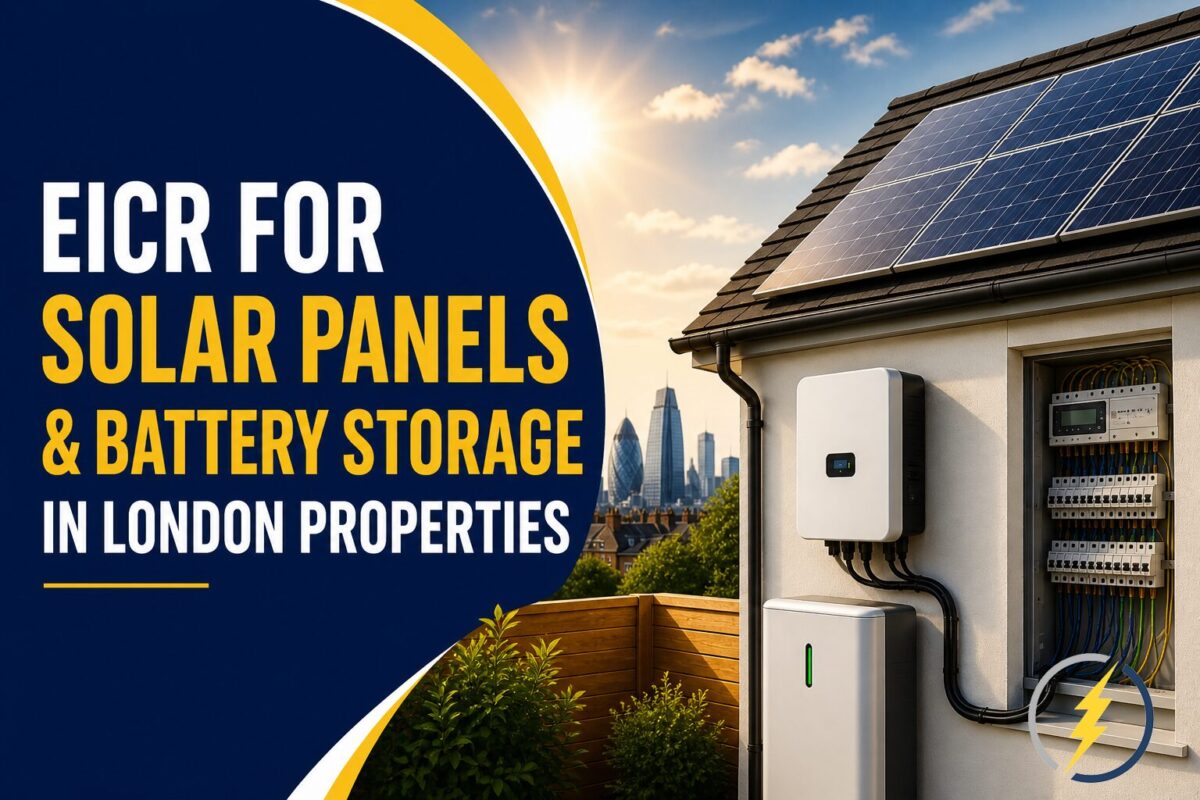
0203 811 8331

Do I Need a New EICR for Every New Tenant in London?

Are you a homeowner, landlord, or business owner in London? Ensuring the safety and compliance of your property’s electrical installations is crucial, and that’s where an Electrical Installation Condition Report (EICR) certificate comes in. But, how do you obtain one? Our step-by-step guide provides all the information you need to follow to get your EICR certificate. From finding a qualified electrician to scheduling the inspection and addressing any issues highlighted in the report, our guide covers everything you need to know. Don’t risk the safety of your property – read our guide and obtain your EICR certificate today!

Compliance and Regulations,EICR Certificates,EICR Faults & Failures,EICR Guide,Electrical Installation,Property Management,Tenant Safety

Do I Need a New EICR for Every New Tenant in London?

Home / Property Management / Archive by category "Tenant Safety"
Landlord guide image about whether a new EICR is needed for every new tenant in London.

Latest 2026 GB Guide

When a new tenant is about to move into a rental property, most London landlords ask the same question:

Do I need a new EICR every time a tenant changes?

The short answer is no, not automatically.

In most cases, you do not need a new EICR certificate for every new tenant if your existing Electrical Installation Condition Report is still valid, satisfactory, within date, and no electrical issues have appeared since it was carried out. However, you must be able to prove that the report is valid and you must give a copy of the latest EICR to the new tenant before they move into the property.

That is where many landlords make mistakes.

Some landlords assume that because an EICR is usually valid for up to five years, they can simply ignore it until the expiry date. That is risky. An EICR is not a permanent guarantee that the property is safe forever. It is a professional inspection of the electrical installation at the time of testing. If the previous tenant damaged sockets, caused water leaks, overloaded circuits, altered fittings, or reported electrical issues, the landlord should not blindly rely on the old report.

For London landlords, this becomes even more important because tenancy changes often happen quickly. One tenant moves out, the property is cleaned, new tenants are ready to move in, and the agent wants the keys released immediately. If the EICR is missing, failed, expired, unclear, or not provided to the tenant correctly, it can create compliance problems, delays, and potential enforcement risk.

At London EICR Certificates, we help landlords, letting agents, homeowners, and property managers arrange fast, professional EICR inspections in London, including checks before new tenancies, urgent move-in inspections, and remedial work where a report has failed.


What Is an EICR Certificate?

An EICR, or Electrical Installation Condition Report, is a formal inspection and test of the fixed electrical installation inside a property.

It looks at the condition and safety of items such as:

Consumer unit or fuse board

Wiring

Socket circuits

Lighting circuits

Earthing and bonding

RCD protection

Electrical accessories

Signs of overheating or damage

Circuit identification and labelling

Electrical test results

The purpose is to confirm whether the electrical installation is safe for continued use. For rental properties in England, landlords must ensure the electrical installation is inspected and tested by a qualified person at least every five years, unless the report recommends an earlier inspection. The GOV.UK landlord guidance also states that landlords must provide a copy of the report to a new tenant before they occupy the premises.

This is the key point:

The law does not say every new tenant automatically requires a brand-new EICR. It says the landlord must have a valid electrical safety report and provide it to the tenant before occupation.

So the question is not only “has the tenant changed?” The better question is:

Is the current EICR still valid, satisfactory, accurate, and suitable for this new tenancy?


Do You Need a New EICR for Every New Tenant?

In most cases, no.

You usually do not need a new EICR every time a new tenant moves in if:

The existing EICR is less than five years old.

The report is satisfactory.

The report does not state that a shorter retest period is required.

There are no unresolved C1, C2, or FI observations.

Any required remedial work has been completed and documented.

No major electrical work has been carried out since the inspection.

The property has not suffered water damage, fire damage, overheating, or electrical faults.

The previous tenant has not damaged sockets, switches, lights, or wiring.

You still have a full copy of the report.

You provide the report to the new tenant before they move in.

If all these points are true, a landlord can normally use the existing EICR for the new tenancy.

However, if any of these points are uncertain, the safest approach is to arrange a new inspection or at least ask a qualified electrician to review the property. This is especially important if the tenant is moving in soon and the landlord cannot confidently prove the electrical installation is safe.

For landlords who are unsure whether their report is still valid, we can inspect the property and issue a new landlord EICR certificate in London.


What Must a Landlord Give to a New Tenant?

A landlord should give the new tenant a copy of the latest valid EICR before the tenant occupies the property.

This should not be left until after move-in. It should be part of the tenancy preparation process, alongside other documents such as the tenancy agreement, deposit information, gas safety certificate where applicable, EPC, and other compliance paperwork.

The tenant should receive:

The full EICR report

Any confirmation of completed remedial work if the original report was unsatisfactory

Any relevant Electrical Installation Certificate or Minor Electrical Installation Works Certificate for works completed after the EICR

The date of the next inspection if available

Ideally, this should be sent by email before the move-in date so there is a clear record. If you are a landlord or agent, keep proof that the report was sent.

That proof may include:

Email copy

Date sent

Recipient email address

Attachment record

Tenancy file note

Agent compliance checklist

This matters because if a tenant or local authority later asks for evidence, you need more than “I think we sent it”. You need a clear record.


When Is an Existing EICR Still Valid for a New Tenant?

An existing EICR is normally still valid if it remains within the inspection interval and the electrical installation has not changed or deteriorated.

Example:

A landlord owns a two-bedroom flat in Battersea. The EICR was completed in June 2024. The report was satisfactory and recommended the next inspection in June 2029. The tenant leaves in May 2026 and a new tenant is due to move in.

In this case, the landlord would usually not need a new EICR just because the tenant has changed.

The landlord should:

Check the report is satisfactory.

Confirm the next inspection date has not passed.

Make sure no electrical work has been carried out since the inspection.

Visually check the property after the old tenant leaves.

Repair any obvious damage.

Give the report to the new tenant before move-in.

Keep proof that the report was provided.

This is a sensible and compliant approach.

But now compare that with a different situation.

A landlord has a three-bedroom flat in Camden. The EICR was completed in 2022 and was satisfactory. The tenant moves out in 2026. During checkout, the agent notices a cracked double socket, a loose kitchen switch, and scorch marks near a plug used for a portable heater.

In that case, relying on the old EICR without further action would be risky. The report may still be within five years, but the installation may have deteriorated. The landlord should arrange repairs and consider whether a new EICR or further testing is required before the next tenant moves in.


When Should You Book a New EICR Before a New Tenant Moves In?

You should book a new EICR before a new tenant moves in if there is any doubt about the safety, validity, or accuracy of the existing report.

A new EICR is strongly recommended if:

The EICR is more than five years old.

The next inspection date has passed.

The report is missing.

The report is incomplete.

The report was unsatisfactory.

There are unresolved C1, C2, or FI observations.

You do not have proof that remedial work was completed.

The previous tenant caused damage.

There was a water leak near electrics.

There was a fire, overheating issue, or burning smell.

Electrical work was carried out after the last report.

A new consumer unit was installed.

New circuits were added.

The property was converted or extended.

The property changed from owner-occupied to rented.

The property became an HMO.

You suspect the previous report was poor quality.

The letting agent or council asks for an updated report.

The safest rule is simple:

If the report is valid, satisfactory, and the property has not changed, you may not need a new EICR. If the report is missing, failed, expired, damaged, altered, or uncertain, book a new inspection.

You can arrange this through our Book Online page.


What If the Existing EICR Was Unsatisfactory?

If your existing EICR is unsatisfactory, you should not rely on it for a new tenancy unless the required works have been completed and properly documented.

An unsatisfactory EICR means the report has identified issues that require action. Common codes include:

C1: Danger present

C2: Potentially dangerous

FI: Further investigation required

C3: Improvement recommended

C1, C2, and FI normally result in an unsatisfactory report. C3 alone does not usually make the report unsatisfactory.

Where remedial or further investigative work is required, the GOV.UK guidance states that landlords must make sure the work is carried out within 28 days, or sooner if the report specifies a shorter period. Landlords must also provide written confirmation of the completed work to the tenant and local authority where required.

This is where many landlords get caught.

They book an EICR. It fails. They arrange some remedial work. Then they assume everything is finished. But they do not keep the written confirmation, certificate, invoice description, or follow-up paperwork.

For a new tenancy, that is weak evidence.

If the original EICR was unsatisfactory, your tenancy file should include:

The original failed EICR

The remedial work invoice

The electrician’s written confirmation

Any relevant electrical certificate

Confirmation that the installation is now safe

Evidence that the tenant received the relevant documents

If you have a failed report, we can help with EICR remedial work in London and issue the correct follow-up documentation once the work is completed.


Does a C3 Mean You Need a New EICR for a New Tenant?

No, not usually.

A C3 means improvement is recommended. It does not normally mean the report has failed.

For example, an older consumer unit may receive a C3 recommendation if it does not meet the latest modern standards but is not considered dangerous. In that situation, the EICR may still be satisfactory.

However, C3 observations should not be ignored forever. They are warnings that the installation could be improved. If a property has several C3 observations and a new tenant is moving in, it may be worth discussing upgrades with an electrician.

Examples of C3 observations may include:

Older consumer unit

Limited RCD protection in certain areas

Older accessories

Minor labelling improvements

Older installation that is safe but not modern

The key point is this:

A satisfactory EICR with C3 observations can usually still be used for a new tenant, but the landlord should understand what the recommendations mean.

If you are unsure how to read your report, see our guide: How to Read and Understand an EICR Report.


Should You Visually Check the Property Between Tenants?

Yes. This is strongly recommended.

Even if a new EICR is not legally required, a visual check between tenancies is a sensible landlord habit. GOV.UK guidance recommends that landlords carry out at least a visual inspection before a new tenancy to confirm that the property remains electrically safe and has not deteriorated since the last inspection.

A visual check does not replace an EICR, but it can identify obvious problems before a new tenant moves in.

Check for:

Cracked sockets

Loose switches

Burn marks

Exposed cables

Broken light fittings

Loose pendant lights

Damaged extractor fans

Consumer unit cover damage

Missing blanks in consumer unit

Signs of water leaks

Damaged outdoor electrics

Tenant-installed fittings

Overloaded extension leads

Damaged cooker switch

Loose shower pull cord

Bathroom light issues

If you notice any of these, get them checked before the new tenant moves in.

This protects the tenant, the landlord, and the rental income. It also prevents the common situation where a tenant moves in, reports an electrical issue immediately, and the landlord then has to arrange urgent access, repairs, and paperwork under pressure.


New Tenant Moving In Tomorrow: What Should You Do?

If a new tenant is moving in tomorrow and you are unsure about the EICR, use this emergency checklist.

Ask yourself:

Do I have the full EICR report?

Is it less than five years old?

Does it say satisfactory?

Is the next inspection date still valid?

Are there any C1, C2, or FI observations?

If there were remedial works, do I have proof they were completed?

Has any electrical work been done since the report?

Has the outgoing tenant caused any damage?

Has the property been visually checked after checkout?

Has the new tenant received the report?

If the answer to any of these is “no” or “I’m not sure”, book an inspection before move-in if possible.

This is exactly the type of situation where a landlord should not gamble. A delayed move-in is frustrating, but a non-compliant or unsafe tenancy is worse.

London EICR Certificates offers fast booking for EICR inspections in London, subject to availability. You can start here: Book an EICR Certificate Online.


Case Study 1: Valid EICR, No New Inspection Needed

A landlord in Wandsworth contacted us because a new tenant was moving in and the letting agent asked whether a fresh EICR was required.

The property was a two-bedroom flat. The landlord had an EICR from 2023. The report was satisfactory, the next inspection date was 2028, and no electrical work had been carried out since the report.

We advised the landlord to:

Check the property after checkout

Repair any obvious damage if found

Send the existing EICR to the new tenant before move-in

Keep email proof that the report was provided

Add the next inspection date to the landlord’s compliance calendar

In this case, a new EICR was not necessary. The landlord avoided unnecessary cost while still handling the tenancy properly.

The lesson:

A valid EICR can usually be reused for a new tenant if it is satisfactory and the property condition has not changed.


Case Study 2: Existing EICR Was Valid, But Property Damage Changed the Risk

A landlord in South London had a valid EICR with three years remaining. On paper, everything looked fine.

However, after the tenant moved out, the property manager found:

Two cracked sockets

A loose hallway switch

A damaged bathroom extractor fan

A scorch mark near a kitchen socket

The landlord initially believed the EICR was enough because it was still within five years. But the property condition had changed after the inspection.

The correct approach was to arrange repairs and confirm the affected accessories were safe before the new tenant moved in.

The lesson:

A valid EICR does not mean a landlord can ignore new damage.

If the electrical installation deteriorates after the report, the landlord must deal with the issue.


Case Study 3: Failed EICR and No Remedial Paperwork

A landlord in East London had an EICR carried out by another company. The report was unsatisfactory due to C2 observations. The landlord said remedial work had been completed, but could not provide any written confirmation.

A new tenant was due to move in, and the agent asked for compliance documents.

The problem was not only the failed EICR. The bigger issue was missing evidence. Without written confirmation that the required work had been completed, the landlord had a weak tenancy file.

We recommended a new inspection and proper documentation. Once the issues were checked and confirmed, the landlord had a clear record for the new tenant and agent.

The lesson:

If an EICR failed, you need a clean paper trail before relying on it for a new tenancy.


EICR and New Tenancy: Common Landlord Mistakes

The most common landlord mistake is thinking that “five years” is the only thing that matters.

Five years is important, but it is not the full picture.

A report can be less than five years old and still be unsuitable if it was unsatisfactory, if remedial paperwork is missing, or if the installation has changed.

Other common mistakes include:

Only keeping the invoice instead of the report

Not checking the next inspection date

Ignoring C1, C2, or FI codes

Not giving the report to the new tenant before move-in

Assuming the letting agent has handled it

Using a cheap report with missing test schedules

Failing to check property damage after tenant checkout

Not keeping proof that documents were sent

Forgetting about remedial certificates

Waiting until the tenant move-in date to check compliance

A proper landlord compliance process should happen before marketing the property, not the night before the tenant collects the keys.


What If the EICR Was Done by a Different Electrician?

That is fine, provided the report is genuine, complete, and valid.

A landlord does not need to use the same company every time. However, you should check whether the report contains enough information and was carried out by a qualified person.

A proper EICR should include:

Property address

Client details

Inspection date

Next inspection date

Overall assessment

Schedule of inspections

Schedule of test results

Consumer unit details

Circuit details

Observations and codes

Limitations

Inspector details

Signature or authentication

If the report looks vague, incomplete, or suspicious, be careful. A cheap one-page “certificate” is not the same as a proper EICR report.

For more guidance, see our article on what a proper EICR certificate should include.


Does Electrical Work After the EICR Mean You Need a New Report?

Not always, but it depends on the work.

If minor electrical work was carried out after the EICR, the electrician should provide the appropriate certification for that work. If a new circuit or consumer unit was installed, the paperwork becomes more important.

Examples of work that may affect your EICR position include:

New consumer unit

New shower circuit

New cooker circuit

New sockets

New lighting circuits

Rewiring

Extension wiring

Loft conversion wiring

Outdoor electrical installation

EV charger installation

Major kitchen refurbishment

If the electrical installation has changed significantly since the last EICR, a new inspection may be sensible before a new tenant moves in.

If you are not sure whether your previous electrical work affects your report, see our guide: Do You Need an EICR After Electrical Work?


What About HMOs?

HMOs can be more complex because they often involve higher occupancy, more intensive use, licensing conditions, communal areas, fire alarm systems, emergency lighting, and additional local authority expectations.

If a property has become an HMO since the last EICR, or if the tenant arrangement has changed significantly, do not assume the old report is enough.

Examples:

A standard flat becomes rented to multiple unrelated occupants.

A house is converted into room lets.

Additional cooking facilities are added.

Communal areas are introduced.

More electrical load is added.

Licensing conditions require updated compliance evidence.

For HMOs, landlords should be more cautious. A new or updated EICR may be advisable, especially if the existing report was based on a different use of the property.

See our full guide: HMO EICR Certificates in London


What About Letting Agents Managing the Move-In?

If a letting agent manages the tenancy, the landlord should still make sure the EICR process is handled properly.

Agents often help collect and issue compliance documents, but the landlord should not assume everything is done unless there is proof.

Before the tenant moves in, confirm:

The agent has the latest EICR.

The report is satisfactory.

The report is still in date.

The tenant has received it.

The file contains proof of service.

Any remedial works are documented.

The next inspection date is diarised.

For letting agents and property managers handling multiple properties, the best approach is to keep a central compliance tracker with expiry dates, certificate status, and booking notes.

London EICR Certificates works with landlords and agents across London. We can help with single-property inspections, urgent move-in checks, and portfolio bookings.


How Much Does a New EICR Cost in London?

The cost of a new EICR in London depends on property type, size, number of bedrooms, number of circuits, access arrangements, and whether the property is residential or commercial.

A small flat will usually cost less than a large house, HMO, office, restaurant, or commercial building.

When a new tenant is moving in, landlords often focus only on saving money. That is understandable, but the cost of one proper EICR is usually small compared with the risk of:

Delayed tenancy start

Tenant complaints

Unsafe electrics

Council enforcement

Emergency repair costs

Void period

Disputes with letting agents

Problems during licensing or insurance checks

For current pricing guidance, see our EICR Certificate Cost in London page.


Is It Worth Getting a New EICR Even If the Old One Is Still Valid?

Sometimes, yes.

A new EICR may be worth arranging if:

The report is close to expiry.

You recently bought the property.

The previous report was done cheaply.

You do not trust the old report.

The property has had difficult tenants.

You are changing letting agent.

You are applying for a licence.

You want a clean compliance file.

You are planning to rent long-term.

You want to avoid mid-tenancy disruption later.

For example, if your EICR expires in six months and a new tenant is about to move in on a 12-month tenancy, it may be sensible to renew the EICR now instead of disturbing the tenant later.

This is not always legally required, but commercially it can be the smarter decision.


Practical Landlord Checklist Before a New Tenant Moves In

Use this checklist before every new tenancy.

  1. Find the latest EICR

Do not rely on memory. Locate the actual report.

  1. Check the inspection date

Make sure it is less than five years old or within the recommended retest period.

  1. Check the next inspection date

Some reports recommend an earlier inspection.

  1. Check the overall assessment

It should say satisfactory if you intend to rely on it.

  1. Review the observations

Look for C1, C2, FI, and C3 codes.

  1. Confirm remedial work

If the report failed, make sure there is written evidence that the required work was completed.

  1. Check for changes

Ask whether any electrical work has been carried out since the report.

  1. Inspect the property visually

Look for damage after the previous tenant moves out.

  1. Send the report to the tenant

Provide it before occupation.

  1. Keep proof

Save email evidence and add the next inspection date to your compliance calendar.

This checklist is simple, but it prevents most EICR compliance problems before they happen.


When London EICR Certificates Can Help

We help landlords who need clear, fast, professional EICR support before a new tenant moves in.

Our services include:

Landlord EICR inspections

Electrical safety certificates

Urgent EICR bookings

Pre-tenancy electrical checks

Failed EICR remedial work

Portfolio EICR inspections

Commercial EICR inspections

Report explanation and next-step advice

We regularly work with landlords, estate agents, letting agents, homeowners, commercial tenants, and property managers across London.

If your new tenant is moving in soon and you are unsure whether your current EICR is valid, the safest option is to get the property checked.

Start here:

Book an EICR Certificate Online

Or learn more here:

EICR Certificates for Landlords in London


Final Answer: Do You Need a New EICR for Every New Tenant?

No, you do not automatically need a new EICR every time a new tenant moves into your London rental property.

You can usually rely on the existing EICR if it is:

Still in date

Satisfactory

Complete

Less than five years old, unless a shorter period applies

Supported by remedial paperwork if any work was needed

Still accurate based on the current condition of the property

Provided to the new tenant before occupation

However, you should book a new EICR if the report is expired, missing, unsatisfactory, incomplete, questionable, or if the property has suffered damage, alteration, water leaks, overheating, or electrical issues since the last inspection.

The best landlord rule is:

Do not book a new EICR just because the tenant changed. Book a new EICR when the old report no longer gives you confidence that the property is safe, compliant, and properly documented.

If you need a new EICR certificate before your tenant moves in, London EICR Certificates can help you arrange a fast inspection and clear report.

Book your EICR inspection online today.

❓New Tenant EICR Certificate FAQs for London Landlords

1. Do I need a new EICR every time a new tenant moves in?

No. You do not automatically need a new EICR for every new tenant if the existing report is still valid, satisfactory, in date, and the electrical installation has not changed or been damaged since the inspection.

2. Can I use the same EICR for a new tenancy?

Yes, you can usually use the same EICR for a new tenancy if it is less than 5 years old, marked as satisfactory, and does not state that an earlier reinspection is required.

3. What must I give to a new tenant before they move in?

You should give the new tenant a copy of the latest valid EICR before they occupy the property. Keep email proof or written confirmation that the report was provided.

4. What if my current EICR is unsatisfactory?

If your EICR is unsatisfactory, you should not rely on it for a new tenancy until the required remedial or further investigative work has been completed and properly documented.

5. Do I need a new EICR if the old tenant damaged sockets or switches?

Possibly. If the previous tenant damaged sockets, switches, lighting, wiring, or accessories, you should arrange repairs before the new tenant moves in. Depending on the damage, a new EICR or further testing may be advisable.

6. Is an EICR always valid for 5 years?

Not always. Many rental EICRs are valid for up to 5 years, but the report may recommend an earlier reinspection depending on the condition of the electrical installation.

7. What happens if my EICR expires during a tenancy?

You should arrange a new EICR before the existing report expires. Do not wait until after the expiry date, especially if the property is occupied.

8. Does a C3 observation mean I need a new EICR?

No. A C3 means improvement is recommended, but it does not normally make the EICR unsatisfactory. However, landlords should still understand the issue and consider whether improvements are sensible.

9. Should I check the property electrics between tenants?

Yes. Even if a new EICR is not required, landlords should visually check the property between tenancies for damaged sockets, loose switches, burn marks, exposed cables, water leaks, or other obvious electrical risks.

10. When should I book a new EICR before a new tenant moves in?

Book a new EICR if the old report is expired, missing, unsatisfactory, incomplete, close to expiry, or if there has been electrical work, damage, water leaks, overheating, or any concern about the installation since the last inspection.

Please Submit Details Below

For your convenience, you can also fill out our online contact form below. Please provide as much detail as possible, and a member of our team will get back to you promptly.
Select Certificate Type:
Tags :
EICR Certificates,EICR Inspection
Share This :

24/7 Emergency Service

Find answers to common questions about EICR certificates and electrical safety inspections in London. Visit our FAQ page on EICRcertificates.com for more information.
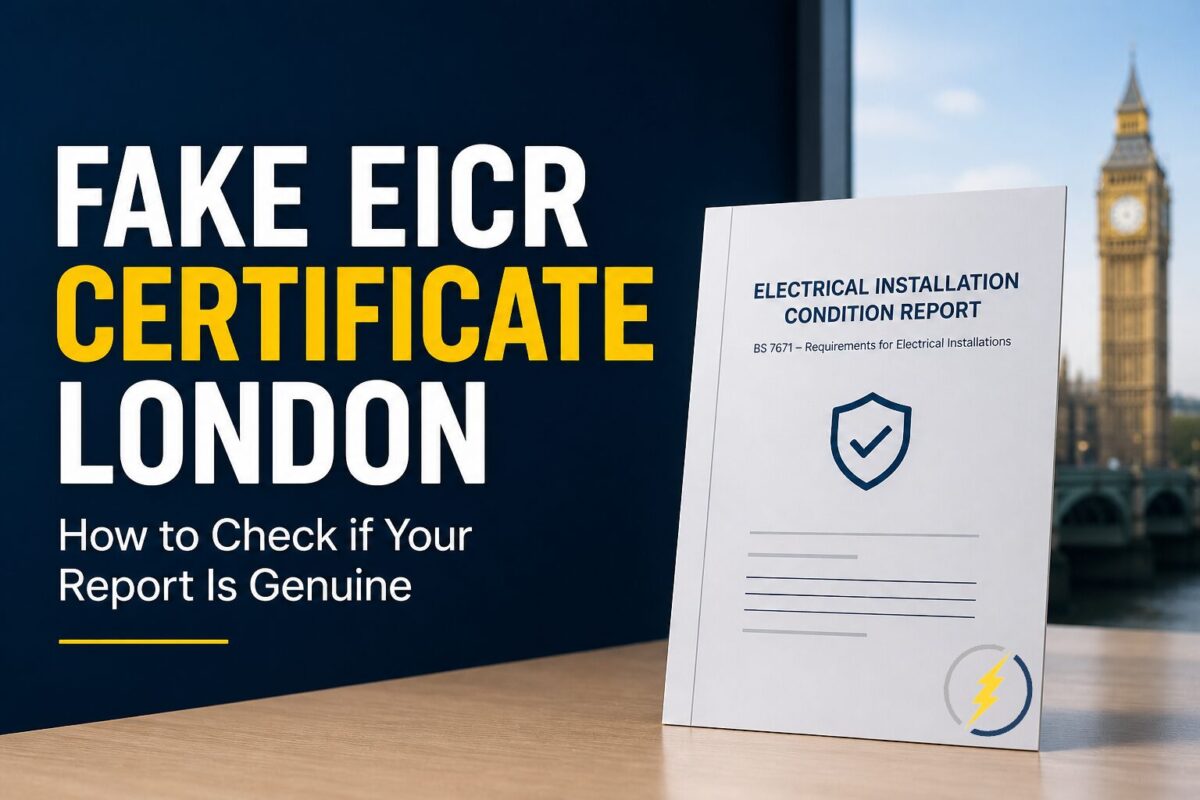
0203 811 8331

Top 5 EICR Companies in London (2025 Review) – Best Electrical Safety Inspections

Are you a homeowner, landlord, or business owner in London? Ensuring the safety and compliance of your property’s electrical installations is crucial, and that’s where an Electrical Installation Condition Report (EICR) certificate comes in. But, how do you obtain one? Our step-by-step guide provides all the information you need to follow to get your EICR certificate. From finding a qualified electrician to scheduling the inspection and addressing any issues highlighted in the report, our guide covers everything you need to know. Don’t risk the safety of your property – read our guide and obtain your EICR certificate today!

Top 5 EICR Companies in London (2025 Review) – Best Electrical Safety Inspections

Home / Property Management / Archive by category "Tenant Safety"
Top 5 EICR companies in London for 2025 ranked for electrical safety inspections, pricing, and customer satisfaction.

Table of Contents

Why Choosing the Right EICR Company in London Matters

If you’re a London landlord, homeowner, or business owner, your Electrical Installation Condition Report (EICR) is one of the most important compliance documents you’ll ever need. It proves that your property meets safety standards, keeps tenants safe, and helps you avoid costly fines.

But here’s the problem with so many companies claiming to be the “best” in London, it’s hard to know who to trust.That’s why we’ve reviewed the top 5 EICR companies in London for 2025, based on price, speed, coverage, customer reviews, and qualifications.

If you have any specific questions regarding EICR Services you can check our FAQ’s page.

EICR Booking London – Fast, Transparent & Certified
EICR Cost Calculator London
Please select a property type
Please select number of rooms
Please enter a valid postcode
💰 Total Cost: Please select property type and rooms. ℹ️
✅ Fully insured & compliant with UK landlord regulations
You’re one click away from full compliance and peace of mind.

Get Instant Confirmation
No payment required now – pay after your inspection

📘Check #1 EICR Company recent work
👉Click Here

How We Ranked the Best EICR Companies

Our selection process looked at:

  • Price transparency – No hidden fees, clear breakdowns (see our EICR Certificate Cost guide)
  • Turnaround speed – Same-day or next-day bookings available
  • Service coverage – Central, North, South, East, and West London
  • Customer feedback – Positive Google & Trustpilot reviews
  • Professional credentials – NICEIC or equivalent certification

🟩 1. London EICR Certificates – Editor’s Choice

🟩2. Aspect Electrical

    • ⭐ Best for: Large property portfolios and ongoing maintenance

      Aspect Electrical is a well-established name for property managers in London. They handle everything from EICRs to PAT testing and electrical repairs. Pricing is on the higher end, but they’re reliable for long-term contracts.

🟩3. London Property Inspections

  • ⭐ Best for: Bundled compliance packages (EICR, EPC, Gas Safety)

    This company is great for landlords who want to get multiple certificates in one visit. However, booking slots can fill quickly during peak months, so plan ahead.

🟩4. Electricians London Ltd

⭐ Best for: Urgent same-day inspections

Electricians London Ltd specialises in emergency EICRs for property sales or urgent rental agreements. They’re competitively priced but mainly focus on central areas.

🟩5. CJ Electrical London

⭐ Best for: Personal service for homeowners

A small, family-run business offering domestic EICRs at fair rates. They’re ideal for one-off inspections but less suited for large commercial properties.

Why London EICR Certificates Stands Out

While all five companies offer good services, London EICR Certificates leads in:

  • Speed – Same-day inspections possible
  • Price – Clear, competitive rates
  • Specialisation – 100% focused on EICRs, ensuring quality
  • Full coverage – See Areas We Cover

They also offer Remedial Work if your property fails an inspection, so you can get certified quickly without juggling multiple contractors.

If you want a fast, affordable, and fully certified electrical safety inspection, London EICR Certificates is the clear leader for 2025.
Whether you’re a landlord, homeowner, or business, our expert engineers make sure your property is safe, compliant, and ready for tenants or sale.

📅 Book Your EICR Now and get your certificate issued in as little as 24 hours.

❓ FAQs

Book Your Canary Wharf E14 EICR Today

  • ❓ 1. What does an EICR involve?

    An EICR (Electrical Installation Condition Report) is a detailed inspection of your property’s electrical systems to ensure they are safe and compliant. Our EICR Services include testing wiring, sockets, fuse boards, and more.

  • ❓ 2. How much does an EICR cost in London?

    The price depends on property type and size. In London, costs typically start from £99 for flats and £119 for houses. See our full EICR Certificate Cost guide for exact pricing.

  • ❓ 3. How long does an EICR take?

    A standard EICR inspection takes 1–4 hours depending on the property size and condition. Commercial sites may require more time — see our Commercial EICR Certificates page.

  • ❓ 4. How often should an EICR be done?

    For rental properties, an EICR is required every 5 years or at a change of tenancy. Homeowners are advised to test every 10 years. Businesses may need more frequent inspections.

  • ❓ 5. What happens if my EICR fails?

    If your property fails, you’ll receive a report with C1, C2, or C3 fault codes. Our Remedial Work service can fix these issues and arrange a re-test.

  • ❓ 6. Do landlords legally need an EICR?

    Yes since July 2020, landlords in England must provide a valid EICR to tenants before they move in and at renewal. Learn more on our EICR Certificates for Landlords page.

  • ❓ 7. Can I get a same-day EICR in London?

    Yes, we offer urgent and same-day inspections in most areas. Use our Book Online system to check availability.

  • ❓ 8. What’s the difference between an EICR and an Electrical Safety Certificate?

    They are often the same document but “Electrical Safety Certificate” is the general term, while EICR refers to the detailed inspection report. See our EICR for Homeowners for more info.

  • ❓ 9. Are your engineers qualified?

    Yes all our electricians are fully qualified, NICEIC-registered, insured, and experienced in carrying out EICRs for both domestic and commercial properties.

  • ❓ 10. Do you cover my area in London?

    We cover all postcodes in Central, North, South, East, and West London. See our full Areas We Cover list.

Please Submit Details Below

For your convenience, you can also fill out our online contact form below. Please provide as much detail as possible, and a member of our team will get back to you promptly.
Select Certificate Type:
Tags :
EICR Certificates,EICR Inspection,EICR Services]
Share This :

24/7 Emergency Service

Find answers to common questions about EICR certificates and electrical safety inspections in London. Visit our FAQ page on EICRcertificates.com for more information.
0203 811 8331

EICR Certificates for Flats vs. Houses in London (2025): Key Differences Explained

Are you a homeowner, landlord, or business owner in London? Ensuring the safety and compliance of your property’s electrical installations is crucial, and that’s where an Electrical Installation Condition Report (EICR) certificate comes in. But, how do you obtain one? Our step-by-step guide provides all the information you need to follow to get your EICR certificate. From finding a qualified electrician to scheduling the inspection and addressing any issues highlighted in the report, our guide covers everything you need to know. Don’t risk the safety of your property – read our guide and obtain your EICR certificate today!

EICR Certificates for Flats vs. Houses in London (2025): Key Differences Explained

Compliance and Regulations,EICR Certificates,EICR Guide,Electrical Inspections,Electrical Installation,Electrical Maintenance,Electrical Safety,Property Management,Tenant Safety
Home / Property Management / Archive by category "Tenant Safety"

Introduction

If you’re a homeowner or landlord in London, understanding the differences between EICR certificates for flats and houses is essential. Whether you’re preparing to let out your property or just ensuring compliance with 2025 electrical safety regulations, the type of property you own can significantly affect inspection requirements, access, costs, and common electrical issues. In this blog, we break it all down.

Electrician inspecting consumer unit in a London flat and house side by side
Table of Contents

Do Flats and Houses Have the Same EICR Requirements?

No, they don’t. While the core purpose of an Electrical Installation Condition Report (EICR) is the same for both property types – to ensure the safety of electrical installations – the way inspections are carried out varies:

Flats often have shared electrical infrastructure such as risers or communal meter rooms.

Houses typically have individual consumer units and direct access to all circuits.

Book Your EICR in London (Instant Quote)

Fast booking, transparent pricing, and pay after inspection. Pick your details and tap WhatsApp to confirm.

💰 Total Cost: Please select property type and rooms. ℹ️
🚗 Parking to be confirmed: an additional charge may apply if parking is not available on arrival.
Pay after inspection • ✅ NICEIC engineers • ✅ Fast certificate delivery
We save your selections on this device to make booking faster next time.
Get instant confirmation
We usually reply quickly during working hours.
No payment required now, you pay after the inspection

EICR Cost Comparison: Flats vs. Houses

Property TypeAverage Cost (2025)Typical DurationNotes
1-Bed Flat£89 – £9960–90 minutesShared meters may require coordination
2-Bed Flat£99 – £1191.5 hoursExtra circuits increase cost slightly
3-Bed House£129 – £1492 hoursMore sockets, outdoor electrics
4+ Bed House£150+2–3 hoursIncludes garden/outbuilding circuits

Shared vs. Private Electrical Installations

Flats:

  • May rely on communal infrastructure.
  • Fuse boards could be outside the unit.
  • May need permission from managing agents.

Houses:

  • All circuits and access are usually under homeowner control.
  • Quicker to inspect without third-party access issues.

Common Faults Found: Flats vs. Houses

Flats:

  • Tripping RCDs from shared neutral faults
  • Lack of main bonding to water/gas
  • Old-style consumer units with no RCD

Houses:

  • Overloaded kitchen rings
  • Outdoor lighting/sockets with no RCD
  • Detached garage or garden shed circuits not tested

Special Case: Maisonettes & Studio Flats

Maisonettes often behave like a hybrid flat in structure, but with house-like control over wiring. Studio flats usually have fewer circuits, making the EICR faster and cheaper.

Quick Checklist: What Type of EICR Do You Need?

QuestionAnswerImportance
Flat or House?Determines wiring complexityHigh
Is fuse board inside your property?Affects accessHigh
Are you a landlord?Legal requirement appliesCritical
Is it part of an HMO?May need additional checksHigh
Any history of tripping breakers?Helps prepare electricianMedium

Why It Matters

Knowing the differences between flats and houses for EICR inspections helps you:

  • Avoid delays or failed inspections
  • Understand your legal responsibilities
  • Get accurate pricing
  • Be fully compliant in 2025

Final Tips for Homeowners and Landlords

  • Landlords: Must provide a valid EICR to tenants every 5 years.
  • Homeowners: Should book an EICR every 10 years for safety.
  • Both: Book only NICEIC-registered electricians.

❓10 Amazing FAQs for “EICR Certificates for Flats vs. Houses in London

1. Do flats and houses have the same EICR requirements in London?

No. While both property types require EICR certificates for safety and legal compliance, flats often involve shared electrical infrastructure like risers and communal meters, which can affect inspection access and complexity.

2. Is an EICR cheaper for a flat than a house in London?

Yes, generally. A 1-bedroom flat EICR typically costs £89–£99, while a 3-bedroom house might cost £129–£149. However, shared access in flats may increase the cost slightly.

3. Who is responsible for the EICR in a leasehold flat?

The leaseholder (owner/landlord) is usually responsible for the internal wiring and must obtain an EICR. Freeholders or managing agents handle communal area electrics separately.

4. Can my EICR fail because my flat shares a meter room?

Not directly. Your EICR covers your individual unit, but if access to the consumer unit or isolator is restricted, it could delay or limit the inspection.

5. Are maisonettes treated as flats or houses for EICR?

Maisonettes are treated case-by-case. If you have private access and your own consumer unit, your EICR is treated similarly to a house. Shared access may classify it more like a flat.

6. How often do I need an EICR for my flat or house in London?

Landlords: Every 5 years or on new tenancy. Homeowners: Every 10 years or when selling the property.

7. What’s included in an EICR for a flat or house?

Your electrician will check all accessible wiring, sockets, switches, the consumer unit, and bonding. In houses, external circuits like garden lights and sheds are also included.

8. What’s the difference between a failed EICR in a flat vs. a house?

In a flat, failures often relate to older consumer units or bonding issues. In a house, failures often include garden sockets or RCD protection issues. Remedial access is typically easier in houses.

9. Does a studio flat need an EICR?

Yes. All rental properties—including studio flats—must comply with Electrical Safety Standards in the Private Rented Sector (England) Regulations 2020.

10. How can I book an EICR for my flat or house in London?

You can book instantly using our online system. Simply select your property type and preferred date.

Please Submit Details Below

For your convenience, you can also fill out our online contact form below. Please provide as much detail as possible, and a member of our team will get back to you promptly.
Select Certificate Type:
Tags :
EICR Certificates,EICR Inspection,EICR Services],Legal Requirements,Property Compliance
Share This :

24/7 Emergency Service

Find answers to common questions about EICR certificates and electrical safety inspections in London. Visit our FAQ page on EICRcertificates.com for more information.

0203 811 8331

EICR Certificate in Kensington W8: Fast, Certified & Affordable Inspections in 2025

Are you a homeowner, landlord, or business owner in London? Ensuring the safety and compliance of your property’s electrical installations is crucial, and that’s where an Electrical Installation Condition Report (EICR) certificate comes in. But, how do you obtain one? Our step-by-step guide provides all the information you need to follow to get your EICR certificate. From finding a qualified electrician to scheduling the inspection and addressing any issues highlighted in the report, our guide covers everything you need to know. Don’t risk the safety of your property – read our guide and obtain your EICR certificate today!

EICR Certificate in Kensington W8: Fast, Certified & Affordable Inspections in 2025

Compliance and Regulations,EICR Certificates,EICR Guide,Electrical Inspections,Electrical Maintenance,Property Management,Tenant Safety
Home / Property Management / Archive by category "Tenant Safety"
EICR Certificate Kensington W8 promotional banner showing classic Victorian houses in London with text highlighting fast, certified, and affordable inspections in 2025.

Table of Contents

Why You Need an EICR Certificate in Kensington in 2025

If you’re a property owner, landlord, or managing agent in Kensington (W8), an up-to-date Electrical Installation Condition Report (EICR) is no longer optional – it’s essential. With stricter compliance laws, insurance requirements, and rising tenant safety awareness, having a valid EICR ensures your property is safe, legal, and market-ready.

Kensington is known for its high-value properties, luxury flats, and historic homes. Whether you own a modern apartment near Kensington High Street or a listed townhouse near Holland Park, an EICR is your proof of electrical safety.

You can learn more about our full EICR Services across London.

Book Your EICR in London (Instant Quote)

Fast booking, transparent pricing, and pay after inspection. Pick your details and tap WhatsApp to confirm.

💰 Total Cost: Please select property type and rooms. ℹ️
🚗 Parking to be confirmed: an additional charge may apply if parking is not available on arrival.
Pay after inspection • ✅ NICEIC engineers • ✅ Fast certificate delivery
We save your selections on this device to make booking faster next time.
Get instant confirmation
We usually reply quickly during working hours.
No payment required now, you pay after the inspection

📘Check our recent work & let us know if you have any questions
👉Click Here

Who Needs an EICR Certificate in Kensington?

🟩Landlords and Letting Agents

Since July 2020, all rental properties in England require a valid EICR every 5 years. Landlords in Kensington must provide tenants with this certificate and submit it to the local council if requested.

🟩Homeowners

Even if you’re not renting, getting an EICR is highly recommended every 10 years or when buying/selling your home. It helps uncover potential hazards and avoid costly repairs.

Discover how we help homeowners with EICRs.

🟩Commercial Property Owners

Shops, offices, galleries, and workspaces across Kensington must maintain valid electrical reports to meet HSE and fire safety obligations.

What Does an EICR Inspection in Kensington Include?

Our NICEIC-approved electricians conduct a thorough inspection of your property’s entire electrical system. This includes:

  • Checking all wiring and circuits
  • Assessing fuse boards (consumer units)
  • Identifying faulty or outdated equipment
  • Testing sockets, lighting, and switches
  • Detecting overheating or fire risks

The final report grades any issues as:

  • C1 (Danger present – immediate action required)
  • C2 (Potentially dangerous)
  • C3 (Improvement recommended)

If remedial work is needed, we provide clear quotes and rapid solutions.

Learn how we handle Remedial Work for Failed EICRs.

EICR Certificate Costs in Kensington W8

The cost of an EICR in Kensington varies depending on the property type and size. Here’s a general guide:

  • 1-bedroom flat: from £89
  • 2-bedroom flat: from £99
  • 3-bedroom house: from £119
  • Commercial property: from £179

Luxury or historic properties may require additional time and checks.

Get detailed pricing on our EICR Certificate Cost page.

Or use our EICR Cost Calculator to get an instant quote.

Why Choose Us for Your Kensington EICR?

  • Local London-based team with Kensington coverage
  • Fully qualified NICEIC electricians
  • Fast same-day or next-day bookings
  • Digital certificates issued within 24 hours
  • Transparent pricing – no hidden costs
  • Remedial work quoted and resolved fast

We’re the go-to provider for landlords, estate agents, developers, and homeowners across Central and West London.

What Happens If You Don’t Get an EICR in Kensington?

Failure to obtain a valid EICR can result in:

  • Fines of up to £30,000 for landlords
  • Invalid insurance claims
  • Tenant injury or property damage
  • Delays in sale or rental of your property

Don’t wait until it’s too late. Kensington councils and tenants are becoming increasingly vigilant about compliance.

❓EICR FAQs for Kensington Homeowners and Landlords

What is an EICR certificate and why is it important in Kensington?

An Electrical Installation Condition Report (EICR) is a legal document that confirms the safety of your property's electrical system. In Kensington (W8), it's crucial for landlords, homeowners, and businesses to ensure compliance, avoid fines, and protect occupants.

How much does an EICR cost in Kensington in 2025?

EICR prices in Kensington start from £89 for a 1-bedroom flat and vary based on property size and complexity. Premium or listed properties may cost more due to their age or layout. 👉 Check our EICR Cost Guide

Do Kensington landlords need an EICR by law?

Yes. Since July 2020, it’s legally required for all rented properties in Kensington to have a valid EICR every 5 years. Failure to comply can result in fines up to £30,000.

Can I get an EICR on a listed property in Kensington?

Absolutely. Our electricians are experienced with Kensington's heritage and conservation buildings. We conduct careful inspections that respect your property's unique structure and layout.

How long is an EICR valid in Kensington?

Rental Properties: Valid for 5 years Owner-occupied Homes: Recommended every 10 years More frequent testing is needed after renovations or a change in tenancy.

What happens if my EICR fails?

If your EICR identifies issues (C1 or C2), we’ll provide a clear quote for remedial work. Once fixed, we issue a Satisfactory Certificate for your records and legal use. 👉 Learn About EICR Remedial Work

Do I need an EICR when selling a property in Kensington?

While not legally required, many buyers and estate agents request one. A clean EICR speeds up the sale process and boosts buyer confidence especially in high-value areas like W8.

Can I book an EICR online for a property in Kensington?

Yes. Use our quick online booking form to choose your preferred time. We offer same-day and next-day appointments in the Kensington area.

Will I receive a digital certificate after my EICR?

Yes. You'll receive a professionally written EICR report (PDF) within 24 hours. It includes electrical condition ratings, issue explanations, and next steps if needed.

Please Submit Details Below

For your convenience, you can also fill out our online contact form below. Please provide as much detail as possible, and a member of our team will get back to you promptly.
Select Certificate Type:

Book Your EICR Certificate in Kensington Today

Don’t leave compliance to chance. Whether you own a buy-to-let near Kensington Gardens, a period home near Gloucester Road, or a modern flat by Cromwell Road, we provide stress-free electrical safety reports trusted by hundreds of Londoners.

Other Areas We Cover Nearby

We don’t just serve Kensington. Explore EICR services near you:

Full list of Areas We Cover

Protect Your Kensington Property with a Certified EICR

EICRs aren’t just another box to tick. They’re a vital part of modern property safety, compliance, and marketability. In one of London’s most prestigious postcodes, you can’t afford to skip it.

With our local team, transparent pricing, and reliable service, your Kensington EICR is one step away.

Tags :
EICR Certificates,EICR Inspection,EICR Services],Legal Requirements,Property Compliance,Rental Property Safety
Share This :

24/7 Emergency Service

Find answers to common questions about EICR certificates and electrical safety inspections in London. Visit our FAQ page on EICRcertificates.com for more information.

0203 811 8331

EICR Certificates in City of London (EC1–EC4) | Fast & Certified

Are you a homeowner, landlord, or business owner in London? Ensuring the safety and compliance of your property’s electrical installations is crucial, and that’s where an Electrical Installation Condition Report (EICR) certificate comes in. But, how do you obtain one? Our step-by-step guide provides all the information you need to follow to get your EICR certificate. From finding a qualified electrician to scheduling the inspection and addressing any issues highlighted in the report, our guide covers everything you need to know. Don’t risk the safety of your property – read our guide and obtain your EICR certificate today!

EICR Certificates in City of London (EC1–EC4) | Fast & Certified

Compliance and Regulations,EICR Certificates,EICR Guide,Electrical Inspections,Electrical Maintenance,Property Management,Tenant Safety
Home / Property Management / Archive by category "Tenant Safety"
Skyline of the City of London with red bus and modern office buildings, promoting EICR electrical inspections in EC1 to EC4.

Table of Contents

Electrical Installation Condition Reports (EICRs) are essential for maintaining safety and legal compliance in all commercial and residential properties. Nowhere is this more critical than in the heart of London’s financial district, the bustling area of EC1–EC4. In this guide, we’ll explore why businesses and homeowners in the City of London must prioritize EICR compliance and how London EICR Certificates can simplify the process.

For more information about our services please check Service Page.

Book Your EICR in London (Instant Quote)

Fast booking, transparent pricing, and pay after inspection. Pick your details and tap WhatsApp to confirm.

💰 Total Cost: Please select property type and rooms. ℹ️
🚗 Parking to be confirmed: an additional charge may apply if parking is not available on arrival.
Pay after inspection • ✅ NICEIC engineers • ✅ Fast certificate delivery
We save your selections on this device to make booking faster next time.
Get instant confirmation
We usually reply quickly during working hours.
No payment required now, you pay after the inspection

📘Check our FAQ’s if you have any questions
👉Click Here

Why EICR Matters in the City of London (EC1–EC4)

The City of London is renowned globally as a financial hub, filled with prominent businesses, upscale commercial properties, and premium residential buildings. Electrical compliance isn’t just a legal formality here—it directly impacts business operations, property values, insurance premiums, and occupant safety.

🟩Legal Compliance and Safety Standards

UK law requires that landlords and business owners regularly conduct electrical safety checks. EICRs ensure all electrical installations meet current standards defined in BS 7671. Neglecting these checks can result in hefty fines, insurance complications, and even serious safety risks.

For comprehensive guidance, visit our dedicated EICR Services page.

🟩High Demand in Commercial Spaces

Commercial properties within EC1–EC4 must adhere strictly to electrical safety regulations. Frequent tenancy changes, significant electrical loads from equipment, and high footfall create heightened risks, making regular EICRs indispensable.

Discover more about our tailored solutions for commercial properties on our Commercial EICR Certificates page.

Benefits of Regular EICR Inspections

🟩Enhanced Safety

Regular inspections by certified electricians help identify potential electrical faults early, significantly reducing the risks of electrical fires and accidents.

🟩Avoid Legal Complications

By maintaining updated EICR certificates, landlords and businesses protect themselves from legal actions and regulatory fines.

🟩Increased Property Value

Regularly inspected properties maintain higher market values and attract quality tenants who prioritize safety and compliance.

Learn about improving your property’s safety further through EICR remedial work.

What Does an EICR Inspection Include?

An EICR inspection involves thorough testing and evaluation of the entire electrical system within a property, including:

  • Inspection of wiring and electrical connections
  • Testing of sockets, switches, and lighting fixtures
  • Evaluation of fuse boards and circuit breakers
  • Checking for potential overloads and faults

For a deeper understanding, read our article on how to read and understand an EICR report.

Our Expert EICR Services in EC1–EC4

At London EICR Certificates, we offer comprehensive electrical inspection services tailored to the unique needs of businesses and residents in the City of London.

🟩Certified Professionals

Our team comprises highly trained, NICEIC-certified electricians, ensuring rigorous standards and unmatched expertise.

🟩Quick Turnaround

We understand the busy schedules in the financial district. That’s why we promise rapid service, often providing same-day inspections and next-day certificates.

🟩Competitive, Transparent Pricing

No hidden fees or surprises. Use our intuitive EICR Certificate Cost Calculator for instant pricing tailored to your property.

Our Service Process

  • Step 1: Book Your Inspection

Use our hassle-free online system to book your EICR appointment today.

  • Step 2: Comprehensive Inspection

Our electrician will thoroughly evaluate your property’s electrical system, ensuring all components meet the latest regulations.

  • Step 3: Certification and Reporting

Once the inspection is complete, we’ll promptly deliver your detailed EICR certificate, clearly outlining any issues and recommended actions.

Areas We Cover

Our team covers the entirety of EC1–EC4, including:

  • EC1: Barbican, Clerkenwell, Farringdon
  • EC2: Liverpool Street, Moorgate, Shoreditch
  • EC3: Aldgate, Monument, Tower Hill
  • EC4: Blackfriars, St Paul’s, Fleet Street

Explore our full coverage area details on our Areas We Cover page.

Don’t risk fines, safety hazards, or insurance complications. Trust London EICR Certificates to deliver expert electrical inspections and certifications tailored specifically to the City of London’s EC1–EC4 area.

Book your EICR inspection today and enjoy complete peace of mind.

❓Frequently Asked Questions (FAQs)

  • What exactly is an EICR certificate?

    An EICR (Electrical Installation Condition Report) is a detailed inspection and assessment of your property's electrical system, ensuring it meets UK safety standards (BS 7671).

  • Is an EICR mandatory for properties in the City of London (EC1–EC4)?

    Yes, landlords and commercial property owners are legally required to conduct regular EICRs to ensure electrical safety and compliance.

  • How long does an EICR inspection take in EC1–EC4?

    Typically, inspections take 2–4 hours depending on property size, complexity, and electrical installations.

  • How often must residential landlords carry out an EICR in EC1–EC4?

    Residential landlords must perform an EICR every five years or at every tenancy change, whichever is sooner.

  • What are the consequences of not having an updated EICR certificate?

    Failing to maintain an EICR can lead to substantial fines, invalidated insurance, or even prosecution in severe cases.

  • Can I continue operating if my property fails an EICR inspection?

    You must promptly address any identified electrical issues. Until remedial works are completed, continued use could pose risks and legal complications.

  • Do you provide remedial work if issues are identified during an inspection?

    Absolutely. Our NICEIC-certified electricians offer comprehensive remedial services to swiftly rectify all identified issues.

  • Are your electricians certified for EICR inspections in EC1–EC4?

    Yes, all our electricians are NICEIC-certified, ensuring compliance, safety, and peace of mind.

  • Can I get a same-day EICR inspection in the City of London?

    Yes, we understand the urgency in EC1–EC4 and offer same-day or next-day EICR inspections and certifications.

  • How much does an EICR inspection cost in EC1–EC4?

    Our pricing is competitive and transparent. Use our online EICR Certificate Cost Calculator for instant pricing specific to your property.

Please Submit Details Below

For your convenience, you can also fill out our online contact form below. Please provide as much detail as possible, and a member of our team will get back to you promptly.
Select Certificate Type:
Tags :
EICR Certificates,EICR Inspection,EICR Services],Electrical Regulations,Electrical Safety,Landlord Safety,Legal Requirements,Property Compliance,Rental Property Safety
Share This :

🟩Business Owners

24/7 Emergency Service

Find answers to common questions about EICR certificates and electrical safety inspections in London. Visit our FAQ page on EICRcertificates.com for more information.

0203 811 8331

EICR Certificate Canary Wharf (E14) – Book Your 2025 Electrical Safety Inspection Today

Are you a homeowner, landlord, or business owner in London? Ensuring the safety and compliance of your property’s electrical installations is crucial, and that’s where an Electrical Installation Condition Report (EICR) certificate comes in. But, how do you obtain one? Our step-by-step guide provides all the information you need to follow to get your EICR certificate. From finding a qualified electrician to scheduling the inspection and addressing any issues highlighted in the report, our guide covers everything you need to know. Don’t risk the safety of your property – read our guide and obtain your EICR certificate today!

EICR Certificate Canary Wharf (E14) – Book Your 2025 Electrical Safety Inspection Today

Compliance and Regulations,EICR Certificates,EICR Guide,Electrical Inspections,Electrical Maintenance,Property Management,Tenant Safety
Home / Property Management / Archive by category "Tenant Safety"
Canary Wharf skyline at sunset with bold text promoting 2025 EICR certificate bookings in E14 London.

Table of Contents

What Is an EICR Certificate?

An EICR (Electrical Installation Condition Report) is a formal inspection of your property’s electrical installation. It identifies:

  • Unsafe wiring or components
  • Outdated installations
  • Electrical fire or shock hazards
  • Signs of damage or wear and tear

In 2025, an EICR is a legal requirement for all landlords every 5 years and highly recommended for homeowners and commercial property owners.

If you have any specific questions you can check our FAQ’s page.

EICR Booking London – Fast, Transparent & Certified
EICR Cost Calculator London
Please select a property type
Please select number of rooms
Please enter a valid postcode
💰 Total Cost: Please select property type and rooms. ℹ️
✅ Fully insured & compliant with UK landlord regulations
You’re one click away from full compliance and peace of mind.

Get Instant Confirmation
No payment required now – pay after your inspection

📘For our recent work please
👉Click Here

Why Canary Wharf Properties Need Regular EICRs

Canary Wharf is a high-risk area due to its:

  • High concentration of rental flats and serviced apartments
  • Large commercial offices and coworking hubs
  • Short-let and Airbnb turnover

Failing to meet electrical safety regulations in E14 can result in fines of up to £30,000.

✅ The solution: Book your inspection with a NICEIC-certified engineer today.

👉 Book Your EICR Online

Who Needs an EICR in Canary Wharf (E14)?

🟩 Landlords

  • Legally required every 5 years
  • Must be shared with tenants and letting agents
  • Applies to HMOs, flats, and houses

👉 EICR for Landlords in London

🟩Business Owners

    • Offices, retail spaces, coworking areas

    • Required for insurance and fire safety compliance

👉 Commercial EICRs in London

🟩Homeowners

  • Optional but recommended

  • Especially before renovations or property sale

👉 Homeowner EICR Services

How Much Does an EICR Cost in Canary Wharf?

Typical prices in 2025:

  • 1-bed flat: from £95
  • 2-bed flat: from £110
  • Commercial property: custom quote based on size

👉 Use our tool to get an instant price:
EICR Certificate Cost Calculator

Parking fees or congestion zone charges may apply in Canary Wharf (E14).

Same-Day & Next-Day EICRs Available in E14

We offer:

  • 🚀 Fast bookings (same-day if available)
  • 🧾 PDF reports within 24 hours
  • ✅ NICEIC-approved electricians
  • 📱 WhatsApp support throughout
  • 👉 Meet Our Team

What Happens If Your EICR Fails?

Don’t worry — we’ve got you covered:

  • A detailed failure report will be provided
  • We offer remedial work and retesting
  • Most minor issues can be fixed the same day

👉 EICR Remedial Work

Areas We Cover Around Canary Wharf

Our electricians cover all of E14 including:

  • Canary Wharf
  • Poplar
  • Isle of Dogs
  • Limehouse
  • Blackwall
  • Canning Town
  • South Quay

👉 Full Area Coverage

Why Choose London EICR Certificates?

  • ⭐ 500+ jobs completed in East London
  • 🔧 NICEIC-certified engineers
  • 📅 Book online in 60 seconds
  • 🔐 Fully insured and qualified
  • 💬 5-star rated service with WhatsApp booking

Secure Your Property & Compliance Today

Whether you’re managing a commercial office in Canada Square or letting a riverside flat in Canary Riverside, a valid EICR Certificate is essential in 2025.

✅ Instant quotes, trusted engineers, and legal compliance — all in one place.

👉 Book Your EICR Now in Canary Wharf


❓ FAQs About EICR in Canary Wharf (E14)

  • How long does an EICR take?

    Usually 45–120 minutes depending on the property.

  • Do I need to be there for the inspection?

    Only if access is restricted. Key exchange or access codes are fine.

  • What if the property fails the EICR?

    We provide a quote for remedial work and offer a discounted retest.

  • Are your electricians certified?

    Yes — all are NICEIC-registered and fully insured.

Book Your Canary Wharf E14 EICR Today

Ensure your Shoreditch enterprise stays safe and legally compliant for 2025 and beyond.

  • 🔗 Instant quote
  • 📞 Prefer WhatsApp? Tap “Book via WhatsApp” on our booking page.

Please Submit Details Below

For your convenience, you can also fill out our online contact form below. Please provide as much detail as possible, and a member of our team will get back to you promptly.
Select Certificate Type:
Tags :
EICR Certificates,EICR Inspection,EICR Services],Electrical Regulations,Electrical Safety,Landlord Safety,Legal Requirements,Property Compliance,Rental Property Safety
Share This :

24/7 Emergency Service

Find answers to common questions about EICR certificates and electrical safety inspections in London. Visit our FAQ page on EICRcertificates.com for more information.
0203 811 8331

EICR Certificates in Shoreditch: Why Every Business Needs One in 2025

Are you a homeowner, landlord, or business owner in London? Ensuring the safety and compliance of your property’s electrical installations is crucial, and that’s where an Electrical Installation Condition Report (EICR) certificate comes in. But, how do you obtain one? Our step-by-step guide provides all the information you need to follow to get your EICR certificate. From finding a qualified electrician to scheduling the inspection and addressing any issues highlighted in the report, our guide covers everything you need to know. Don’t risk the safety of your property – read our guide and obtain your EICR certificate today!

EICR Certificates in Shoreditch: Why Every Business Needs One in 2025

Compliance and Regulations,EICR Certificates,EICR Guide,Electrical Inspections,Electrical Maintenance,Property Management,Tenant Safety
Home / Property Management / Archive by category "Tenant Safety"
Shoreditch skyline with modern skyscrapers and historic red-brick buildings, representing commercial properties in London requiring EICR certificates in 2025.

Table of Contents

What Is an EICR and Why It Matters in Shoreditch

An Electrical Installation Condition Report (EICR) is a detailed health-check of your building’s fixed wiring. It identifies faults, deterioration, or non-compliance with the latest 18th Edition Wiring Regulations and classifies them as C1 (danger present), C2 (potential danger), or C3 (improvement recommended).

Shoreditch is a hotbed of tech start-ups, creative agencies, co-working spaces, boutique hotels, and late-night eateries. These mixed-use buildings often have layered renovations and ad-hoc cabling, making professional inspections essential for:

  • Fire risk reduction in dense urban blocks
  • Insurance validity – most commercial policies require up-to-date EICRs
  • Landlord & tenant liability under the Electricity at Work Regulations 1989

Need a primer first? Read our guide on How to Read and Understand an EICR Report for a plain-English walkthrough.

EICR Booking London – Fast, Transparent & Certified
EICR Cost Calculator London
Please select a property type
Please select number of rooms
Please enter a valid postcode
💰 Total Cost: Please select property type and rooms. ℹ️
✅ Fully insured & compliant with UK landlord regulations
You’re one click away from full compliance and peace of mind.

Get Instant Confirmation
No payment required now – pay after your inspection

📘 Check our FAQ’s page
👉Click Here

2025 Legal Requirements for Businesses

Key points for Shoreditch companies

RequirementApplies toInterval
Landlord & Tenant Act 1985 (Section 8)Commercial landlords“Reasonable condition” at all times
Electricity at Work Regulations 1989Employers & self-employedOngoing maintenance; EICR seen as best-practice proof
BS 7671 – 18th Edition Amendment 2 (2022)All fixed installationsRe-inspection recommends every 5 years for commercial or at change of tenancy
Licensing & insurancePubs, clubs, hotels, serviced apartmentsOften require annual checks
 

In practice, insurers across the Square Mile and Tech City now demand a five-year EICR or face ‘terms imposed’ clauses that can hike premiums by 10–20 percent.

Typical EICR Costs for Shoreditch Premises

Premises Type (example)Circuits*Guide Price
Small retail unit / café (≤100 m²)4–6£189–£249
Creative studio / open-plan office (100–300 m²)8–12£279–£349
Multi-floor agency HQ or hotel20–30£449–£699


*Circuits = individual protective ways in the distribution board.

  • Prices VAT excluded

💡 Exact quote in seconds: Try our EICR Cost Calculator or Book Online with postcode and floor-area.

Step-by-Step: How Our NICEIC Engineers Carry Out an EICR

  1. Site walk-through & distribution-board audit
  2. Dead testing – continuity, insulation resistance
  3. Live testing – loop impedance (Zs), RCD trip times
  4. Visual inspection – trunking, sockets, switches, emergency lighting feeds
  5. Coding of observations
  6. Digital report within 24–48 hours
  7. Remedial Work quote (if any C1/C2 issues)
  8. Free re-inspection once our team completes fixes

See examples on our Our Projects page for Shoreditch loft conversions and Victorian warehouses we recently updated.

Top Electrical Issues We Find in Shoreditch Offices & Studios

  • Overloaded ring circuits feeding clusters of sit-stand desks
  • Mixed aluminium and copper conductors from legacy refurbishments
  • Non-RCD-protected sockets in kitchenette areas
  • Cables hidden behind reclaimed brick walls without mechanical protection
  • DIY data-centre expansions in basements lacking surge protection

Early detection avoids downtime for creative agencies relying on 24/7 server racks or hospitality venues with high footfall.

Benefits of Staying Compliant (Beyond Avoiding Fines)

  1. Business continuity – fewer outages
  2. Lower insurance premiums – proof of proactive risk management
  3. Tenant retention – Grade-A offices command higher yields
  4. CSR credentials – demonstrable safety culture for tender bids
  5. Future-proofing – compatible with EV charger upgrades and smart-building tech

Why Choose London EICR Certificates

FeatureYour Advantage
NICEIC-approved commercial electriciansWork guaranteed & accepted by lenders and councils
24–48 hour turnaroundPerfect for tight fit-out schedules
Fixed transparent pricingView rates online before booking
Central London rapid response teamEngineers based minutes from Shoreditch High St
End-to-end service – test, fix, re-certifyOne supplier, zero hassle

Not a business? Explore our tailored EICR Certificates for Homeowners and EICR Certificates for Landlords pages.

❓ Frequently Asked Questions

  • 1. How often should Shoreditch businesses renew their EICR?

    The industry norm is every five years or at change of tenancy. High-risk venues like clubs may need annual checks.

  • 2. Can I stay open during testing?

    Yes. We schedule out-of-hours or phase circuits to avoid downtime.

  • 3. What happens if my report shows C1 or C2 faults?

    Our team provides an on-the-spot remedial quote. Once fixed, we issue a satisfactory certificate at no extra test cost.

  • 4. Do you cover areas beyond Shoreditch?

    Absolutely. See our full EICR Services across Greater London.

  • 5. Is an EICR the same as PAT testing?

    No. PAT covers portable appliances. An EICR inspects the fixed wiring and distribution boards.

    For more questions, visit our dedicated FAQ page.

Book Your Shoreditch EICR Today

Ensure your Shoreditch enterprise stays safe and legally compliant for 2025 and beyond.

  • 🔗 Instant quote & booking: Book Online
  • 📞 Prefer WhatsApp? Tap “Book via WhatsApp” on our booking page for real-time scheduling.
  • 🛠️ Need a multi-site package across Central London? Call our commercial desk on 020 3811 8331 for volume pricing.

Please Submit Details Below

For your convenience, you can also fill out our online contact form below. Please provide as much detail as possible, and a member of our team will get back to you promptly.
Select Certificate Type:
Tags :
EICR Certificates,EICR Inspection,EICR Services],Electrical Regulations,Electrical Safety,Landlord Safety,Legal Requirements,Property Compliance,Rental Property Safety
Share This :

24/7 Emergency Service

Find answers to common questions about EICR certificates and electrical safety inspections in London. Visit our FAQ page on EICRcertificates.com for more information.
0203 811 8331

Commercial EICR Certificates Central London 2025 Guide

Are you a homeowner, landlord, or business owner in London? Ensuring the safety and compliance of your property’s electrical installations is crucial, and that’s where an Electrical Installation Condition Report (EICR) certificate comes in. But, how do you obtain one? Our step-by-step guide provides all the information you need to follow to get your EICR certificate. From finding a qualified electrician to scheduling the inspection and addressing any issues highlighted in the report, our guide covers everything you need to know. Don’t risk the safety of your property – read our guide and obtain your EICR certificate today!

Commercial EICR Certificates Central London 2025 Guide

Compliance and Regulations,EICR Certificates,EICR Guide,Electrical Inspections,Electrical Maintenance,Property Management,Tenant Safety
Home / Property Management / Archive by category "Tenant Safety"
Electrician performing commercial EICR inspection on electrical panel in Central London office.

🔥What Your Business Needs to Know in 2025

If your business operates in Central London, having a valid Commercial EICR Certificate isn’t just a formality it’s a legal requirement and a critical step in protecting your property, your people, and your profits.

In 2025, the demand for EICR testing has surged across the capital, especially in commercial hubs like Holborn, Soho, Fitzrovia, and the City. Whether you’re managing a busy office, retail space, hotel, or restaurant, your property must comply with the latest electrical safety regulations.

This in-depth guide breaks down everything business owners and property managers need to know about EICRs in Central London, including costs, legal obligations, what the report includes, and how to book a certified inspection.

EICR Booking London – Fast, Transparent & Certified
EICR Cost Calculator London
Please select a property type
Please select number of rooms
Please enter a valid postcode
💰 Total Cost: Please select property type and rooms. ℹ️
✅ Fully insured & compliant with UK landlord regulations
You’re one click away from full compliance and peace of mind.

Get Instant Confirmation
No payment required now – pay after your inspection

📘 Check Our Recent Work 
👉Click Here

What is a Commercial EICR Certificate?

A Commercial Electrical Installation Condition Report (EICR) is a formal document issued by a qualified electrician after a detailed assessment of your property’s electrical system.

It ensures that the installation is safe to use and identifies any issues that need to be fixed, from outdated wiring to potential fire hazards. These reports are essential for:

  • Offices
  • Restaurants
  • Retail stores
  • Warehouses
  • Gyms and fitness centres
  • Hotels
  • Shared commercial spaces and co-working hubs

“The goal of the EICR is to prevent electrical fires, protect occupants, and keep your premises legally compliant.”

🛡️Who Needs a Commercial EICR in Central London?

You need one if you’re:

  • A business owner renting or owning a commercial property
  • A landlord letting commercial spaces
  • A facilities manager or building manager
  • A developer preparing units for sale or lease

In 2025, most commercial tenants also request updated EICRs before signing lease agreements, especially in Central London boroughs like:

How Often Should a Commercial EICR Be Done?

According to BS 7671 IET Wiring Regulations:

  • Commercial properties require an EICR every 5 years, or sooner if recommended by the electrician
  • Properties with heavy equipment or high occupancy (like gyms or restaurants) may need more frequent checks

What Does the Inspection Cover?

A commercial EICR includes:

  • Testing all circuits and electrical systems
  • Inspection of consumer units, distribution boards, and fuse boxes
  • Identifying overloaded circuits
  • Spotting signs of wear, damage, or poor installation
  • Checking earthing and bonding
  • Noting any deviations from the latest electrical standards

At London EICR Certificates, our qualified engineers use advanced digital tools to provide a fast, detailed, and fully-insured report.

How Much Does a Commercial EICR Cost in London?

The price varies depending on:

  • Size of the property
  • Number of circuits
  • Access conditions

Typical pricing starts from £149.99 + VAT. For an accurate cost, try our free EICR Certificate Cost Calculator or Book Online.

Need urgent inspection? We offer same-day appointments for most Central London areas.

How Much Does a Commercial EICR Cost in London?

If your installation is deemed “unsatisfactory,” you must carry out remedial work to correct the issues before the property can be considered safe.

Common reasons for failure include:

  • Outdated consumer units
  • Missing RCD protection
  • Faulty wiring
  • Loose or exposed connections

You can learn more about the process here: Remedial Work for Failed EICR Certificates

Why Choose Us for Your Commercial EICR in Central London?

  • NICEIC-approved electricians
  • ✅ Fully insured & DBS-checked
  • ✅ Digital reports within 24 hours
  • ✅ Transparent pricing
  • ✅ Flexible booking via WhatsApp or online

We cover Holborn, Soho, Mayfair, Fitzrovia, Covent Garden, Oxford Street, and beyond. You can also explore our Areas We Cover to check if we service your specific postcode.

How to Book Your Commercial EICR in London

Booking is easy and takes less than 60 seconds:

  • Visit our EICR Calculator Page
  • Choose your property type and size
  • Select your preferred date
  • Confirm your details – that’s it!

Or send us a message on WhatsApp for instant replies and custom quotes.

In a city like London, where regulations are tight and risks are high, staying compliant with a valid Commercial EICR Certificate is a smart and necessary investment. Don’t leave your property or business exposed to avoidable hazards or fines.

Secure peace of mind today with trusted local experts who understand your business needs.

❓ FAQs for Commercial EICR Certificates in Central London

  • ❓What is the difference between a commercial and residential EICR certificate?

    Commercial EICRs are more detailed and cover complex electrical systems found in business premises. They follow stricter compliance standards and are tailored for office buildings, retail units, and industrial spaces, unlike residential EICRs which focus on domestic settings.

  • ❓Is a commercial EICR certificate a legal requirement in London?

    Yes. Under the Electricity at Work Regulations 1989, all commercial premises must have their electrical systems tested and documented. Failing to provide a valid EICR can result in legal action or insurance claims being denied.

  • ❓How long does a commercial EICR inspection take?

    The inspection time depends on the size and complexity of your premises. A small shop may take 2–3 hours, while a large office block could take a full day or more. You’ll receive a detailed report within 24–48 hours after the visit.

  • ❓Can my business continue to operate during the EICR inspection?

    In most cases, yes. Our electricians work discreetly to minimize disruption. However, brief power interruptions may occur when circuits are tested.

  • ❓What happens if my commercial EICR fails?

    If your EICR is marked as “unsatisfactory,” you’ll need to complete remedial work to fix any safety issues. Once resolved, we can retest the installation and issue a compliant certificate. Learn more here.

  • ❓How can I reduce the cost of my commercial EICR certificate?

    Preparing your site in advance (e.g., ensuring access to distribution boards and isolators) can speed up the inspection and reduce labour costs. For transparent pricing, try our EICR cost calculator.

  • ❓Do I need a new EICR if I’ve just purchased the property?

    Yes, especially if the EICR provided is more than 5 years old or marked as unsatisfactory. It’s your responsibility as the owner or leaseholder to ensure compliance from day one.

  • ❓How do I know if my electrician is qualified to issue a commercial EICR?

    Only electricians registered with an approved scheme (like NICEIC) and trained in commercial testing should carry out EICRs. Always ask for their accreditation. Our team is fully NICEIC-certified and insured.

  • ❓Are commercial EICRs accepted for insurance and legal audits?

    Absolutely. A valid EICR is often required by insurers and auditors as proof of compliance. It can also protect you in the event of an electrical fault or fire.

  • ❓How do I book a commercial EICR in Central London quickly?

    Simply use our online booking form or contact us via WhatsApp for fast scheduling. We offer same-day appointments in most Central London zones.

Please Submit Details Below

For your convenience, you can also fill out our online contact form below. Please provide as much detail as possible, and a member of our team will get back to you promptly.
Select Certificate Type:
Tags :
EICR Certificates,EICR Inspection,EICR Services],Electrical Regulations,Electrical Safety,Landlord Safety,Legal Requirements,Property Compliance,Rental Property Safety
Share This :

24/7 Emergency Service

Find answers to common questions about EICR certificates and electrical safety inspections in London. Visit our FAQ page on EICRcertificates.com for more information.

0203 811 8331

Meet London’s First EICR AI Chat Assistant

Are you a homeowner, landlord, or business owner in London? Ensuring the safety and compliance of your property’s electrical installations is crucial, and that’s where an Electrical Installation Condition Report (EICR) certificate comes in. But, how do you obtain one? Our step-by-step guide provides all the information you need to follow to get your EICR certificate. From finding a qualified electrician to scheduling the inspection and addressing any issues highlighted in the report, our guide covers everything you need to know. Don’t risk the safety of your property – read our guide and obtain your EICR certificate today!

Meet London’s First EICR AI Chat Assistant

Compliance and Regulations,EICR Certificates,EICR Guide,Electrical Inspections,Electrical Maintenance,Property Management,Tenant Safety
Home / Property Management / Archive by category "Tenant Safety"
Illustration of a friendly AI chatbot.

🔥 Revolutionising EICR Compliance: Meet London’s First AI Chat Assistant for Landlords

In an era of smart homes, digital contracts, and AI-powered banking, why are property owners still navigating legal compliance the old-fashioned way? At London EICR Certificates, we’re proud to introduce a game-changer for landlords, homeowners, and property managers: the UK’s first AI-powered EICR Compliance Assistant.

This cutting-edge tool isn’t just a chatbot. It’s your 24/7 digital compliance consultant, capable of helping you understand EICR requirements, assess if you need a certificate, and even guide you through instant online booking, all within two minutes.

In this blog, we’ll walk you through:

  • What the EICR Compliance Assistant does
  • Who it’s for
  • Why it matters (and how it saves you money)
  • How it improves legal compliance in real time
  • Where to try it out instantly

Let’s break it down.

📘 Check our AI Assistent
👉Click Here

🧠What Is the AI EICR Compliance Assistant?

The AI EICR Compliance Assistant is a conversational AI trained on the latest UK electrical safety laws, including the Electrical Safety Standards in the Private Rented Sector (England) Regulations 2020.

It allows landlords, homeowners, and commercial property managers to ask natural questions like:

  • “Do I need an EICR for my 2-bed flat in Camden?”
  • “How often does a landlord need to renew an EICR?”
  • “What happens if my EICR fails?”

Using that context, it guides the user through a short Q&A flow that results in:

Clear legal confirmation

A suggested action (book, monitor, refer)

A direct link to our EICR Price Calculator for live quotes and online booking

And the best part? It takes less than 2 minutes.

🛡️Who Is It For?

The assistant was built with simplicity, speed, and accuracy in mind. If you fall into any of the following categories, this tool is for you:

🏡 London Landlords

  • Navigating HMO licenses?
  • Preparing for a new tenancy?
  • Unsure if your certificate is still valid?

Let the assistant walk you through the rules.

🏠 Homeowners

  • Selling your home?
  • Renovating?
  • Living in an older property?

An EICR gives you peace of mind, and our AI makes it easy to decide.

🏢 Commercial Property Owners or Agents

  • Office buildings
  • Retail units
  • Mixed-use developments

If it’s wired, we can inspect it. And yes, the AI assistant can help triage requests even for large-scale or multi-property bookings.

🧾Why Does This Matter?

In 2024 and beyond, property compliance is non-negotiable. Penalties for failing to have an up-to-date EICR can include:

  • Fines up to £30,000
  • Voided landlord insurance
  • Inability to legally rent your property

But it’s not just about avoiding fines.

🚀 It Saves Time

No more calling around. No waiting for quotes. The assistant answers your questions and links you directly to the price calculator.

💰 It Saves Money

Automated filtering means you’re not paying for unnecessary inspections. If the assistant determines you don’t need one yet, it tells you.

🚀 It Boosts Safety

Every conversation improves electrical awareness and for many users, it’s the first time they truly understand what EICR is for.

🚀 It Helps You Stay Ahead

AI tools are becoming standard across industries. Why not in property compliance?

🔧 How Does It Work? A Quick Walkthrough

The assistant asks you a few quick questions:

  1. Are you a landlord or homeowner?
  2. What kind of property do you have? (Flat, house, commercial)
  3. Is it rented or owner-occupied?
  4. What’s your location or postcode?

From there, it runs a logic tree based on UK compliance rules.

If you qualify for an EICR inspection, it says:

“Based on your answers, you likely need an EICR certificate.”

Then it links you to this page: 👉 EICR Booking & Price Calculator

If you don’t need one yet, it tells you when to follow up and what to look out for.

Bonus: The assistant can also answer things like:

  • How long an EICR lasts
  • How much it costs (by property type)
  • How to read EICR results (C1, C2, C3 codes)
 

💬How Is This Different from a Regular Chatbot?

Most chatbots just help you fill out a contact form. This one:

  • Answers legal and safety questions
  • Tailors advice to landlords vs. homeowners
  • Acts as a triage system that sends the right people to book
  • Stays live 24/7
  • Offers AI-quality answers, not just canned replies

We trained it on:

  • Government regulations
  • NICEIC best practices
  • Our own internal EICR process and FAQs

🧠 Where Can I Try It?

Try it now here: 👉 https://londoneicrcertificates.co.uk/eicr-ai-chat-assistant-london/

Whether you’re browsing from your phone or desktop, the assistant works on all devices.

It’s also linked from:

❓ Frequently Asked Questions

  • ❓1. What is the AI EICR Compliance Assistant?

    The AI EICR Assistant is a smart chatbot designed to help landlords and homeowners in the UK check if they legally need an EICR certificate. It provides clear answers and helps you book instantly.
    👉 Try the assistant now

  • ❓2. How accurate is the AI assistant?

    It’s trained on UK regulations, NICEIC guidelines, and our internal expert knowledge so you get legally accurate, safety focused answers 24/7.

  • ❓3. Can the assistant help me book my EICR?

    Yes! After answering a few quick questions, the assistant will send you directly to our live quote and booking tool.
    👉 Book your EICR now

  • ❓4. Do I still need to speak to someone after using the assistant?

    No unless you want to. Everything from compliance check to booking can be done online in under 2 minutes.

  • ❓5. Who should use this assistant?

    Any landlord, homeowner, letting agent, or commercial property manager who needs to understand EICR compliance and act quickly.

  • ❓6. What if my property is outside London?

    The assistant currently serves London-based properties but will offer general advice. You can also let us know your location we may be able to refer you.

  • ❓7. Does the AI assistant explain EICR results?

    Yes. It can help you understand EICR coding like C1, C2, and C3 and explain what each one means in terms of safety and action required.
    👉 Learn how to read your EICR report

  • ❓8. Is this assistant free to use?

    Yes it’s completely free. There’s no login, no commitment, and no need to speak to an engineer unless you’re ready to book.

  • ❓9. What happens if the assistant says I don’t need an EICR?

    You’ll get advice on when to check again and what signs to look for no upselling or pressure.

  • ❓10. Is the assistant safe to use for compliance guidance?

    Absolutely. It doesn’t store personal data and uses trusted, accurate UK legal and safety frameworks to guide its answers.

Please Submit Details Below

For your convenience, you can also fill out our online contact form below. Please provide as much detail as possible, and a member of our team will get back to you promptly.
Select Certificate Type:
Tags :
EICR Certificates,EICR Inspection,EICR Services],Electrical Regulations,Electrical Safety,Landlord Safety,Legal Requirements,Property Compliance,Rental Property Safety
Share This :

24/7 Emergency Service

Find answers to common questions about EICR certificates and electrical safety inspections in London. Visit our FAQ page on EICRcertificates.com for more information.

0203 811 8331

EICR Certificate: Sell or Rent Faster in London (2025)

Are you a homeowner, landlord, or business owner in London? Ensuring the safety and compliance of your property’s electrical installations is crucial, and that’s where an Electrical Installation Condition Report (EICR) certificate comes in. But, how do you obtain one? Our step-by-step guide provides all the information you need to follow to get your EICR certificate. From finding a qualified electrician to scheduling the inspection and addressing any issues highlighted in the report, our guide covers everything you need to know. Don’t risk the safety of your property – read our guide and obtain your EICR certificate today!

EICR Certificate: Sell or Rent Faster in London (2025)

Compliance and Regulations,EICR Certificates,EICR Guide,Electrical Inspections,Electrical Maintenance,Property Management,Tenant Safety
Home / Property Management / Archive by category "Tenant Safety"
Electrician inspecting London property with EICR certificate passed sell or rent faster in 2025.

🔥 Why This Blog Matters

Thinking of selling or renting out your London property in 2025? A valid EICR Certificate could be the one thing that:

  • ✅ Speeds up your sale or tenancy agreement
  • ✅ Increases your property’s appeal
  • ✅ Saves you from legal nightmares and fines up to £30,000

Let’s break down why.

📘 Learn more about our services
👉 EICR Services

🧠 What’s an EICR (and Why Does It Matter in 2025)?

An EICR (Electrical Installation Condition Report) is a formal document issued after a property’s electrical system has been inspected and tested by a qualified electrician.

It’s not just a formality it’s essential in today’s compliance-heavy London property market.

Want to understand what’s in a typical report? Read How to Read an EICR Report.

🛡️ 5 Reasons Why an EICR Is Your 2025 Marketing Superpower

1. Increases Buyer & Tenant Trust Instantly

Showcasing a compliant certificate reassures potential renters and buyers. See how it plays out in our guide for Landlord Electrical Certificates.

2. Prevents Sales from Falling Through

Want peace of mind before a sale? Our EICR Testing Services are designed to prevent nasty surprises later.

3. Increases Property Value & Appeal

Pair your EICR with our optional PAT Testing for added appeal to landlords and commercial buyers.

4. Makes You Instantly Compliant

Avoid penalties under MEES regulations. Learn more about the 2025 regulation changes.

5. Gives You a Sales Edge Over Non-Certified Properties

It’s not just smart it’s financially sound. Understand how much EICRs cost and see the ROI for yourself.

🧾 What’s Actually in an EICR Report?

Your EICR includes:

  • 🔌 Wiring and socket condition
  • ⚡ Fuse board & circuit protection checks
  • 🚨 Signs of overheating, fire hazards or unsafe modifications
  • 🧯 Earth bonding and compliance checks

At the end, you’ll get:

  • ✅ PASS = Your property is compliant
  • ❌ FAIL = You’ll be told exactly what to fix

Most landlords pass after minor updates like socket changes or replacing an outdated consumer unit.

📈 Real Stats That Prove It Works

  • 💡 57% of London buyers consider electrical safety a key buying factor (Rightmove, 2024)
  • 🔎 Homes with an EICR listed in the ad get 2.3x more enquiries
  • ⚠️ Landlords without EICRs saw void periods increase by 41% in Q1 2025

Don’t just list your property — sell it with proof.

🔧 How to Get One (Without the Hassle)

At London EICR Certificates, we’ve made the process ridiculously easy:

  1. ✅ Get an instant online quote
  2. 👨‍🔧 Choose your preferred date/time
  3. 📄 Receive your official certificate within 24–48 hours

We cover all London postcodes, offer weekend slots, and send reminders when renewal’s due. No stress, no hidden fees.

💬 What Our Clients Say

“I had two buyers walk away from other flats. George’s team did my EICR fast, fixed a few minor issues, and my flat sold the next week.”
Maya S., Landlord, Battersea

“I listed my rental with an EICR attached and had tenants lined up within 3 days.”
Alex T., Southwark

🧠 Final Thoughts: In 2025, EICRs Are More Than Just Compliance

They’re proof. They’re trust. They’re your fast track to closing deals.

So whether you’re selling your flat in Hackney or renting out a maisonette in Hammersmith, one thing’s clear:

A valid EICR makes your listing safer, stronger, and way more attractive.

❓ Frequently Asked Questions

  • 1. Is an EICR legally required to sell a home in London?

    Not legally but it massively helps reassure buyers and can stop a sale from collapsing.

  • 2. How long does an EICR last?

    5 years for rentals. But if you’re selling, a recent one (within 12 months) looks best.

  • 3. Can I advertise a property without an EICR?

    If it’s a rental no. It’s a legal requirement. For sales, it’s not mandatory, but highly recommended.

  • 4. What if my property fails the EICR?

    You’ll receive a report showing what needs to be fixed. We also offer remedial services.

  • 5. How much does an EICR cost in London in 2025?

    Anywhere from £89–£149 depending on property size. Use our EICR price calculator for an exact quote.

Please Submit Details Below

For your convenience, you can also fill out our online contact form below. Please provide as much detail as possible, and a member of our team will get back to you promptly.
Select Certificate Type:
Tags :
EICR Certificates,EICR Inspection,EICR Services],Electrical Regulations,Electrical Safety,Landlord Safety,Legal Requirements,Property Compliance,Rental Property Safety
Share This :

24/7 Emergency Service

Find answers to common questions about EICR certificates and electrical safety inspections in London. Visit our FAQ page on EICRcertificates.com for more information.

0203 811 8331